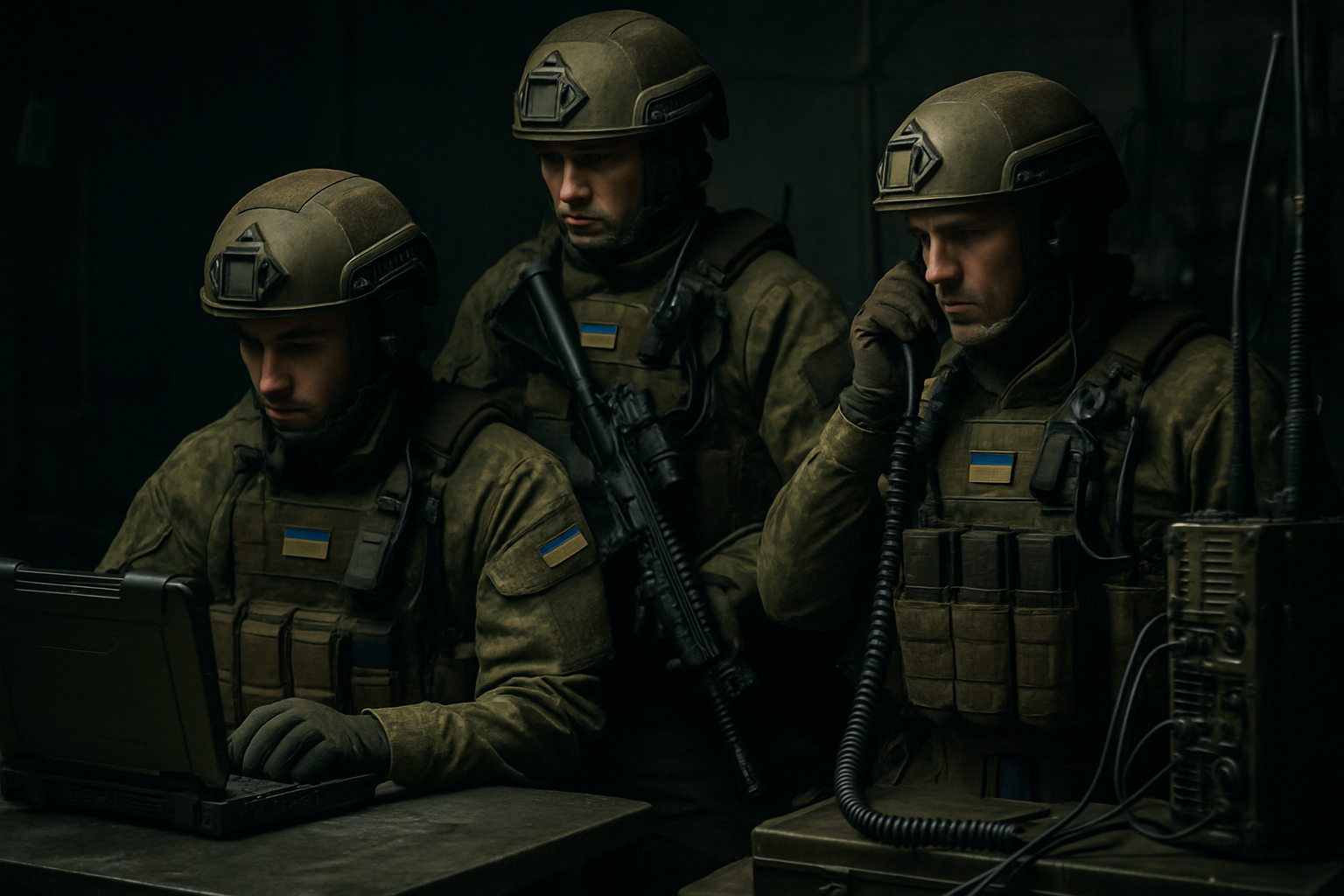
Ukrainian military intelligence operations have intensified across multiple fronts, with Defense Intelligence forces successfully capturing two Russian soldiers during stabilization operations in the Zaporizhzhia sector while domestic counter-intelligence efforts continue to expose espionage networks supporting the Russian war effort.
The latest developments in Ukraine's intelligence war reflect the evolving nature of the conflict as it enters its fifth year, with both offensive reconnaissance operations against enemy forces and defensive security measures against internal threats playing crucial roles in the broader military campaign.
Zaporizhzhia Sector Captures
Special forces of the Defense Intelligence of the Ministry of Defense of Ukraine successfully captured two Russian soldiers while conducting stabilization operations in the strategically important Zaporizhzhia sector. The operation demonstrates Ukraine's continued capability to conduct precision intelligence operations despite sustained Russian pressure across multiple fronts.
The Zaporizhzhia region has remained a critical battleground throughout the conflict, with Russian forces maintaining control over significant portions of the oblast while Ukrainian forces conduct regular reconnaissance and disruption operations. The successful capture of enemy personnel provides valuable intelligence opportunities and represents the effectiveness of Ukrainian special operations capabilities.
Counter-Intelligence Breakthrough in Zhytomyr
In a parallel development highlighting the domestic espionage threat, a resident of the Zhytomyr region has been sentenced to 15 years in prison for providing Russian intelligence services with critical information about Ukrainian Armed Forces aircraft movements. The case underscores the persistent internal security challenges facing Ukraine as it defends against both conventional military attacks and sophisticated intelligence operations.
The convicted individual had systematically gathered and transmitted data about Ukrainian aircraft operations to Russian handlers, information that could have been used to target Ukrainian air assets and compromise military operations. This type of intelligence gathering represents a significant threat to Ukrainian air defense capabilities and pilot safety.
Terrorist Activity Investigation in Bucha
Separately, law enforcement officers have formally notified a 21-year-old resident of Bucha in the Kyiv region of suspicion in connection with committing a terrorist act. The investigation in Bucha, a city that became synonymous with Russian war crimes early in the conflict, highlights the ongoing security concerns in previously occupied territories.
The case demonstrates the complex security environment in areas that experienced Russian occupation, where collaboration networks and sleeper cells may continue to pose threats to civilian and military targets. Counter-terrorism operations remain a critical component of Ukraine's overall defense strategy.
Broader Intelligence Context
These operations occur against the backdrop of a dramatically escalated intelligence war between Ukraine and Russia. Recent months have witnessed unprecedented developments in peace negotiations, including the historic February 2026 Abu Dhabi breakthrough that achieved a 314-prisoner exchange and restored US-Russia military communications after a four-year suspension.
However, these diplomatic advances have been suspended indefinitely due to the Iran crisis, leaving military and intelligence operations as the primary means of interaction between the combatants. The suspension of trilateral Ukraine-Russia-US negotiations represents a significant setback to diplomatic momentum despite framework achievements being preserved for potential future reactivation.
Military Intelligence Evolution
Ukraine's military intelligence capabilities have evolved significantly since the February 2022 invasion, developing sophisticated networks for both offensive operations against Russian forces and defensive measures against espionage activities. The country's intelligence services have adapted to conduct operations across multiple domains while maintaining security within Ukrainian territory.
The successful capture operations in Zaporizhzhia demonstrate Ukraine's ability to conduct precision special operations despite Russian territorial gains of 481 square kilometers in January 2026 versus 260 square kilometers in December 2025. This 85% increase in Russian territorial acceleration makes Ukrainian intelligence operations even more critical for maintaining military effectiveness.
International Support for Intelligence Operations
Ukraine's intelligence capabilities have been significantly enhanced through international cooperation, with the UK recently revealing four operational MRO (Maintenance, Repair, and Operations) facilities in Ukraine servicing Western-supplied equipment. This represents the first public acknowledgment of extensive military infrastructure supporting Ukrainian operations.
Additionally, Ukrainian military experts have been deployed to five Middle Eastern countries - including the UAE, Qatar, Jordan, Bahrain, and Kuwait - to share expertise in combating Iranian Shahed drones, the same weapons systems that have been used extensively against Ukrainian infrastructure. This evolution from aid recipient to security provider demonstrates Ukraine's growing intelligence and operational expertise.
Nuclear Governance Context
These intelligence operations take place within an unprecedented nuclear governance crisis, with the New START treaty between the US and Russia having expired on February 5, 2026 - the first time in over 50 years without bilateral nuclear constraints between the superpowers. Both nations control approximately 80% of global nuclear weapons, adding extraordinary urgency to intelligence operations and conflict resolution efforts.
The restoration of US-Russia military communications through the Abu Dhabi framework represents the only remaining formal diplomatic channel between the nuclear superpowers, making intelligence operations and their potential for escalation particularly sensitive.
Humanitarian and Legal Implications
The espionage activities being prosecuted by Ukrainian authorities occur amid systematic violations of international humanitarian law by Russian forces, including the documented targeting of civilian infrastructure as a "winter weapon" strategy. Over 1,170 Kyiv buildings continue to operate with inadequate heating following systematic energy attacks.
Ukraine has officially disclosed that 55,000 soldiers have been killed in the conflict, with a "large number" missing in action. International estimates suggest actual military casualties could be 2-3 times higher, providing context for the critical importance of intelligence operations in protecting Ukrainian forces and civilians.
Strategic Implications
The continuation of aggressive intelligence operations by both sides reflects the reality that despite diplomatic efforts, the conflict remains in an active military phase with no clear resolution timeline. The suspension of peace talks due to the Iran crisis has left military and intelligence activities as the primary means of pursuing strategic objectives.
These operations also demonstrate the evolving nature of modern conflict, where traditional military operations intersect with sophisticated intelligence warfare, cyber operations, and counter-espionage activities. Ukraine's success in both offensive intelligence gathering and defensive security operations will be critical for maintaining military effectiveness amid sustained Russian pressure.
As the conflict approaches its fifth year, the intensity and sophistication of intelligence operations on both sides continue to escalate, with civilian populations increasingly caught in the crossfire of espionage networks and military operations targeting critical infrastructure and military assets.