Ukrainian military forces have launched a series of coordinated strikes against Russian targets while making significant progress toward European Union membership, as the ongoing conflict enters a critical phase with continued diplomatic efforts alongside intensified military operations.
The latest developments represent a multi-front approach by Ukraine, combining sustained military pressure with accelerated European integration efforts and participation in international peace negotiations. Ukrainian Air Assault Forces have liberated nine settlements on the Oleksandrivka axis, according to the General Staff, while President Volodymyr Zelensky announced Ukraine will be technically ready to join the European Union by 2027.
Military Operations Intensify Across Multiple Fronts
Ukrainian forces have demonstrated their continued operational capabilities through a series of successful strikes against Russian infrastructure and military targets. Most notably, Ukraine conducted its deepest strike to date, hitting a Russian ballistic missile production facility in Udmurtia region, approximately 1,400 kilometers from the Ukrainian border, using domestically produced Flamingo cruise missiles.
The targeted facility manufactures critical Russian weaponry including Iskander and Topol-M missiles. Alexander Brechalov, the regional governor, confirmed both damage to the facility and casualties among personnel, marking a significant escalation in Ukraine's long-range strike capabilities.
"This demonstrates our continued ability to strike at the heart of Russia's military-industrial complex, disrupting their capacity to produce the weapons used against our civilians,"
— Ukrainian Military Official
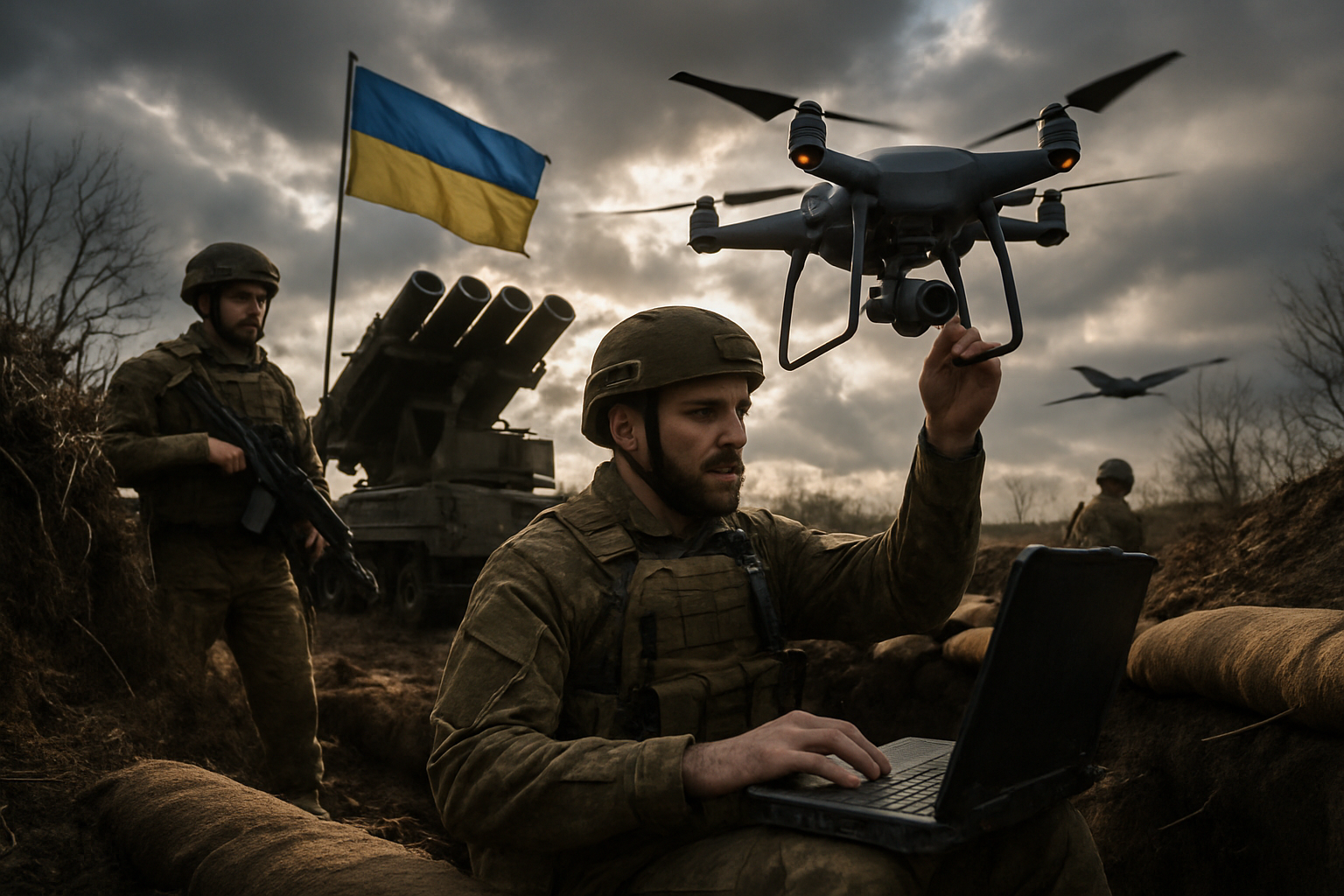
Concurrent operations saw Ukrainian forces successfully target a Russian 2S9 Nona-S self-propelled artillery system in the Pokrovsk sector of Donetsk region using precision drone strikes. This prevented Russian paratroopers from supporting assault operations toward the strategic town of Hryshyne.
The 17th Army Corps achieved tactical success near Pavlivka village in the Zaporizhzhia sector, capturing 11 Russian soldiers. Ukrainian forces also conducted operations in occupied Crimea, striking an oil depot and destroying two Russian border guard ships along with two Be-12 aircraft.
Civilian Casualties from Russian Attacks Continue
Despite Ukrainian military successes, Russian forces continue their systematic targeting of civilian infrastructure and populated areas. Recent attacks have resulted in multiple civilian casualties, including a deadly drone strike on a moving commuter train in the Kryvyi Rih district of Dnipropetrovsk region.
The attack on the suburban electric train killed one person and wounded seven others. Emergency crews evacuated passengers and transported the wounded to hospital facilities. This incident represents part of Russia's broader pattern of targeting civilian transportation infrastructure.
Russian forces also struck residential areas in Komyshuvakha, Zaporizhzhia region, using guided aerial bombs (KABs), injuring three civilians. The attacks damaged civilian infrastructure and residential buildings, continuing the documented pattern of systematic civilian targeting that violates international humanitarian law.
European Union Accession Progress Accelerates
Amid ongoing military operations, Ukraine has made remarkable progress toward European Union membership. President Zelensky announced that Ukraine will be technically ready to open all EU negotiation clusters within days, with full membership readiness expected by 2027.
This accelerated timeline comes despite some EU member states continuing to block the opening of negotiation clusters. Zelensky emphasized Ukraine's commitment to meeting all technical requirements for membership while simultaneously defending its territorial integrity.
"We are proving that Ukraine belongs in the European family of nations, both through our democratic values and our determination to defend them against authoritarian aggression,"
— President Volodymyr Zelensky
The EU accession process has gained momentum following the European Parliament's approval of a historic €90 billion loan package for Ukraine, representing the largest EU financial assistance package ever provided to a single nation. This demonstrates unprecedented European commitment to Ukraine's future within European institutions.
International Support and Diplomatic Efforts
International support for Ukraine continues to expand, with Czech lawmakers demonstrating significant backing for Ukrainian war refugees and ongoing military assistance. MP Hayato Okamura confirmed that a large number of members of the Czech Republic's lower house support continued aid to Ukraine.
This support comes as diplomatic efforts continue through multiple channels. Recent trilateral negotiations in Geneva involving Ukraine, Russia, and the United States achieved "significant progress" on ceasefire monitoring mechanisms, according to US Special Envoy Steve Witkoff, though fundamental territorial disputes remain unresolved.
The diplomatic breakthrough included the restoration of US-Russia military communications after a four-year suspension, along with a historic 314-prisoner exchange - the first such exchange in five months. These confidence-building measures provide a foundation for continued negotiations despite ongoing military operations.
Strategic Implications and Future Outlook
Ukraine's multi-pronged strategy of maintaining military pressure while pursuing European integration represents a sophisticated approach to the ongoing conflict. The successful strikes deep into Russian territory demonstrate Ukraine's growing technological capabilities and strategic reach, potentially altering Moscow's calculations about the conflict's trajectory.
The accelerated EU accession timeline provides Ukraine with a concrete path toward European integration, offering both economic benefits and security guarantees that could prove crucial for long-term stability. This progress occurs despite some EU member states maintaining reservations about the pace of Ukrainian integration.
Challenges and Ongoing Concerns
Despite military successes and diplomatic progress, significant challenges remain. Russian territorial gains have accelerated in recent months, with forces capturing 481 square kilometers in January 2026 compared to 260 square kilometers in December 2025. This 85% increase represents the fastest territorial acquisition rate in months.
The human cost continues to mount, with President Zelensky having disclosed that 55,000 Ukrainian soldiers have been officially confirmed killed, with a "large number" still missing in action. International estimates suggest actual military casualties could be 2-3 times higher when including missing personnel and undocumented deaths.
Systematic Russian attacks on civilian infrastructure continue, with energy "terrorism" leaving over 1,170 buildings in Kyiv without heating during sub-zero temperatures. Ukrainian nuclear plants have been forced to halt electricity production for the first time in the conflict, creating unprecedented security risks.
Looking Forward
The current phase of the conflict represents a critical juncture, with military operations intensifying alongside diplomatic efforts and European integration processes. The Trump administration has established a June 2026 deadline for comprehensive peace negotiations, potentially involving presidential-level engagement in Washington.
Success in these multiple endeavors could end Europe's deadliest conflict since World War II while providing a template for 21st-century conflict resolution. However, fundamental disagreements over territorial control remain, with Russia demanding recognition of its gains while Ukraine maintains its commitment to territorial integrity.
The coming months will likely determine whether diplomatic innovation can overcome military escalation, with implications extending far beyond Ukraine to affect European security architecture, international law enforcement, and territorial sovereignty principles for decades to come.