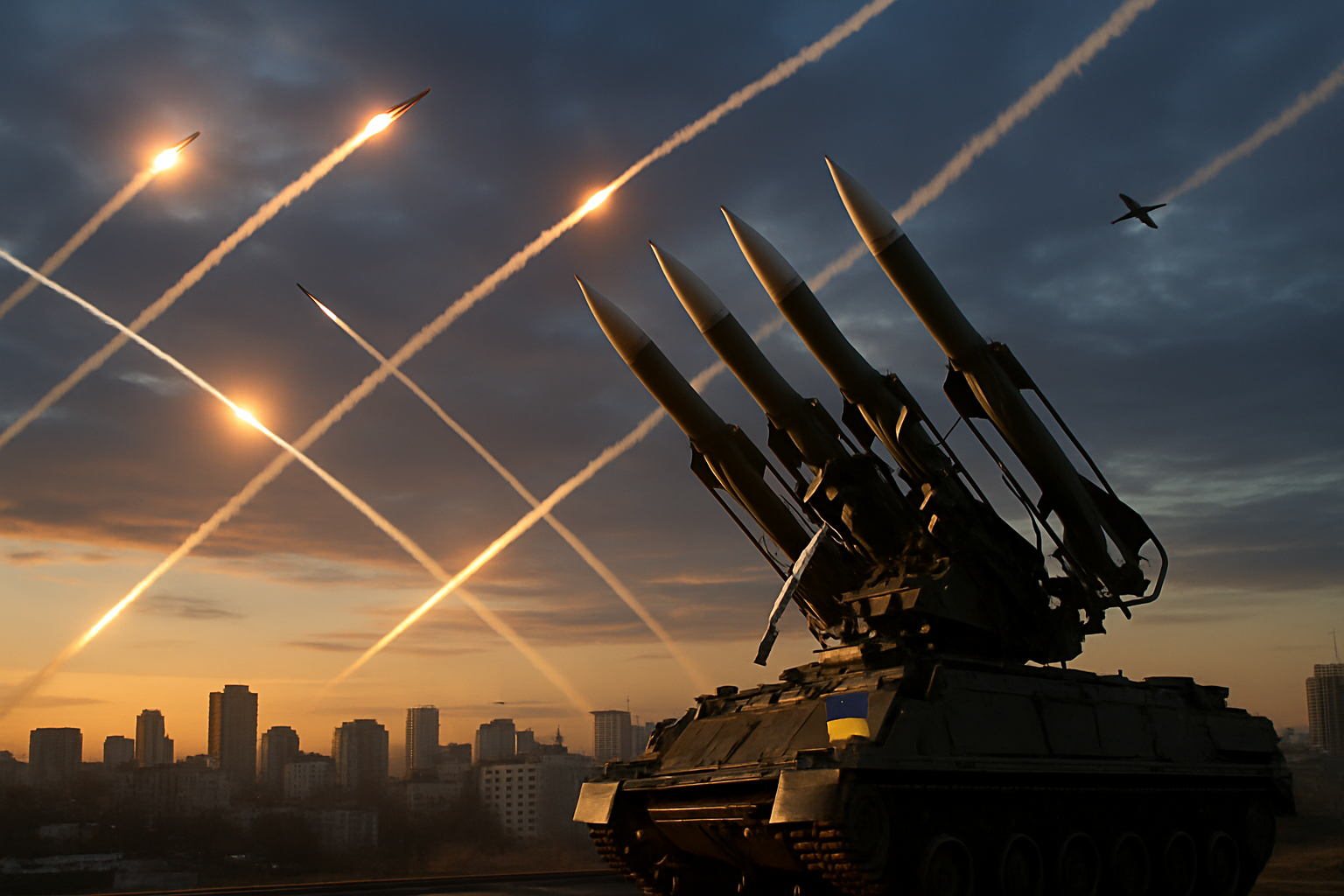
Russian forces continued their devastating campaign against Ukrainian cities on February 22, 2026, launching a massive coordinated assault involving 29 ballistic missiles and 396 drones that overwhelmed air defenses and caused significant damage across multiple regions, including the capital Kiev.
Ukrainian air defense systems successfully intercepted 25 missiles and 367 drones according to multiple military sources, but the sheer scale of the attack allowed several projectiles to penetrate defenses. The strikes resulted in fires breaking out on the roof of a high-rise residential building in Kiev, while explosions were reported across the capital during an active air raid alert.
Scale and Impact of the Attack
The February 22 assault represents one of the largest single coordinated attacks in months, continuing Russia's systematic targeting of Ukrainian civilian infrastructure. Italian media sources confirmed that explosions were heard throughout Kiev after missile alerts were activated, while Ukrainian officials reported significant damage to residential areas.
According to Russian Defense Ministry statements cited by Bulgarian media, Russian air defense systems simultaneously intercepted and destroyed 86 Ukrainian drones over Russian territory during the same period. The drones were reportedly shot down across multiple Russian regions, with the highest concentration of 29 drones intercepted over Belgorod Oblast.
Civilian Infrastructure Under Fire
The attacks continued Russia's documented strategy of targeting civilian infrastructure during winter months, creating what Ukrainian officials have termed "energy terrorism." This latest assault follows a pattern of strikes that have left over 1,170 buildings in Kiev without heating during temperatures as low as minus-30 degrees Celsius.
"As a result of the attack by Russian troops, a fire broke out on the roof of a residential high-rise building in the capital."
— Ukrainian Emergency Services
The systematic targeting of residential buildings and essential infrastructure has become a hallmark of Russia's military strategy, designed to maximize civilian suffering during the harsh winter months. Emergency warming centers have been activated across affected regions to provide shelter for those without heating.
Diplomatic Paradox Continues
The attacks occurred against the backdrop of ongoing diplomatic efforts, including the recently concluded Geneva peace talks that took place February 17-18, 2026. These trilateral negotiations between Ukraine, Russia, and the United States achieved what US Special Envoy Steve Witkoff described as "significant progress" on ceasefire monitoring mechanisms, though fundamental territorial disputes remain unresolved.
The timing of major attacks before or during diplomatic initiatives has become a consistent pattern, with military analysts noting Russia's apparent strategy of using humanitarian pressure to strengthen its negotiating position. This approach was similarly observed during the Abu Dhabi breakthrough talks that achieved a historic 314-prisoner exchange in early February.
International Response and Support
The continued attacks have prompted sustained international support for Ukraine's defense capabilities. The European Union has approved a historic €90 billion loan package—the largest ever for a single nation—though Slovakia, Czech Republic, and Hungary refused participation, showing divisions within the bloc.
Additional military aid includes:
- Sweden-Denmark €246 million air defense package with Tridon Mk2 systems
- Germany providing 35 Patriot missiles
- World Bank allocation of $40 million for energy restoration
- Over 17.8 million Ukrainians accessing winter support programs
Nuclear Crisis Context
The escalation occurs within an unprecedented nuclear governance crisis. The New START treaty between the United States and Russia expired February 5, 2026, marking the first time in over 50 years without bilateral nuclear constraints between the superpowers. Both nations control approximately 80% of global nuclear weapons, with Russia possessing 4,380 warheads and the US 3,708.
UN Secretary-General António Guterres has called this a "grave turning point," warning that nuclear risks are at their "highest in decades." The restoration of US-Russia military communications through the recent diplomatic breakthroughs represents the only remaining formal diplomatic channel between the nuclear superpowers.
Human Cost Mounts
President Zelensky has disclosed that 55,000 Ukrainian soldiers have been officially killed since the conflict began, with a "large number" still missing in action. International estimates suggest actual casualties could be 2-3 times higher when including undocumented deaths and missing personnel.
The systematic targeting of civilians has resulted in particularly tragic incidents, including the February 11 Bohodukhiv attack that killed four civilians, including three young children—two one-year-old boys and one two-year-old girl—along with their 34-year-old father. This represented the second deadly attack on the same town within three days, demonstrating the systematic nature of civilian targeting.
Territorial Disputes Remain Central
Despite diplomatic progress on humanitarian issues, the fundamental sticking point remains unchanged: eastern Ukrainian territories currently under Russian control. Russia demands territorial recognition and insists that any Putin-Zelensky talks must occur only in Moscow, while Ukraine maintains its territorial integrity position and seeks long-term security guarantees of 20-30 years.
Russian territorial gains have accelerated dramatically, with 481 square kilometers captured in January 2026 compared to 260 square kilometers in December 2025. Over 10,000 Russian drones and bombs were launched in January 2026 alone, indicating the sustained intensity of military operations.
Looking Ahead: June Deadline
The Trump administration has established a comprehensive peace timeline with a June 2026 deadline, potentially involving Washington as a venue for presidential-level engagement. This evolution from Abu Dhabi to Geneva to potentially Washington suggests a deliberate diplomatic escalation designed to create unprecedented pressure for territorial compromise solutions.
The success or failure of these diplomatic efforts carries implications far beyond Ukraine and Russia. European security architecture, international law enforcement, and territorial sovereignty principles for the 21st century all hang in the balance. The international community is watching closely to see whether innovative diplomatic solutions can overcome traditional limitations in resolving complex territorial disputes.
Strategic Stakes
This represents the most significant diplomatic opportunity since the conflict began nearly four years ago. Success could end Europe's deadliest war since World War II and provide a template for 21st-century conflict resolution. However, failure may intensify military operations globally and undermine diplomatic credibility in addressing territorial disputes worldwide.
The humanitarian-military paradox continues, with concrete diplomatic results such as prisoner exchanges and communications restoration achieved amid continued civilian targeting. This raises questions about genuine peace commitment versus the use of humanitarian pressure tactics as negotiating strategies.
As winter conditions persist and military operations continue alongside diplomatic efforts, the coming months will prove decisive in determining whether sustained diplomatic innovation can overcome military escalation, or whether Europe's deadliest conflict since World War II will continue to exact its devastating human and strategic toll.