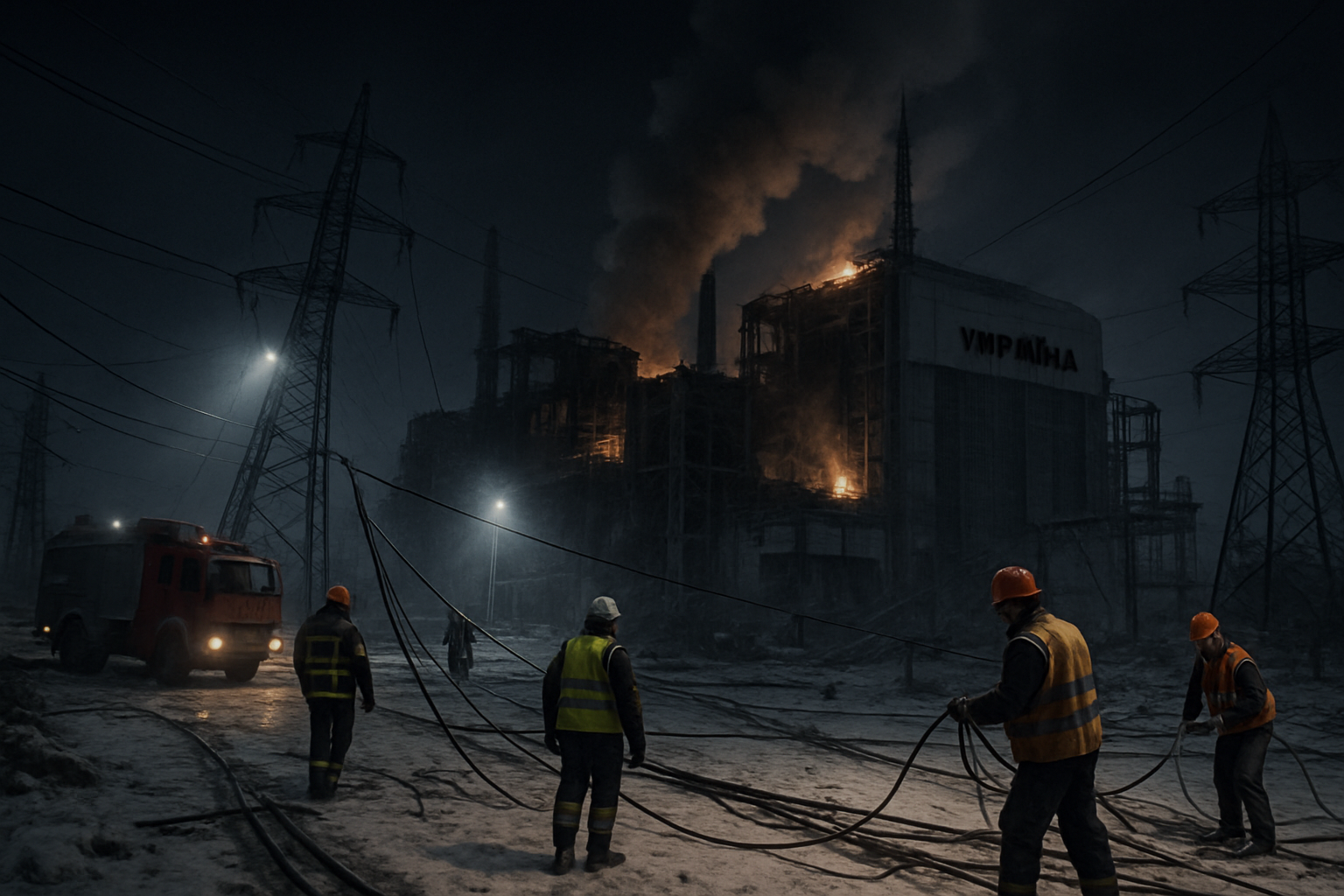
Ukraine's nuclear power plants halted electricity production on Saturday after Russian overnight attacks severely damaged critical substations and cut power lines, according to the International Atomic Energy Agency (IAEA) Director General Rafael Grossi, marking an unprecedented escalation in Russia's systematic targeting of Ukrainian energy infrastructure.
The coordinated strikes, which occurred across multiple oblasts, forced the unprecedented shutdown of all Ukrainian nuclear facilities' electricity generation capacity for the first time since the conflict began. The attacks specifically targeted the electrical distribution network that connects nuclear plants to Ukraine's national grid, effectively isolating these critical facilities from their ability to supply power to Ukrainian cities and industries.
IAEA Confirms Nuclear Generation Halt
IAEA Director General Rafael Grossi confirmed that Ukrainian nuclear power plants were compelled to cease electricity production following the Russian bombardment of electrical infrastructure. The targeting of substations and transmission lines created a cascading effect throughout Ukraine's interconnected power grid, making it impossible for nuclear facilities to safely transmit electricity to consumers.
This represents a significant escalation in Russia's "winter weapon" strategy, which has systematically targeted civilian infrastructure during extreme weather conditions to maximize humanitarian suffering. The timing during sub-zero temperatures across Ukraine compounds the crisis, as millions of civilians face the dual threat of blackouts and life-threatening cold.
Widespread Regional Impact
The attacks affected multiple regions simultaneously, demonstrating the coordinated nature of the assault. In Odesa, explosions echoed throughout the city as approximately 15 drones approached from the Black Sea, targeting all districts according to military administration head Sergiy Lysak. Air raid sirens were activated at 23:22 local time, with regional authorities urging residents to seek shelter in bomb shelters.
The strategic port city of Odesa, home to over 150,000 ethnic Bulgarians making them the third-largest minority group in Ukraine, faced particularly intense bombardment. The targeting of this crucial maritime hub underscores Russia's broader strategy of crippling Ukraine's economic lifelines alongside its energy infrastructure.
Emergency power outages were implemented across most regions on Sunday, with household consumers facing hourly blackout schedules throughout the entire day. Industrial consumers confronted severe capacity restrictions, while some regions continued to experience emergency outages beyond the scheduled timeframes.
Casualties and Human Cost
The attacks resulted in tragic civilian casualties, including the death of 30-year-old rescuer Mykhailo Protsenko of the State Emergency Service of Ukraine. Protsenko was killed while battling a massive fire caused by Russian strikes in the town of Yahotyn, Kyiv region, highlighting the dangerous conditions faced by emergency responders.
"Russia is terrorizing Ukrainians to freeze them to death"
— Baiba Braže, Latvia's Minister of Foreign Affairs
Latvia's Foreign Minister Baiba Braže strongly criticized Russia's deliberate targeting of energy infrastructure, characterizing it as a systematic campaign to terrorize Ukrainian civilians through the weaponization of winter conditions. This assessment reflects the international community's growing recognition that attacks on civilian infrastructure constitute a form of warfare designed to break civilian morale.
Critical Energy Deficit
Ukrainian energy officials reported that the loss of power generation capacity created a significant additional electricity deficit in an already strained system. The overnight and morning attacks of February 7 exacerbated what was already described as an "extremely difficult" energy situation throughout the country.
The systematic nature of these attacks has forced Ukraine's national grid operator Ukrenergo to implement rolling blackouts and emergency measures to prevent total system collapse. The targeting of both generation facilities and distribution infrastructure demonstrates sophisticated understanding of Ukraine's energy network vulnerabilities.
Nuclear Security Implications
Ukrainian Foreign Minister's office warned that Russian attacks on energy infrastructure put "all of Europe at risk of nuclear incident," highlighting the broader regional security implications of targeting facilities connected to nuclear power plants. The disruption of electrical systems supporting nuclear facilities raises serious concerns about operational safety and emergency response capabilities.
The IAEA has consistently monitored the situation at Ukrainian nuclear facilities throughout the conflict, expressing concern about attacks on energy infrastructure that could compromise nuclear safety systems. The halting of electricity production represents a new dimension in the intersection of energy warfare and nuclear security risks.
Pattern of Systematic Targeting
These latest attacks continue a well-documented pattern of Russian forces targeting civilian energy infrastructure as a weapon of war. Previous strikes have killed energy workers, including 15 DTEK employees in Dnipropetrovsk region, demonstrating deliberate targeting of repair personnel essential for restoration efforts.
The strategy represents what Ukrainian officials describe as "energy terrorism" – the systematic destruction of civilian infrastructure to create humanitarian crises that extend far beyond traditional battlefield engagement. The timing during extreme winter weather conditions amplifies the humanitarian impact on millions of Ukrainian civilians.
International Response and Condemnation
NATO Secretary-General Mark Rutte has previously condemned such attacks as sending a "bad signal" during ongoing diplomatic efforts, highlighting the tension between military escalation and peace negotiations. The international community has consistently characterized attacks on civilian infrastructure as violations of international humanitarian law.
European nations have responded with increased air defense support, including Sweden and Denmark's €246 million air defense package featuring advanced Tridon Mk2 systems. Poland has maintained heightened alert status, previously scrambling fighter jets in response to attacks on western Ukrainian regions near the border.
Long-term Reconstruction Challenges
The systematic destruction of energy infrastructure creates massive long-term reconstruction challenges that will require months or years to fully address. The targeting of both generation facilities and transmission networks necessitates comprehensive rebuilding efforts that go far beyond simple repairs.
International support mechanisms, including World Bank allocations for energy restoration and EU loan packages, represent recognition that Ukraine's energy security has become a critical component of European stability. The reconstruction of destroyed infrastructure will require specialized equipment, technical expertise, and substantial financial resources.
Broader Strategic Implications
The halting of nuclear electricity production represents a new escalation in modern warfare's increasing focus on civilian infrastructure as military targets. This strategy creates humanitarian crises that affect millions of people far removed from traditional combat zones, fundamentally altering the nature of contemporary conflict.
The attacks demonstrate how critical infrastructure targeting can achieve strategic military objectives through civilian suffering, raising important questions about international legal frameworks for protecting essential services during armed conflict. The precedent established by systematic energy infrastructure destruction has implications far beyond the current conflict in Ukraine.