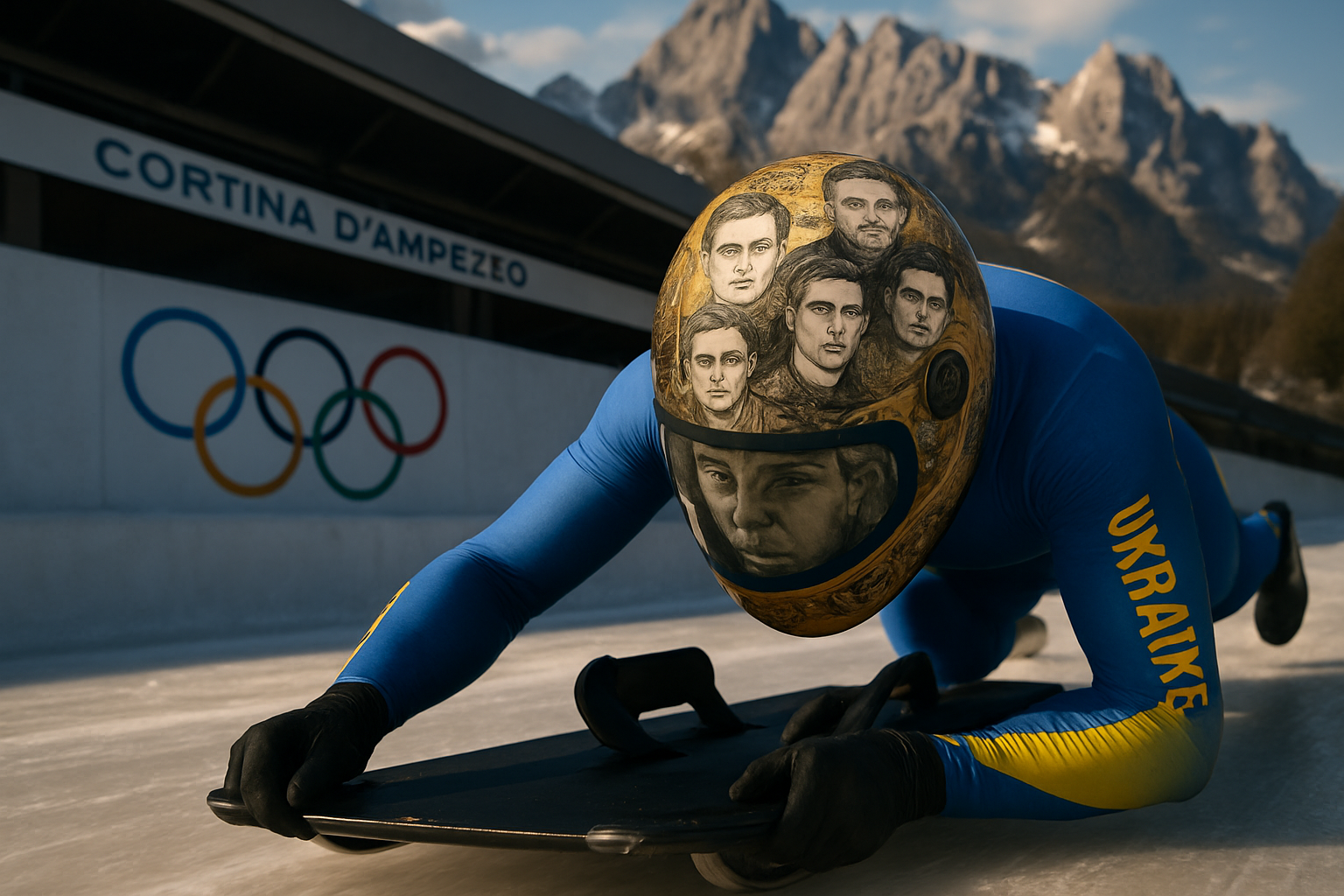
Ukrainian skeleton athlete Vladyslav Heraskevych was disqualified from the Milano-Cortina 2026 Winter Olympics on February 12, 2026, after refusing to compete without his memorial helmet depicting the faces of over 20 Ukrainian athletes and coaches killed during Russia's ongoing invasion of Ukraine.
The 27-year-old skeleton racer was expelled from competition just hours before his scheduled race at the sliding center in Cortina d'Ampezzo, following a tense confrontation with International Olympic Committee (IOC) officials and the International Bobsleigh and Skeleton Federation (IBSF) jury over his helmet design.
The Memorial Helmet Controversy
Heraskevych's helmet featured portraits of Ukrainian sporting community members who have been killed since Russia's full-scale invasion began in February 2022. The tribute was intended to honor fallen colleagues and draw attention to the devastating impact of the war on Ukraine's athletic community.
According to multiple sources, the IOC offered Heraskevych a compromise - he could wear a black armband instead of the memorial helmet during competition. However, the Ukrainian athlete firmly rejected this alternative.
"Even if the IOC wants to betray the memory of these athletes, I will not betray them. This is the price of our dignity."
— Vladyslav Heraskevych, Ukrainian skeleton athlete
Despite a personal meeting with IOC President Kirsty Coventry, Heraskevych refused to abandon his memorial tribute, leading to his immediate expulsion under Olympic Rule 50, which governs athlete expression and political demonstrations.
International Response and Support
The disqualification sparked immediate controversy and widespread support for Heraskevych across multiple countries. Ukrainian President Volodymyr Zelensky quickly condemned the IOC's decision and awarded the athlete the Order of Freedom for his "selfless service to the Ukrainian people" and "civic courage and patriotism."
Ukrainian Sports Minister Matvii Bidnyi called the decision "unjust" while confirming that the Ukrainian team would continue competing in the Games despite the controversy.
International media coverage highlighted the tension between Olympic neutrality rules and athlete expression during ongoing conflicts. Polish sports journalist Mirosław Żukowski criticized the IOC's "soullessness," while Olympic champion Robert Korzeniowski spoke of "double standards" in the organization's enforcement of rules.
The Athletes Remembered
The memorial helmet honored a diverse group of Ukrainian athletes and coaches from various sports disciplines who lost their lives during the war. Italian media reported details about the 24 individuals commemorated, including gymnasts, biathletes, and diving coaches, representing the broad impact of the conflict on Ukraine's sporting community.
The tribute served not only as remembrance but as a powerful symbol of Ukraine's ongoing struggle and the price paid by its people, including those in the sporting world who dedicated their lives to athletic excellence and youth development.
Allegations of Double Standards
Following his disqualification, Heraskevych raised concerns about inconsistent enforcement of Olympic neutrality rules. He pointed to the presence of Russian flags in the stands and on some athletes, suggesting the IOC was selectively applying its regulations.
"I still do not understand why I was disqualified today when the IOC turns a blind eye to Russian flags in the stands and on some athletes."
— Vladyslav Heraskevych, following his disqualification
These allegations have added another layer to the controversy, with critics arguing that the IOC's approach to political expression during the Games has been inconsistent and potentially biased.
Olympic Rule 50 and Political Expression
The controversy has reignited debates about Olympic Rule 50, which prohibits political demonstrations, propaganda, or religious expression at Olympic venues. While the rule is intended to maintain the Games' neutrality and focus on sport, critics argue it can suppress legitimate expressions of grief, remembrance, and human dignity.
The case raises fundamental questions about whether commemorating war victims constitutes a political demonstration or simply an act of human remembrance. Legal experts and sports ethicists have noted the complexity of distinguishing between political activism and memorial tribute in the context of ongoing conflicts.
Impact on the Games
The Heraskevych controversy has overshadowed other developments at the Milano-Cortina 2026 Winter Olympics, drawing international attention to broader questions about sport and politics. The incident occurred during what organizers had hoped would be a celebration of athletic achievement and international cooperation.
Ukrainian delegation members received some of the warmest cheers during the opening ceremony, indicating public support for the nation's athletes amid their country's ongoing struggle. Heraskevych's disqualification has further galvanized this support while creating diplomatic tensions.
Historical Context
This controversy comes amid the most geographically dispersed Winter Olympics in history, with events spanning over 400 kilometers across northern Italy. The Games have faced numerous challenges, including infrastructure problems, security concerns, and civil protests, but the Heraskevych case represents perhaps the most significant political controversy of the 2026 Winter Olympics.
The incident occurs against the backdrop of Russia's continued exclusion from many international sporting events following its invasion of Ukraine, creating a complex environment for Olympic officials attempting to maintain neutrality while addressing humanitarian concerns.
Looking Forward
The Heraskevych case is likely to influence future discussions about Olympic neutrality rules and athlete expression rights. Sports governance experts suggest this incident could lead to revisions of Rule 50 or more detailed guidelines about what constitutes acceptable forms of remembrance versus prohibited political demonstrations.
For Ukraine's Olympic team, the controversy has reinforced their role as symbols of national resilience while competing under extraordinary circumstances. The team continues to participate in the Games despite the setback, carrying forward their mission to represent their nation with dignity and honor.
As the Milano-Cortina 2026 Winter Olympics continue through February 22, the Heraskevych controversy serves as a stark reminder of how global conflicts inevitably intersect with international sporting events, challenging organizers to balance neutrality with human compassion and the fundamental Olympic values of dignity and respect.