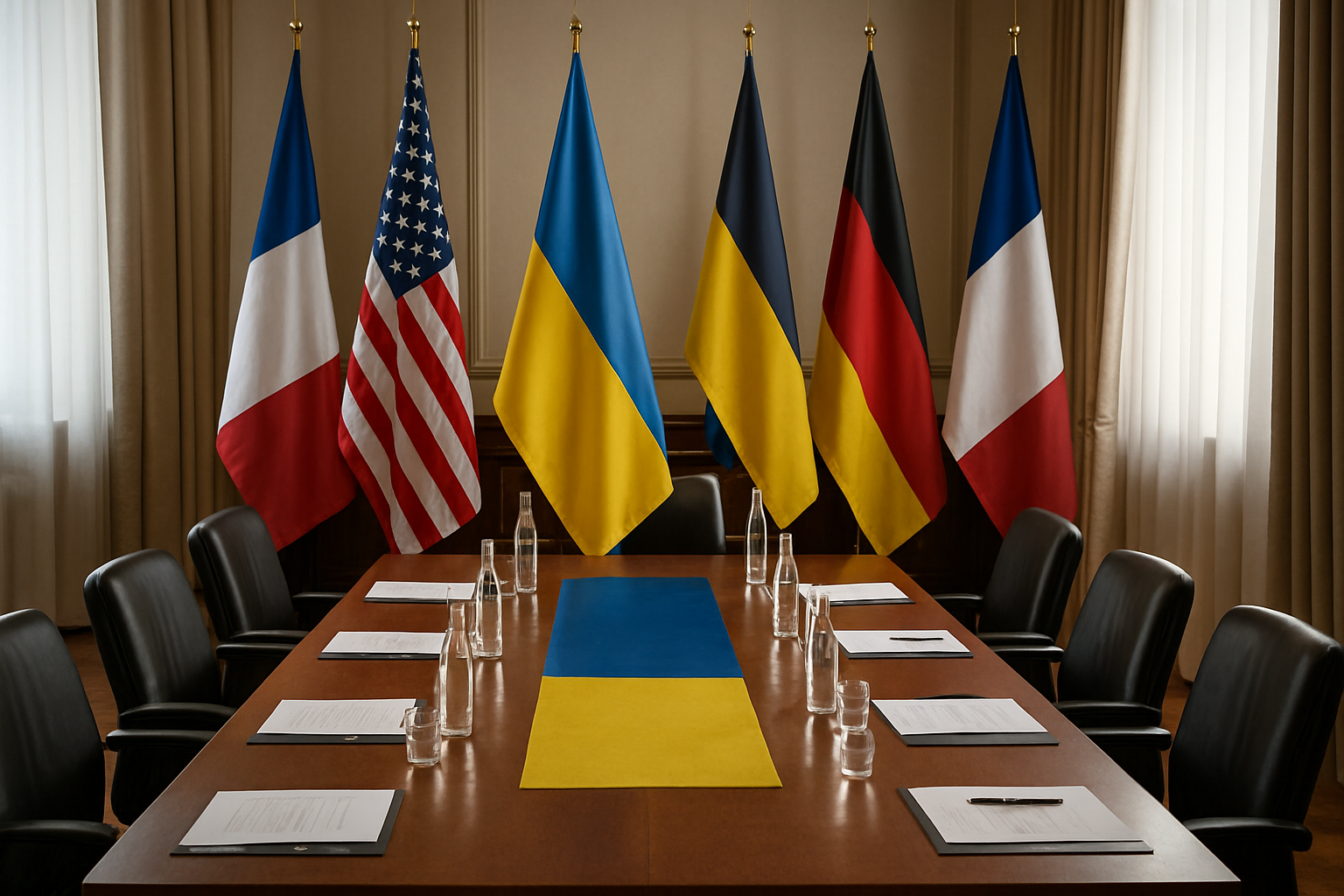
The United States is spearheading an intensive diplomatic campaign to secure a peace agreement between Ukraine and Russia by March 2026, with discussions underway for rapid Ukrainian elections to follow, marking the most ambitious timeline yet proposed for ending Europe's deadliest conflict since World War II.
According to Reuters sources familiar with the negotiations, American and Ukrainian negotiators have established this aggressive March deadline during ongoing trilateral talks in Abu Dhabi, though territorial disputes over eastern Ukraine continue to present the primary obstacle to any comprehensive agreement.
The diplomatic push comes on the heels of a historic breakthrough achieved during the second round of Ukraine-Russia-US trilateral peace talks in Abu Dhabi, which concluded February 5 with the first prisoner exchange in five months - 314 prisoners of war swapped between the sides - and the restoration of US-Russia military communications after a four-year suspension.
March Peace Timeline and May Elections Framework
Sources close to the negotiations reveal that the March timeline emerged from what Bulgarian diplomatic sources describe as "four breakthroughs in Abu Dhabi," where Russian representatives showed renewed seriousness about peace negotiations. An American expert consulting with Ukrainian officials told Politico that Russians "finally began to take them more seriously."
The proposed framework would see a peace agreement finalized by March 2026, followed by Ukrainian elections and potentially a referendum in May. This represents a dramatic shift from the wartime martial law governance that has been in place under President Volodymyr Zelensky since Russia's February 2022 invasion.
Ukrainian Defense Minister Rustem Umerov, who led Ukraine's delegation in Abu Dhabi, described the talks as "substantial and productive," while US Special Envoy Steve Witkoff confirmed concrete results from the negotiations. The discussions included detailed examination of "methods for implementing ceasefire and monitoring cessation of hostilities."
Territorial Disputes Remain Central Challenge
Despite diplomatic momentum, the fundamental issue of eastern Ukrainian territories under Russian control remains the primary sticking point. Russian forces have accelerated their territorial gains, capturing 481 square kilometers in January 2026 compared to 260 square kilometers in December 2025, demonstrating continued military pressure even amid peace negotiations.
The March deadline appears ambitious given the complexity of these territorial disputes, with TASS sources indicating that peace agreement work requires "at least 1.5 months minimum." Greek and Azerbaijani diplomatic sources confirm US-Ukraine discussions on the March target, though they acknowledge the timeline may require adjustment based on negotiating realities.
Russia's position has remained consistent throughout the talks: any high-level negotiations between Putin and Zelensky must occur in Moscow, a demand that complicates the diplomatic framework. However, Zelensky has indicated that future talks will "most likely" occur in the United States, suggesting an evolution toward higher-level negotiations.
Military Context and Escalation Concerns
The peace negotiations are proceeding against a backdrop of continued military escalation. Russia launched what Ukrainian energy company DTEK called the "most powerful blow" of 2026 against Ukrainian energy infrastructure, leaving over 1,170 buildings in Kyiv without heating during minus-30°C temperatures and breaking an informal Trump-Putin energy truce.
Over 10,000 Russian drones and bombs were launched in January 2026 alone, while Ukraine faces severe winter conditions with more than 17.8 million Ukrainians accessing winter support programs. The humanitarian pressure strategy appears calculated to strengthen Russia's negotiating position ahead of formal peace talks.
NATO Secretary-General Mark Rutte made a surprise visit to Kyiv, addressing the Ukrainian Parliament and condemning the attacks as a "bad signal" before negotiations. The timing of military escalation immediately before diplomatic breakthroughs has become a pattern throughout the conflict.
International Support and Divisions
The peace initiative has revealed significant divisions among European allies. Germany maintains opposition to direct talks with Putin, viewing Russian territorial demands as unacceptable, while France and Italy support continued diplomatic engagement. The United Kingdom and France have pledged troop deployments for peace agreement enforcement, which has prompted Russian threats of retaliation.
International support for Ukraine remains robust, with the EU approving a historic €90 billion loan package - the largest European aid package ever provided to a single country. Sweden and Denmark announced a €246 million air defense package, while Poland has committed to continued military support.
The UAE's role as neutral host has proven crucial for the structured negotiations, providing a diplomatic framework that has produced concrete humanitarian results. The success of the Abu Dhabi format has led to discussions about continuing this neutral venue approach for future rounds.
Nuclear Arms Control Context
The Ukraine peace negotiations are occurring simultaneously with the expiration of the New START treaty between the US and Russia on February 5, 2026 - the first time in over 50 years without bilateral nuclear constraints between the superpowers. This adds urgency to diplomatic efforts, as the restoration of US-Russia military communications during the Abu Dhabi talks represents the only major dialogue channel between the nuclear powers.
President Trump rejected Putin's offer for a 12-month extension of New START limits, demanding a "new, improved, and modernized treaty" that includes China's expanding nuclear arsenal. The loss of nuclear verification mechanisms creates additional uncertainty that makes resolution of the Ukraine conflict even more critical for global stability.
Domestic Political Considerations
The May elections proposal represents particularly complex political territory for Ukraine. Zelensky's attitude toward elections has been described by Western sources as "complex," given security concerns during wartime and the need to maintain unity during peace negotiations. The transition from martial law to democratic elections would require coordination with ceasefire implementation and security guarantees.
Reuters sources indicate that the US negotiating team told Ukrainian officials in Abu Dhabi that "it would be best if that vote occurred soon," representing American pressure for democratic renewal alongside peace agreements. This timeline would mark Ukraine's first national elections since the 2019 presidential contest that brought Zelensky to power.
Humanitarian Breakthroughs Build Confidence
The 71st prisoner exchange since the invasion began serves as a crucial confidence-building measure, demonstrating that sustained diplomatic engagement can produce humanitarian results even amid military operations. The Pentagon's announcement of restored US-Russia military communications includes deconfliction protocols and incident prevention measures, providing operational frameworks that could support broader peace agreements.
President Zelensky disclosed that 55,000 Ukrainian soldiers have been officially confirmed killed since the invasion began, with a "large number" still classified as missing in action. These stark casualties underscore the human cost driving the diplomatic urgency, though international researchers estimate actual military deaths could be 2-3 times higher when including missing personnel and undocumented casualties.
Economic and Energy Security Issues
The repeated Russian attacks on Ukrainian energy infrastructure highlight the economic dimensions of any peace agreement. Ukraine requires massive reconstruction funding, with the EU's €90 billion loan representing just the beginning of long-term rebuilding needs. Russia's strategy of targeting civilian infrastructure during winter has created humanitarian leverage that any peace framework must address.
World Bank sources indicate that $40 million in energy restoration funding has been allocated, while emergency warming centers have been activated across multiple oblasts. The integration of energy security guarantees into peace agreements represents a critical component for sustainable conflict resolution.
Looking Ahead: Critical Weeks for Diplomacy
The coming weeks will prove critical for determining whether the Abu Dhabi momentum can translate into concrete peace agreements. The March timeline, while ambitious, provides a specific target that could focus negotiating efforts and create pressure for compromise on territorial issues that have deadlocked previous attempts.
Success would not only end Europe's deadliest war since World War II but could provide a diplomatic template for other international conflicts. Failure might intensify military operations globally and undermine confidence in diplomatic solutions to territorial disputes.
As negotiators prepare for continued meetings under the UAE framework, potentially evolving to US venues, the fundamental question remains whether innovative compromise solutions can bridge territorial disagreements that have persisted throughout the nearly four-year conflict. The March deadline creates both opportunity and pressure for the most significant peace breakthrough since the conflict began.
The intersection of peace negotiations with Ukrainian democratic renewal through May elections represents an unprecedented attempt to combine conflict resolution with political transition - a complex undertaking that will test the limits of international diplomatic coordination and the willingness of all parties to prioritize sustainable peace over continued military confrontation.