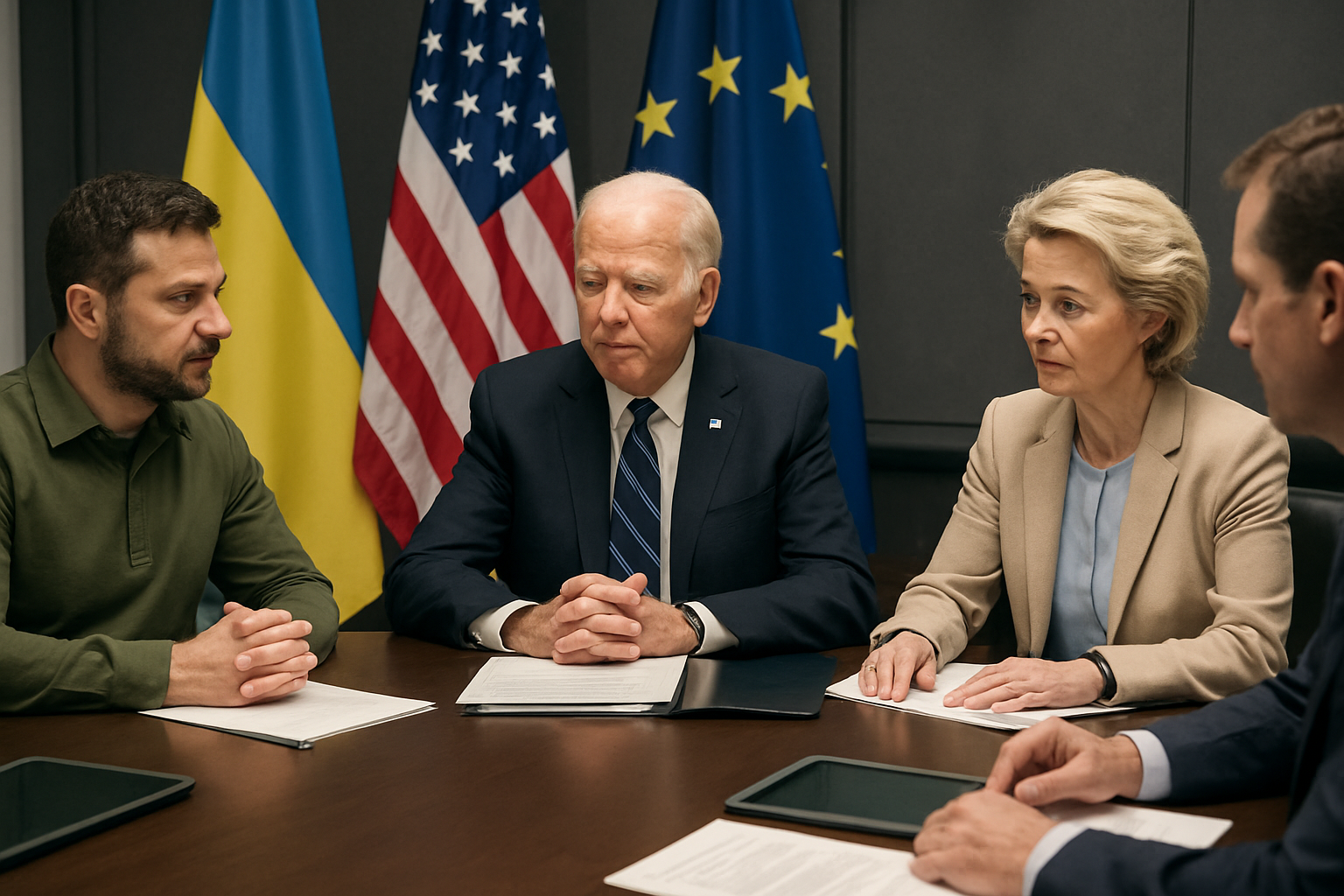
Ukrainian President Volodymyr Zelensky announced Tuesday that the next round of trilateral peace negotiations with Russia and the United States will take place February 17-18 in the United States, marking a significant escalation from previous talks held in Abu Dhabi as territorial disputes continue to dominate the agenda.
Speaking in a Bloomberg interview, Zelensky confirmed Ukraine had accepted the US proposal for the upcoming negotiations, stating that territorial control would be "the key focus" of discussions. The announcement comes as multiple European sources report intense American pressure on Ukraine to announce presidential elections by May 15, 2026, potentially ending nearly four years of martial law.
"For now, Russian terror continues and nothing indicates that Russia is interested in ending the war," a senior Ukrainian official told Le Monde, highlighting the fundamental challenge facing negotiators as fighting persists across multiple fronts.
Diplomatic Breakthrough Builds on Abu Dhabi Success
The February talks represent an evolution from the breakthrough achieved in Abu Dhabi on February 5, where trilateral negotiations between Ukraine, Russia, and the US resulted in a historic 314-prisoner exchange—the first such swap in five months. The talks also restored high-level US-Russia military communications after a four-year suspension, marking the most significant diplomatic achievement since the conflict began.
Ukrainian Defense Minister Rustem Umerov described the Abu Dhabi discussions as "substantial and productive," while US Special Envoy Steve Witkoff confirmed concrete results including detailed ceasefire monitoring frameworks. However, the fundamental sticking point remains unchanged: the fate of eastern Ukrainian territories currently under Russian control.
"Americans are proposing that parties end the war by the beginning of summer and will pressure both sides according to this timeline."
— President Volodymyr Zelensky
Election Pressure Intensifies
Multiple international sources, including reports from the Financial Times and German media, indicate the Trump administration is pressuring Ukraine to announce presidential elections by May 15, 2026. Ukrainian officials have responded cautiously, with the Presidential Office emphasizing that "elections will only be possible when the security situation permits."
The potential elections would mark the first national vote since Zelensky's 2019 victory and represent an unprecedented democratic transition during active conflict. Sources suggest Zelensky may announce plans on February 24, the fourth anniversary of Russia's invasion, with a peace referendum potentially accompanying the electoral process.
However, Ukrainian officials stress that security guarantees and international oversight would be essential prerequisites. "There are many question marks around both the legal framework and security," noted Swedish Russia expert Martin Kragh, highlighting the complex challenges of conducting elections during wartime.
Military Situation Remains Critical
Despite diplomatic progress, fighting continues across multiple fronts with concerning developments for Ukraine. According to the Institute for Study of War, Russian forces captured 481 square kilometers in January 2026 compared to 260 square kilometers in December 2025, showing accelerated territorial gains.
The human cost remains devastating. In a recent disclosure, Zelensky revealed that 55,000 Ukrainian soldiers have been officially confirmed killed since the February 2022 invasion, with a "large number" still classified as missing in action. International researchers estimate actual military casualties could be 2-3 times higher.
Recent Russian attacks have continued the pattern of civilian targeting. In Bohodukhiv, Kharkiv region, a Russian drone strike on February 11 killed four civilians, including three young children—two one-year-old boys and a two-year-old girl—along with their 34-year-old father. This marked the second deadly attack on the same town within three days.
International Support and Nuclear Context
The European Parliament approved a historic €90 billion loan package for Ukraine on February 11, representing the largest EU financial assistance package ever for a single nation. The vote of 458 in favor, 140 against, and 44 abstentions demonstrates continued European commitment despite some member state divisions.
Sweden and Denmark announced a €246 million air defense package including Tridon Mk2 systems, while NATO defense ministers are scheduled to meet February 12 in Brussels to discuss continued support mechanisms.
The negotiations occur against a critical nuclear backdrop, as the New START treaty between the US and Russia expired on February 5, 2026—the first time in over 50 years without nuclear arms control constraints between the superpowers. UN Secretary-General António Guterres called it a "grave turning point" with nuclear weapon use risks "higher than at any time in decades."
European Diplomatic Divisions
European allies remain divided on engagement strategies. Germany continues to oppose direct talks with Putin, citing "maximalist demands" from Moscow, while France and Italy support broader diplomatic engagement. This split reflects broader tensions over how to balance pressure tactics with negotiation opportunities.
The restoration of US-Russia military communications through the Abu Dhabi framework includes deconfliction measures and incident prevention protocols, potentially affecting global security operations beyond Ukraine in regions like Syria, the Arctic, and Africa where the forces operate in proximity.
Territorial Disputes Remain Core Challenge
The primary obstacle to peace remains the status of eastern Ukrainian territories under Russian control. Russia has insisted that any Putin-Zelensky direct meeting must occur in Moscow, while Ukraine maintains its position on territorial integrity. The accelerating Russian territorial gains in January add urgency to the diplomatic process.
Ukrainian officials argue that rewarding territorial aggression through recognition would undermine international law and UN positions on the illegality of Russia's 2014 Crimea annexation. Russia, meanwhile, seeks US recognition of its territorial claims as part of broader economic agreements.
Stakes and Strategic Implications
The upcoming Washington talks represent the most significant diplomatic opportunity since the conflict began. Success could end Europe's deadliest war since World War II and provide a template for international conflict resolution. However, failure might intensify military operations and undermine confidence in diplomatic solutions to territorial disputes globally.
The elevation from Abu Dhabi to Washington venue suggests potential presidential-level involvement, marking the highest-level US engagement in the peace process. This escalation comes as the Trump administration establishes a June 2026 deadline for a comprehensive peace agreement.
With over 17.8 million Ukrainians accessing winter support programs and continued "winter weapon" targeting of civilian infrastructure, humanitarian concerns add urgency to the diplomatic process. The recent prisoner exchange and communications restoration demonstrate that sustained engagement can produce concrete results even amid ongoing military operations.
As negotiators prepare for the February 17-18 meetings, the international community watches for signs of innovative compromise solutions that could bridge decade-old territorial challenges while preserving principles of international law and democratic governance. The stakes extend far beyond Ukraine, potentially redefining European security architecture and international approaches to territorial sovereignty in the 21st century.