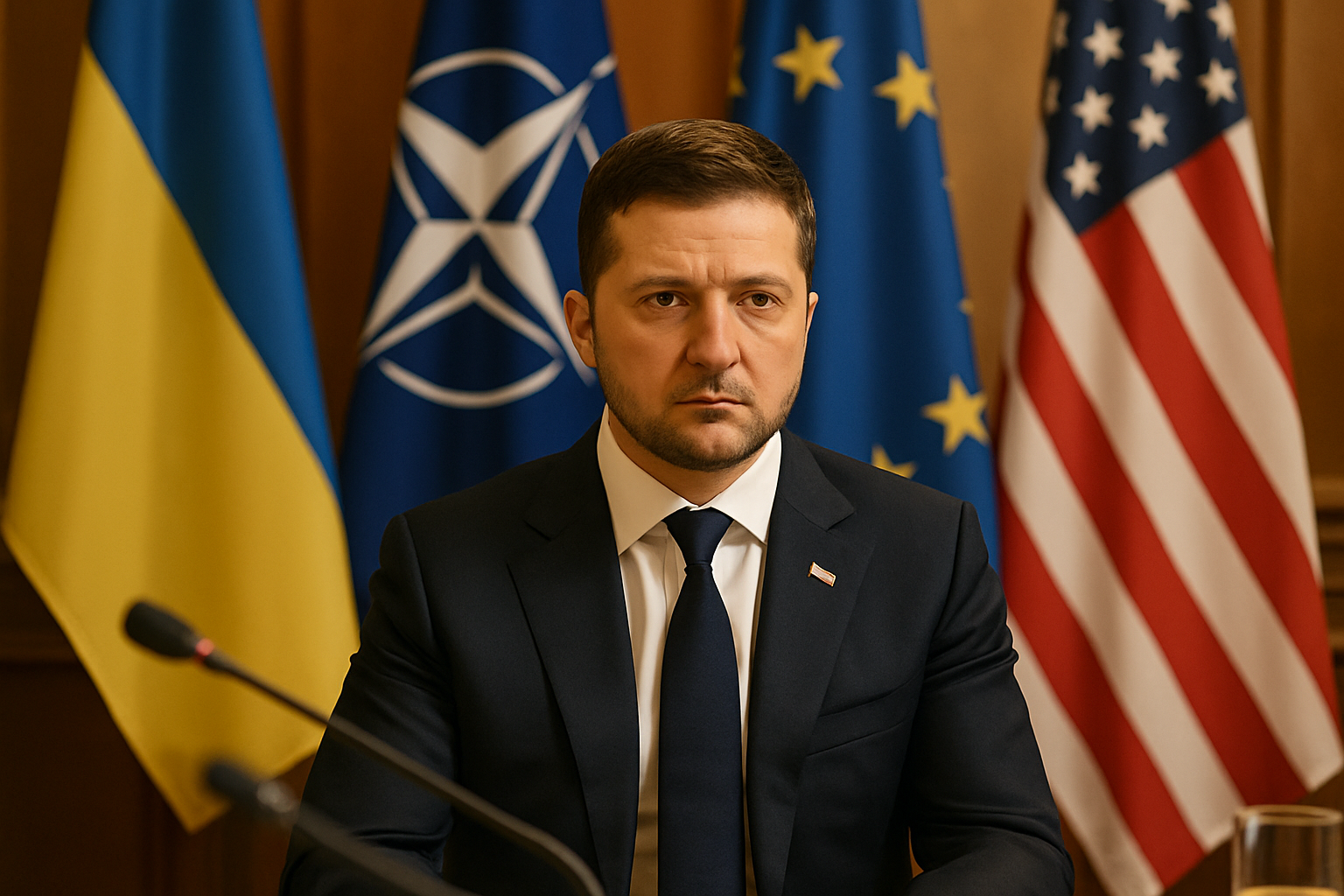
Ukrainian President Volodymyr Zelensky expressed cautious optimism about achieving "dignified and lasting peace" as his delegation departed for crucial trilateral talks in the United Arab Emirates, while NATO Secretary General Mark Rutte prepares for a significant visit to Kyiv on Tuesday, February 3, 2026.
The Ukrainian delegation left for Abu Dhabi on Monday evening for the second round of trilateral meetings with Russian and American officials, scheduled to begin Wednesday. Speaking after discussions with his negotiating team, President Zelensky described the upcoming talks as an opportunity to "scale up real solutions for the sake of peace."
"We consider the bilateral security guarantees document with the United States as complete and anticipate further essential work on documents related to recovery and economic development," Zelensky stated, highlighting Ukraine's strategic priorities ahead of the negotiations.
NATO Chief's Strategic Kyiv Visit
NATO Secretary General Mark Rutte is set to visit Kyiv on Tuesday and address the Ukrainian Parliament, according to opposition lawmakers Yaroslav Zhelezniak and Oleksii Honcharenko. While NATO has not issued an official announcement regarding the visit, the timing coincides with critical developments in the peace process and ongoing military tensions.
The visit comes as Ukraine continues to face severe military pressure. According to analysis by the Institute for the Study of War, Russian forces accelerated their advance in January 2026, capturing 481 square kilometers of Ukrainian territory—nearly double the 260 square kilometers taken in December 2025.
Diplomatic Divisions Emerge Among Allies
European allies remain divided on the approach to peace negotiations. Germany has reaffirmed its opposition to reopening direct diplomatic channels with Russian President Vladimir Putin, despite growing support for such engagement from France and Italy.
"We support direct talks between Russia and Ukraine at the highest level, because there can be no just and lasting peace without the participation of Ukraine," a German government spokesperson stated, maintaining Berlin's position against direct Putin engagement.
"There can be no just and lasting peace without Ukraine's full participation in any negotiation process."
— German Government Spokesperson
Meanwhile, both the United Kingdom and France have pledged to deploy troops to Ukraine in the event of a successful peace agreement, a move that prompted Moscow to threaten that foreign forces in Ukraine would become "legitimate targets."
Ongoing Military Operations and International Support
Despite diplomatic efforts, military operations continue across multiple fronts. Russian forces attacked four districts in the Dnipropetrovsk region on Monday, killing one civilian and wounding two others in strikes on Pavlohrad, Synelnykove, Nikopol, and Kryvyi Rih districts.
In a significant development for Ukraine's technological warfare capabilities, the country has implemented a comprehensive registration system for Starlink terminals to prevent unauthorized Russian use of the satellite internet service. The initiative, developed in cooperation with SpaceX, aims to block Russian forces from using Starlink technology for drone operations and communications.
International Financial Support
Ukraine received a boost to its reconstruction efforts as the World Bank announced a $40 million allocation for energy system restoration. The funding, confirmed by First Deputy Prime Minister and Energy Minister Denys Shmyhal, will support critical infrastructure repairs as the country faces severe winter conditions with temperatures dropping to minus-30°C in some regions.
Escalating Regional Tensions
In a related development, Ukraine officially recognized Iran's Islamic Revolutionary Guard Corps (IRGC) as a terrorist organization, citing the use of thousands of Iranian-made Shahed drones against Ukrainian cities and villages. President Zelensky emphasized that Ukraine "will not forget any of the thousands of Iranian-made Shahed drones" used in attacks on civilian infrastructure.
This designation comes amid broader regional tensions involving Iran and aligns with similar moves by the European Union and other Western allies to isolate Iran's military apparatus.
Peace Process Framework and Challenges
The upcoming Abu Dhabi talks represent the second round of trilateral negotiations aimed at ending the conflict that began with Russia's full-scale invasion in February 2022. The first round in January made limited progress, with territorial control remaining the primary sticking point between the parties.
US Special Envoy Steve Witkoff will participate in the discussions, which Ukrainian officials describe as moving beyond technical issues to substantive political negotiations. The United Arab Emirates continues to serve as a neutral venue for these high-stakes diplomatic efforts.
The talks occur against a backdrop of continued Russian attacks on Ukrainian infrastructure, with over 10,000 drones and bombs launched by Russian forces in January 2026 alone, according to Ukrainian military sources.
International Community's Response
The peace process has garnered significant international attention, with various nations taking different approaches to the diplomatic efforts. While some European allies push for direct engagement with Moscow, others maintain that any agreement must ensure Ukraine's sovereignty and territorial integrity.
The upcoming Ramstein meeting in Brussels is expected to focus on air defense systems, NATO consolidation efforts, and continued military aid to Ukraine, highlighting the dual track of diplomatic engagement and military support.
"We are committed to achieving a lasting and dignified peace, but it must be based on justice and respect for international law."
— President Volodymyr Zelensky
As diplomatic efforts intensify, the international community watches closely to see whether the combination of military pressure, economic support, and diplomatic engagement can produce a breakthrough in one of the most significant conflicts of the 21st century. The coming days will be crucial in determining whether the peace process can gain meaningful momentum or whether the conflict will continue its devastating trajectory into 2026.