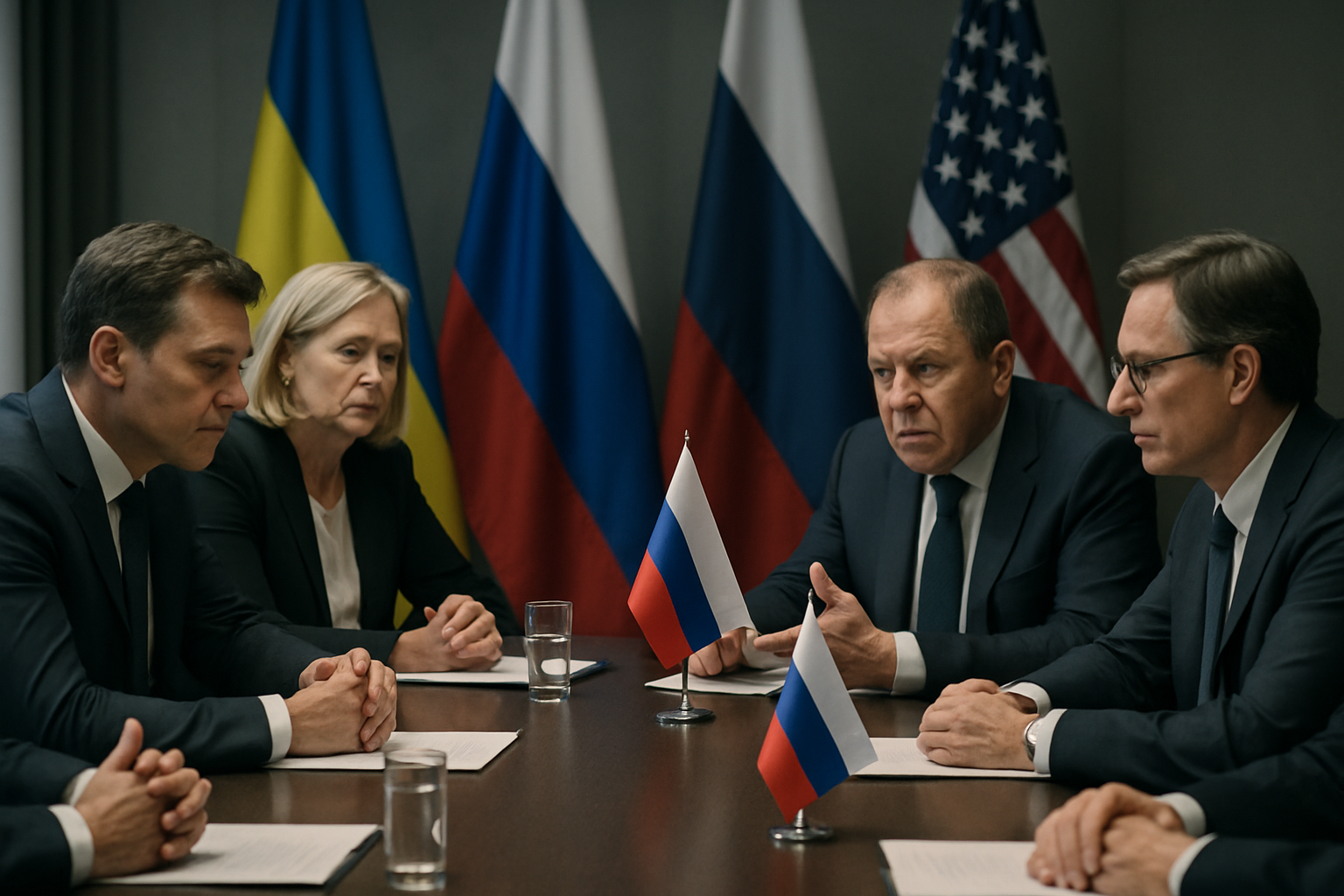
Ukrainian President Volodymyr Zelensky announced Wednesday that Ukrainian negotiators have departed for the United States ahead of planned Saturday meetings with American officials, marking a significant development in diplomatic efforts to end the ongoing conflict with Russia that has now entered its fifth year.
Speaking in his evening video address, Zelensky confirmed that "the Ukrainian team - specifically the political part of the negotiation group - is already on the way." The announcement comes as diplomatic momentum builds following breakthrough achievements in prisoner exchanges and restored communication channels between Washington and Moscow.
Diplomatic Progress Amid Regional Complications
The planned negotiations represent the latest evolution in a series of trilateral talks between Ukraine, Russia, and the United States that have achieved concrete humanitarian results despite ongoing military operations. Previous rounds in Abu Dhabi and Geneva produced the largest prisoner exchange in five months, with 314 individuals returned to their home countries.
However, the diplomatic timeline faces uncertainty due to the escalating Iran crisis in the Middle East. As Zelensky noted in recent statements, there are currently "no necessary signals for trilateral meetings" until the broader security situation allows for high-level engagement.
"There was a pause in the negotiations, time to end it. And we are doing everything to make the negotiations truly meaningful."
— Volodymyr Zelensky, Ukrainian President
Historic Breakthroughs and Ongoing Challenges
The diplomatic framework has achieved unprecedented success in humanitarian initiatives. The February Abu Dhabi talks resulted in the restoration of US-Russia military communications after a four-year suspension, establishing deconfliction protocols that extend globally to operations in Syria, the Arctic, and Africa. Pentagon officials describe this as the most substantial US-Russia military agreement since the conflict began.
Despite these achievements, fundamental disagreements persist over territorial control. Eastern Ukrainian territories remain under Russian control, creating the primary sticking point in negotiations. Russia demands territorial recognition and insists that any Putin-Zelensky summit must occur in Moscow, while Ukraine maintains its position on territorial integrity and seeks long-term security guarantees.
Military Situation and Humanitarian Impact
The diplomatic efforts occur against a backdrop of accelerating military operations. Russian forces have captured 481 square kilometers of territory in January 2026 compared to 260 square kilometers in December 2025, representing an 85% increase in territorial gains.
The human cost continues to mount, with President Zelensky disclosing that 55,000 Ukrainian soldiers have been officially killed, with a "large number" missing. International estimates suggest actual casualties may be two to three times higher than official figures.
Systematic attacks on civilian infrastructure have created a humanitarian crisis, with over 1,170 buildings in Kyiv lacking adequate heating during sub-zero temperatures. This "energy terrorism" strategy violates Geneva Convention protections for civilians and has forced Ukrainian nuclear plants to halt electricity production for the first time in the conflict.
International Support and Nuclear Context
The diplomatic efforts take place amid unprecedented international support for Ukraine and a critical nuclear governance crisis. The European Union has approved a historic €90 billion loan package - the largest assistance program for a single nation in European history - though Slovakia, Czech Republic, and Hungary have refused participation, exposing divisions within the bloc.
The nuclear context adds urgency to diplomatic solutions. The New START treaty between the US and Russia expired on February 5, 2026, marking the first time in over 50 years that the two nuclear superpowers operate without bilateral constraints on their arsenals. Together, Russia and the United States control approximately 80% of global nuclear weapons.
"This represents a grave turning point, with nuclear risks at their highest level in decades."
— UN Secretary-General António Guterres
Ukraine's Strategic Evolution
As diplomatic talks face delays, Ukraine has expanded its strategic partnerships beyond traditional Western allies. The country is deploying military experts to Middle Eastern nations including the UAE, Qatar, Jordan, Bahrain, and Kuwait to share expertise in combating Iranian "Shahed" drone attacks - the same weapons being used against Ukrainian infrastructure.
This evolution from aid recipient to security provider demonstrates Ukraine's transformation during the conflict and potentially creates new leverage in future negotiations. The UK has also revealed four operational maintenance, repair, and overhaul (MRO) facilities in Ukraine servicing Western-supplied equipment, with a fifth facility planned.
June Deadline and Future Prospects
The Trump administration has established a June 2026 deadline for a comprehensive peace agreement, with talks potentially moving to Washington for presidential-level engagement. This timeline represents the evolution from Abu Dhabi to Geneva to Washington, suggesting a deliberate diplomatic escalation strategy.
However, the Iran crisis has introduced uncertainty into this timeline. The interconnected nature of regional conflicts in the current multipolar security environment demonstrates how Middle Eastern developments can derail European diplomatic initiatives.
Stakes and Global Implications
The suspended talks represent the most significant diplomatic opportunity since the invasion began in February 2022. Success could end Europe's deadliest conflict since World War II and provide a template for 21st-century territorial dispute resolution. Failure may intensify military operations globally and undermine the credibility of diplomatic solutions to international conflicts.
The stakes extend beyond Ukraine and Russia, affecting European security architecture, international law enforcement, and territorial sovereignty principles that will shape power competition for decades. The framework established through UAE-hosted negotiations has proven that sustained diplomatic engagement can produce concrete humanitarian results even amid active military operations.
As President Zelensky noted, the diplomatic framework remains intact despite the suspension. "We are doing everything to make the negotiations truly meaningful," he emphasized, indicating that while the current pause reflects regional security realities, the foundation for future talks has been preserved.
The coming weeks will determine whether the innovative diplomatic approach developed through months of multilateral negotiations can overcome the current impasse or whether territorial disputes will continue to be resolved through military rather than diplomatic means, with profound implications for international security in the 21st century.