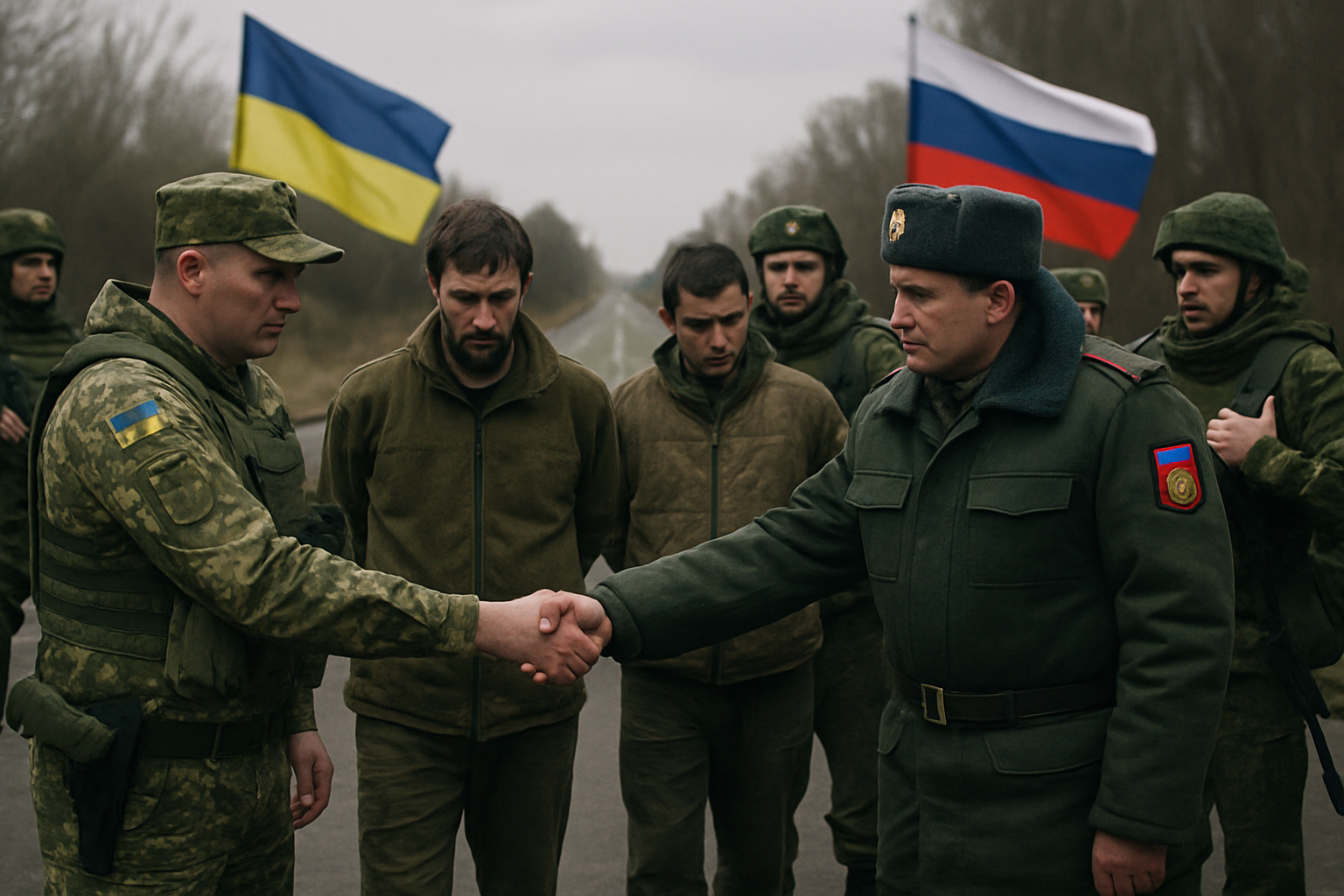
Ukraine and Russia conducted a significant prisoner exchange involving hundreds of prisoners of war, while Ukrainian naval forces successfully downed a Russian Ka-27 anti-submarine helicopter over the Black Sea, highlighting the complex dynamics between ongoing military operations and humanitarian diplomacy in the conflict.
The prisoner exchange, facilitated through international mediation, represents the latest in a series of humanitarian breakthroughs that have emerged from recent diplomatic efforts. According to sources from both Ukrainian and Russian officials, 200 Ukrainian soldiers were released from Russian captivity and returned home, marking a significant humanitarian achievement amid the ongoing conflict.
Major Prisoner Exchange Brings Relief to Families
The exchange comes as part of sustained diplomatic efforts that have produced concrete humanitarian results despite continued military operations. Ukrainian President Volodymyr Zelensky confirmed the successful return of 200 Ukrainian soldiers, emphasizing the critical nature of such exchanges for maintaining hope among military families and the broader Ukrainian population.
According to Latvian media reports, many of the returned Ukrainian soldiers showed signs of severely low body weight, highlighting the harsh conditions faced during their captivity. The exchange represents the continuation of a diplomatic framework that has previously achieved significant breakthroughs, including the historic 314-prisoner exchange earlier this year—the first such swap in five months.
"Each of these soldiers represents a family reunited, a story of survival, and a testament to our commitment to leave no one behind."
— Ukrainian Defense Ministry Official
The prisoner exchange mechanism has become a crucial confidence-building measure, demonstrating that sustained diplomatic engagement can produce tangible humanitarian results even amid active military operations. These exchanges have been facilitated through neutral mediators and represent one of the few areas where both sides have found common ground.
Ukrainian Navy Downs Russian Helicopter
In a separate but significant military development, Ukrainian naval forces successfully engaged and downed a Russian Ka-27 anti-submarine helicopter over the Black Sea. The Kyiv Post reported that Russia's Defense Ministry has not yet commented on the incident, maintaining silence on what represents a notable operational success for Ukrainian naval capabilities.
The Ka-27 helicopter, typically used for anti-submarine warfare and naval reconnaissance missions, was operating over the Black Sea when Ukrainian forces engaged it. This incident demonstrates Ukraine's continued ability to project power over maritime areas despite facing significant pressure across multiple fronts.
The downing of the Russian helicopter coincides with reports of significant damage to the Russian frigate Admiral Essen in Novorossiysk. According to sources from Ukraine's Security Service (SBU), the warship sustained critical damage that prevents its use of Kalibr missiles, though the status of other Russian warships in the area remains unclear.
Escalating Military Operations Across Multiple Fronts
The humanitarian and military developments occur against a backdrop of intensifying combat operations across Ukraine. Russian forces conducted nearly 40 attacks on the Dnipropetrovsk region during the day, targeting the Nikopol District, Kamianske District, and Synelnykove District, resulting in two civilian injuries.
Ukrainian Defense Forces reported repelling 33 combat clashes, with the most intense fighting concentrated in the Pokrovsk sector, where Russian forces launched 13 separate assaults. The Ukrainian military also reported 56 combat clashes since midnight, with the highest concentration of attacks recorded on the Huliaipole, Pokrovsk, and Kostiantynivka axes.
These military operations continue despite the prisoner exchange, illustrating the complex nature of the conflict where humanitarian diplomacy proceeds alongside active combat operations. The ability of both sides to maintain diplomatic channels for prisoner exchanges while engaging in military operations demonstrates the multifaceted nature of the current situation.
Technological and Military Innovation
Ukrainian forces continue to demonstrate adaptability in military technology and tactics. The Armed Forces of Ukraine are expanding their use of unmanned and ground robotic systems, including solutions for intercepting drones and operating along the frontline. These technologies have evolved from initial experimental implementations to systematic deployment and scaling within the military structure.
The military reported that Ukraine is conducting most trials of new weapons systems domestically, as the Armed Forces currently lack agreements with international partners to test the latest weapons systems abroad. This development reflects Ukraine's growing capacity for indigenous military innovation under combat conditions.
Additionally, Ukraine continues to work on the development of new advanced missile weapons, representing a long-term investment in defensive capabilities that could reshape the strategic balance in the region.
Diplomatic Framework and Future Prospects
The prisoner exchange builds upon a established diplomatic framework that has produced concrete results despite the ongoing conflict. Earlier this year, the historic Abu Dhabi trilateral talks between Ukraine, Russia, and the United States achieved significant breakthroughs, including the restoration of US-Russia military communications after a four-year suspension and the implementation of Pentagon deconfliction protocols.
These diplomatic efforts have established working methodologies that enable humanitarian progress even during periods of military escalation. The prisoner exchange mechanism serves as a crucial confidence-building measure that maintains channels for future diplomatic engagement.
International observers note that these exchanges represent one of the few areas where consistent progress has been achieved, providing hope for broader diplomatic solutions. The involvement of neutral mediators and established protocols has created a framework that both sides respect, even as military operations continue.
Broader Strategic Implications
The simultaneous occurrence of the prisoner exchange and the downing of the Russian helicopter illustrates the complex dynamics of the current conflict. While humanitarian diplomacy continues to produce results, military operations across multiple domains—land, sea, and air—demonstrate the ongoing intensity of the confrontation.
The success of Ukrainian naval forces in engaging Russian aircraft over the Black Sea, combined with reported damage to Russian naval vessels, suggests continued Ukrainian operational capabilities despite facing significant pressure across multiple fronts. These developments may influence future diplomatic negotiations by demonstrating Ukraine's sustained military resilience.
The prisoner exchange, meanwhile, provides concrete evidence that diplomatic channels remain viable and can produce humanitarian results. This dual dynamic—continued military engagement alongside humanitarian diplomacy—may shape the framework for future peace negotiations.
International Context and Support
These developments occur within a broader context of international support for Ukraine and growing pressure for diplomatic solutions. The European Union has approved historic financial assistance packages, while NATO allies continue to provide military and humanitarian aid.
The prisoner exchange mechanism enjoys broad international support as a humanitarian imperative, while the military developments underscore the ongoing need for continued defensive assistance to Ukraine. This combination of humanitarian diplomacy and military support reflects the international community's approach to supporting Ukraine while seeking pathways to eventual peace.
The success of the prisoner exchange demonstrates that international mediation can facilitate humanitarian progress even during active military operations. This may provide a template for future diplomatic initiatives and confidence-building measures.
Looking Forward
The prisoner exchange represents a significant humanitarian achievement, bringing relief to families and demonstrating the continued viability of diplomatic channels. Combined with ongoing military developments, these events highlight the complex nature of the current situation, where humanitarian progress coexists with active military operations.
The success of Ukrainian naval forces in engaging Russian aircraft and the reported damage to Russian naval assets may influence the strategic balance in the Black Sea region. Meanwhile, the prisoner exchange provides hope for continued humanitarian progress and the maintenance of diplomatic channels.
As the conflict continues, the ability to maintain both defensive capabilities and humanitarian diplomacy will remain crucial for Ukraine's long-term strategy. The prisoner exchange demonstrates that diplomatic engagement can produce concrete results, while the military successes show continued operational effectiveness across multiple domains.
These developments underscore the importance of sustained international support for both Ukraine's defensive efforts and humanitarian initiatives. The combination of military resilience and diplomatic engagement may prove essential for achieving long-term stability and eventual peace in the region.