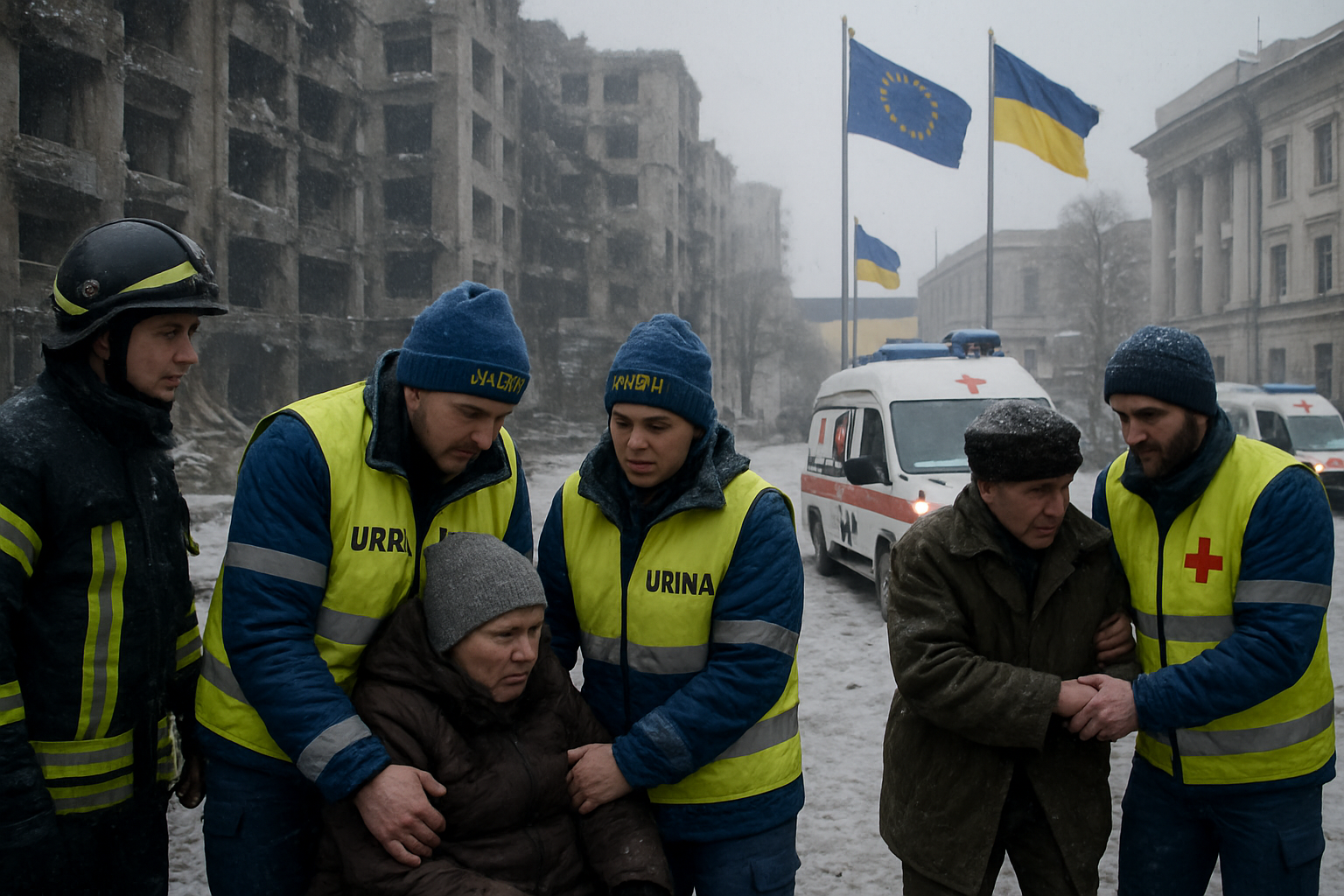
Russian forces launched coordinated attacks across Ukraine's southern regions on March 16, 2026, killing three people and wounding nine others in Kherson and Dnipropetrovsk oblasts, while Hungary's escalating energy demands threaten to block critical European Union financial support worth €90 billion.
The latest casualties underscore the continuing humanitarian toll of Russia's systematic targeting of civilian areas, even as diplomatic efforts face new obstacles from within the European Union itself. Hungarian Foreign Minister Péter Szijjártó announced Budapest would maintain its veto of both the historic EU aid package and the 20th sanctions package against Russia until Ukraine restores oil transit through the Druzhba pipeline.
Regional Violence Claims Civilian Lives
In the Kherson region, Russian drone attacks killed one person and wounded two others during daylight hours, according to regional authorities. The strikes targeted populated areas, prompting the launch of criminal proceedings for violations of international humanitarian law. Kherson has faced relentless bombardment since Ukrainian forces liberated the city in late 2022, with Russian positions across the Dnipro River maintaining daily attacks on civilian infrastructure.
The violence expanded to Ukraine's central industrial heartland, where Russian troops struck the Zaytseve community in the Synelnykivskyi district of Dnipropetrovsk Oblast. The attack killed two civilians and injured seven others, marking another escalation in Russia's systematic campaign against non-military targets. Local officials described the strike as part of Moscow's broader strategy to terrorize civilian populations and disrupt normal life far from active combat zones.
"These attacks on civilian communities demonstrate Russia's deliberate strategy of targeting innocent people to break Ukrainian morale."
— Regional Emergency Services Official
The Dnipropetrovsk strike particularly concerned Ukrainian authorities as the region hosts critical industrial infrastructure supporting the country's defense production capabilities. The area has faced increased Russian attention as Ukraine's domestic weapons manufacturing has expanded to reduce dependence on foreign suppliers.
Hungary's Energy Ultimatum Deepens EU Crisis
As Ukrainian families mourned their dead, a parallel crisis unfolded in European capitals where Hungary's Viktor Orbán government threatened to paralyze EU decision-making over energy politics. The dispute centers on the Druzhba oil pipeline, which has remained offline since late January 2026, when Ukraine reported Russian drone damage requiring extensive repairs.
Hungary and Slovakia, the only EU member states still dependent on Russian oil under special sanctions exemptions, have accused Ukraine of deliberately manipulating energy supplies as "political blackmail." Ukrainian officials maintain that Russian military attacks damaged pipeline infrastructure, necessitating complex repair operations under wartime conditions.
The stakes extend far beyond energy flows. Hungary's blockade threatens the largest EU financial assistance package in history—€90 billion designated for Ukraine's defense and reconstruction needs over 2026-2027. The package, already approved by the European Parliament with 458 votes in favor, requires unanimous Council approval that Budapest refuses to provide.
Lithuania's Foreign Minister Kestutis Budrys warned that the "EU cannot become Budapest's hostage," while European Council President António Costa issued an unprecedented letter demanding Hungary honor its previous commitments to collective European security. The crisis has accelerated discussions about enhanced cooperation mechanisms that would allow willing member states to proceed without unanimity requirements.
Energy Weaponization Among Allies
The Druzhba pipeline dispute reveals dangerous vulnerabilities in European energy architecture despite years of diversification efforts since Russia's 2022 invasion. Slovakia declared an oil emergency in February 2026, releasing 250,000 tons from strategic reserves—equivalent to one month's operational capacity for the Slovnaft refinery in Bratislava.
Natural gas prices have surged 24% across Europe, while Hungary and Slovakia explore Croatian alternatives through Mediterranean routes that would require months or years to implement fully. The crisis demonstrates how energy interdependence can be weaponized even among allies during times of extreme geopolitical tension.
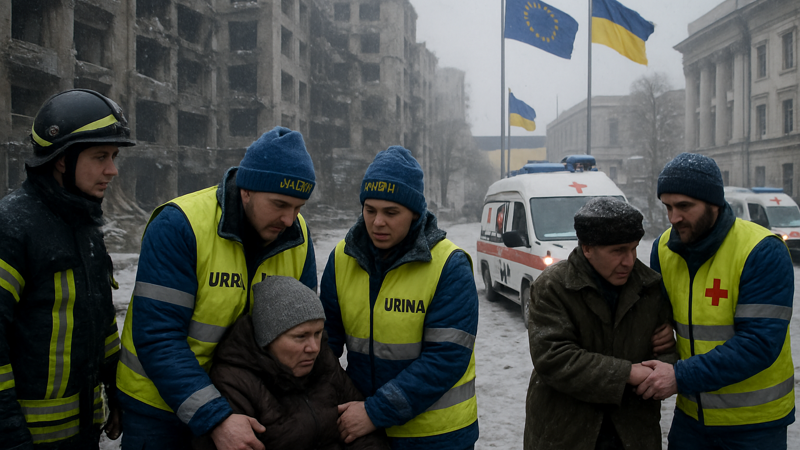
Slovak Prime Minister Robert Fico had previously threatened to cut emergency electricity supplies to Ukraine, which would have devastating humanitarian consequences given that over 1.17 million Kyiv buildings still lack adequate heating following systematic Russian attacks on energy infrastructure during the brutal winter months.
Diplomatic Context and Peace Efforts
The current violence and European divisions unfold against a complex diplomatic backdrop. Earlier in 2026, unprecedented breakthrough talks in Abu Dhabi achieved a historic 314-prisoner exchange—the first such swap in five months—and restored U.S.-Russia military communications after a four-year suspension. Geneva peace talks in February showed "significant progress" on ceasefire monitoring mechanisms.
However, the Trump administration established a June 2026 deadline for comprehensive peace negotiations in Washington, potentially involving presidential-level engagement. The territorial dispute over eastern Ukrainian regions under Russian control remains the fundamental sticking point, with Moscow demanding recognition of its gains while Ukraine maintains its position on territorial integrity.
President Volodymyr Zelensky has categorically rejected territorial concessions, stating that the Ukrainian people would reject any referendum "handing over territories" as a "failure story." The ongoing civilian casualties reinforce Ukraine's argument that Russia cannot be trusted to honor any agreement that rewards territorial aggression.
European Unity Under Pressure
The Hungarian energy ultimatum exposes deeper tensions within the European Union about burden-sharing and strategic autonomy during wartime. While 89% of Europeans support greater unity according to recent polling, practical implementation faces resistance from member states prioritizing national interests over collective security.
The crisis coincides with the New START Treaty's expiration in February 2026—the first time in over 50 years that the United States and Russia operate without bilateral nuclear constraints. With both superpowers controlling 80% of global nuclear weapons, UN Secretary-General António Guterres has warned of nuclear risks reaching their "highest levels in decades."
Sweden and Denmark have committed €246 million for air defense systems, while Germany pledged 35 Patriot missiles to Ukraine's defense. However, Slovakia, Czech Republic, and Hungary's refusal to participate in the €90 billion loan package financing reveals persistent East-West divisions that undermine European solidarity at a critical moment.
Humanitarian Crisis Deepens
Beyond the immediate casualties from Monday's attacks, Ukraine continues grappling with the systematic destruction of civilian infrastructure. Over 17.8 million Ukrainians require winter support programs, while energy facilities face ongoing "terrorism" campaigns designed to break civilian morale through extreme hardship.
President Zelensky has disclosed that 55,000 Ukrainian soldiers have been officially confirmed killed since February 2022, with a "large number" still missing in action. International estimates suggest actual military casualties could be 2-3 times higher when including undocumented losses.
The targeting of civilian repair workers continues, with 15 DTEK energy company employees killed recently while attempting to restore power to affected communities. This systematic targeting of essential personnel demonstrates the calculated nature of Russia's civilian infrastructure campaign.
Looking Ahead: Critical Juncture
The confluence of regional violence, European divisions, and diplomatic deadlock creates one of the most challenging periods since Russia's invasion began. While concrete humanitarian achievements like prisoner exchanges prove sustained engagement can produce results, fundamental territorial disagreements remain unresolved.
The June 2026 Washington deadline represents the most significant diplomatic opportunity since the conflict began. Success could end Europe's deadliest war since World War II and provide a template for 21st-century conflict resolution. However, failure might intensify military operations and undermine diplomatic credibility globally.
For European unity, the Hungarian energy crisis tests whether institutional mechanisms can preserve collective action when individual member states prioritize national interests. The resolution will determine whether European solidarity can withstand authoritarian pressure and set precedents for crisis management in an increasingly multipolar world.
"The stakes extend beyond Ukraine to the fundamental question of whether democratic institutions can respond effectively to authoritarian aggression while maintaining unity and values."
— Senior European Diplomatic Official
As Ukrainian emergency workers continue their dangerous mission of civilian protection amid ongoing attacks, and European leaders struggle with energy politics that could determine the continent's strategic future, the coming weeks will prove decisive for both immediate humanitarian relief and longer-term international stability. The world watches to see whether diplomatic innovation can overcome the deadly combination of military aggression and internal European divisions that threatens to prolong Europe's most devastating conflict in generations.