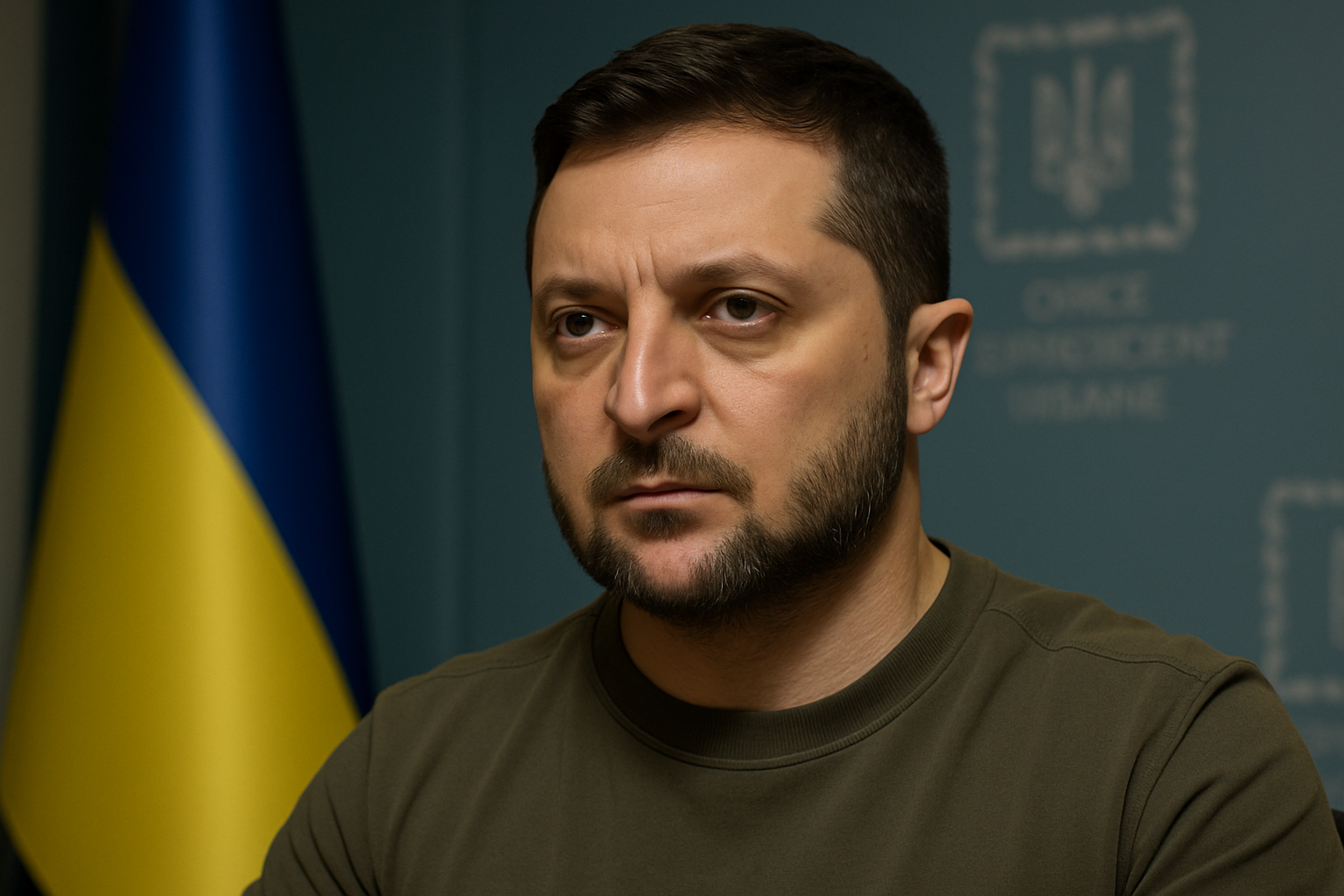
Ukrainian President Volodymyr Zelensky has declared that Russia lacks the military resources to provide large-scale support to Iran while simultaneously being unable to mount a significant March offensive, highlighting what Ukrainian officials describe as critical resource limitations facing Moscow's war machine.
In two separate assessments released Monday, Zelensky's administration painted a picture of a Russian military stretched to its operational limits, with all combat-capable forces committed to the Ukrainian front and insufficient reserves for either supporting Tehran or launching new major operations.
Russia Cannot Support Iran, Says Zelensky
"Russia will not be able to provide substantial assistance to Iran because all of its combat-capable forces are engaged in the war against Ukraine," Zelensky stated in his evening address. This assessment comes as international observers monitor potential Russian military cooperation with Iran amid ongoing regional tensions in the Middle East.
The Ukrainian leader's statement suggests that Moscow's military commitments in Ukraine have severely constrained its ability to project power elsewhere or support allied nations. This analysis contradicts assessments by some Western intelligence agencies that have pointed to continued Russian military assistance to Iran, particularly in drone technology and tactical support.
March Offensive Capabilities Questioned
In a separate statement that directly addresses Russian military planning, President Zelensky emphasized that Ukraine possesses detailed intelligence about Russian intentions. "Ukraine is aware of Russia's plans, where they intend to advance and what they aim to seize, but, according to him, the enemy lacks the forces to accomplish these tasks," according to Ukrainian military intelligence assessments.
This intelligence evaluation comes as military analysts have speculated about potential Russian spring offensives, traditionally launched when winter weather conditions improve and ground operations become more feasible. However, Ukrainian officials now assert that Moscow's military capacity has been degraded to the point where large-scale offensive operations are no longer viable.
Context of Ongoing Conflict
These assessments emerge against the backdrop of nearly four years of continuous warfare that has fundamentally altered both nations' military capabilities. Recent memory analysis reveals that Russian forces captured 481 square kilometers in January 2026 versus 260 square kilometers in December 2025, showing tactical gains but potentially at unsustainable cost to overall force structure.
The conflict has witnessed unprecedented international involvement, with Ukraine receiving historic support including the EU's €90 billion loan package - the largest single-nation assistance program in European history. Additional military aid has included Sweden-Denmark's €246 million air defense systems and Germany's provision of 35 Patriot missiles.
Diplomatic Backdrop
Zelensky's statements come as diplomatic efforts continue through various international channels. The Geneva peace talks in February 2026 achieved what US Special Envoy Steve Witkoff described as "significant progress" on ceasefire monitoring mechanisms, though territorial disputes remain unresolved.
The talks built on earlier breakthroughs from Abu Dhabi negotiations that resulted in a 314-prisoner exchange - the first such swap in five months - and restored US-Russia military communications after a four-year suspension. These diplomatic initiatives have established working frameworks for potential future negotiations, even as military operations continue.
Military Resource Assessment
Ukrainian military intelligence suggests that Russia's force commitment in Ukraine has reached levels that preclude significant operations elsewhere. This assessment aligns with documented casualties and equipment losses that have mounted throughout the conflict.
Official Ukrainian figures, as disclosed by President Zelensky, indicate 55,000 Ukrainian soldiers have been confirmed killed, with international estimates suggesting actual casualties may be 2-3 times higher when including missing personnel and undocumented losses. Russian casualties, while not officially disclosed by Moscow, are believed by Western intelligence to be comparable or higher.
International Implications
The Ukrainian assessment of Russian military limitations carries significant implications for broader international security calculations. If accurate, it suggests that Russia's capacity for simultaneous military operations across multiple theaters has been severely constrained by the Ukrainian conflict.
This evaluation coincides with the expiration of the New START nuclear treaty between the US and Russia on February 5, 2026 - the first time in over 50 years without bilateral nuclear arms control agreements between the superpowers. UN Secretary-General António Guterres has described this as a "grave turning point" with nuclear risks at their "highest in decades."
Energy Warfare Continues
Despite claimed resource limitations, Russia has continued what Ukrainian officials term "energy terrorism" - systematic attacks on civilian infrastructure during winter months. These attacks have left over 1,170 Kyiv buildings without heating during temperatures as low as minus-30°C, violating Geneva Convention protections for civilians.
The targeting of energy infrastructure represents a strategic shift toward civilian pressure tactics rather than direct military confrontation, potentially supporting Ukrainian assessments that Russian conventional military capabilities have been degraded.
Looking Forward
As the conflict approaches its fourth anniversary in February 2026, Ukrainian officials maintain that Russia's military constraints provide opportunities for diplomatic resolution. The Trump administration has established a June 2026 deadline for comprehensive peace negotiations, with Washington venue talks potentially involving presidential-level engagement.
However, fundamental territorial disputes remain unresolved, with Russia demanding recognition of occupied eastern Ukrainian territories while Ukraine maintains its territorial integrity position. This core disagreement continues to challenge all diplomatic initiatives, regardless of military resource constraints on either side.
The coming months will test whether Ukrainian assessments of Russian military limitations prove accurate, and whether these constraints create space for meaningful diplomatic progress toward ending Europe's deadliest conflict since World War II.