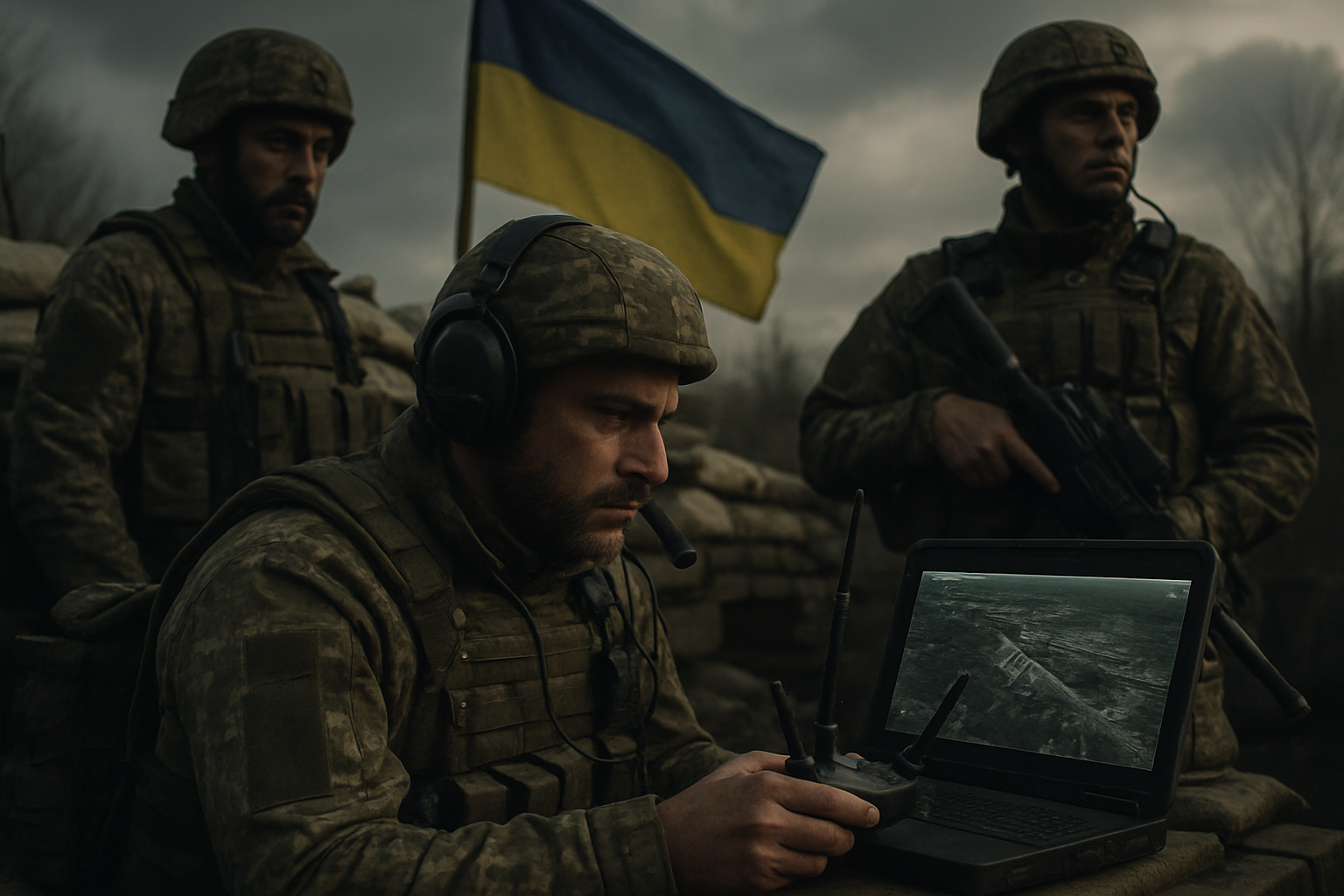
The Ukraine-Russia conflict continues to intensify with Russian forces launching over 1,354 strikes against Ukrainian civilian targets in 24 hours, while peace negotiations between Ukraine, Russia, and the United States remain indefinitely suspended due to the ongoing Iran crisis consuming American diplomatic resources.
According to reports from multiple fronts, the conflict has reached a new level of systematic escalation, with Russian drone forces operating at unprecedented scale while Ukrainian forces demonstrate enhanced counterattack capabilities despite the suspension of critical diplomatic frameworks established earlier this year.
Massive Russian Strike Campaign Targets Civilian Infrastructure
Russian forces carried out 1,354 separate attacks on the Donetsk region alone over the past 24 hours, damaging 30 civilian facilities according to Ukrainian military officials. The systematic targeting of civilian infrastructure continues what Ukrainian authorities describe as "energy terrorism" - a calculated strategy to pressure civilian populations during harsh winter conditions.
The scale of Russian operations has expanded dramatically, with military intelligence confirming that Russia now operates 101,000 troops dedicated specifically to drone operations - the largest unmanned force in modern warfare history. This represents a fundamental shift in military doctrine, with autonomous weapons systems playing an increasingly central role in the conflict.
European Union officials have confirmed that over 1,170 buildings in Kyiv still lack adequate heating from previous attacks, while Ukrainian nuclear plants have been forced to halt electricity production for the first time since the conflict began. These systematic attacks on energy infrastructure during extreme weather conditions constitute violations of the Geneva Conventions' civilian protection protocols.
Ukrainian Forces Strike Back with Precision Operations
Despite facing massive bombardment, Ukrainian forces have maintained their operational capabilities through sophisticated counterstrikes. The Security Service of Ukraine (SSU) successfully struck a Samara oil terminal in Russia's Samara region, causing a massive fire at the line-production dispatch station in Prosvet. This facility processes Urals crude oil for export, representing a significant blow to Russian energy revenues.
Ukrainian air defense forces demonstrated remarkable effectiveness, intercepting 116 of 143 Russian drones launched since the evening of April 20. Additionally, drone operations targeted railway infrastructure in Russia's Rostov region near military installations, successfully halting train traffic and disrupting supply lines to the front.
The Ukrainian military has evolved from primarily defensive operations to conducting sophisticated deep-strike campaigns that reach over 1,000 kilometers into Russian territory. These operations target critical military-industrial infrastructure while maintaining precision to avoid civilian casualties, contrasting sharply with Russian tactics.
Peace Process Derailed by Iran Crisis
The most significant diplomatic setback has been the indefinite suspension of trilateral peace talks between Ukraine, Russia, and the United States due to the Iran crisis consuming American foreign policy attention. This suspension has derailed momentum from historic February 2026 breakthroughs that included:
- A 314-prisoner exchange - the largest in five months
- Restoration of US-Russia military communications after a four-year suspension
- Geneva talks achieving "significant progress" on ceasefire monitoring
- First-time participation of European "Big 5" observers (Germany, France, Italy, UK, Poland)
The framework for these negotiations remains intact and could be reactivated when the Iran crisis permits, according to diplomatic sources. However, the fundamental territorial disagreements remain unchanged, with Russia demanding recognition of occupied eastern Ukrainian territories and Moscow venue for Putin-Zelensky talks, while Ukraine maintains its territorial integrity position.
Nuclear Governance Crisis Adds Urgency
The suspension of peace talks occurs against the backdrop of an unprecedented nuclear governance crisis. The New START treaty expired on February 5, 2026, marking the first time in over 50 years without US-Russia nuclear constraints. Both nations control 80% of global nuclear weapons, with Russia possessing 4,380 warheads and the United States 3,708.
UN Secretary-General António Guterres has described this as a "grave turning point," warning that nuclear risks are now at their highest levels in decades. The restored military communications between Washington and Moscow represent the only remaining formal diplomatic channel between the nuclear superpowers.
International Support Reveals European Divisions
International support for Ukraine has reached historic levels, with the European Union approving a €90 billion loan package - the largest single-nation assistance ever provided. However, this support has exposed significant divisions within Europe, as Slovakia, Czech Republic, and Hungary refused to participate in the financing, demonstrating the persistent challenges to unified Western policy.
Despite these divisions, military support continues expanding. The United Kingdom has revealed four operational maintenance, repair, and overhaul (MRO) facilities within Ukraine servicing Western-supplied equipment, with a fifth facility planned. This represents the first public acknowledgment of extensive military infrastructure on Ukrainian soil and signals long-term commitment beyond the current conflict.
Ukraine's Strategic Transformation
Perhaps most significantly, Ukraine has evolved from an aid recipient to a security provider on the global stage. Over 200 Ukrainian military specialists have been deployed to five Middle Eastern countries - the UAE, Qatar, Jordan, Bahrain, and Kuwait - sharing expertise in combating Iranian Shahed drones, the same weapons that have been devastating Ukrainian civilian infrastructure.
This transformation demonstrates Ukraine's growing influence as a security partner, leveraging hard-won battlefield experience to build strategic partnerships that could provide future diplomatic leverage when peace negotiations resume.
Humanitarian Crisis Deepens
The human toll continues to mount dramatically. Ukrainian President Volodymyr Zelensky has disclosed that 55,000 Ukrainian soldiers have been officially killed, with a "large number" missing. International estimates suggest actual casualties may be 2-3 times higher. Additionally, 17.8 million Ukrainians are currently accessing winter support programs due to systematic targeting of civilian infrastructure.
The systematic targeting of repair personnel represents another alarming escalation, with 15 workers from DTEK, Ukraine's largest energy company, killed while attempting to restore power infrastructure. These attacks on emergency services personnel constitute documented war crimes under international humanitarian law.
Global Implications and Strategic Stakes
The current suspension of peace talks carries implications far beyond Ukraine's borders. The stakes include the redefinition of European security architecture, international law enforcement credibility, and territorial sovereignty principles that will influence power competition for decades to come.
Success in eventual resumed talks could end Europe's deadliest war since World War II and provide a template for 21st-century conflict resolution. Failure, however, risks continued escalation with global implications for diplomatic solutions to territorial disputes worldwide.
Looking Forward
The timeline for resumed negotiations depends entirely on the resolution of the Iran crisis and broader Middle East stability. Military escalation continues with systematic civilian targeting while Ukraine maintains operational capabilities and expands international partnerships.
The test of whether diplomatic innovation can overcome military escalation will ultimately determine European security trajectory for decades. With the conflict approaching its fourth anniversary in February 2027, innovative solutions to territorial sovereignty challenges have never been more urgently needed, yet fundamental compromises remain absent from both sides.
As the international community grapples with managing simultaneous crises in an increasingly multipolar world, the Ukraine-Russia conflict serves as a critical template for whether diplomatic frameworks can be preserved and reactivated when conditions permit, or whether military solutions will continue to dominate 21st-century international relations.