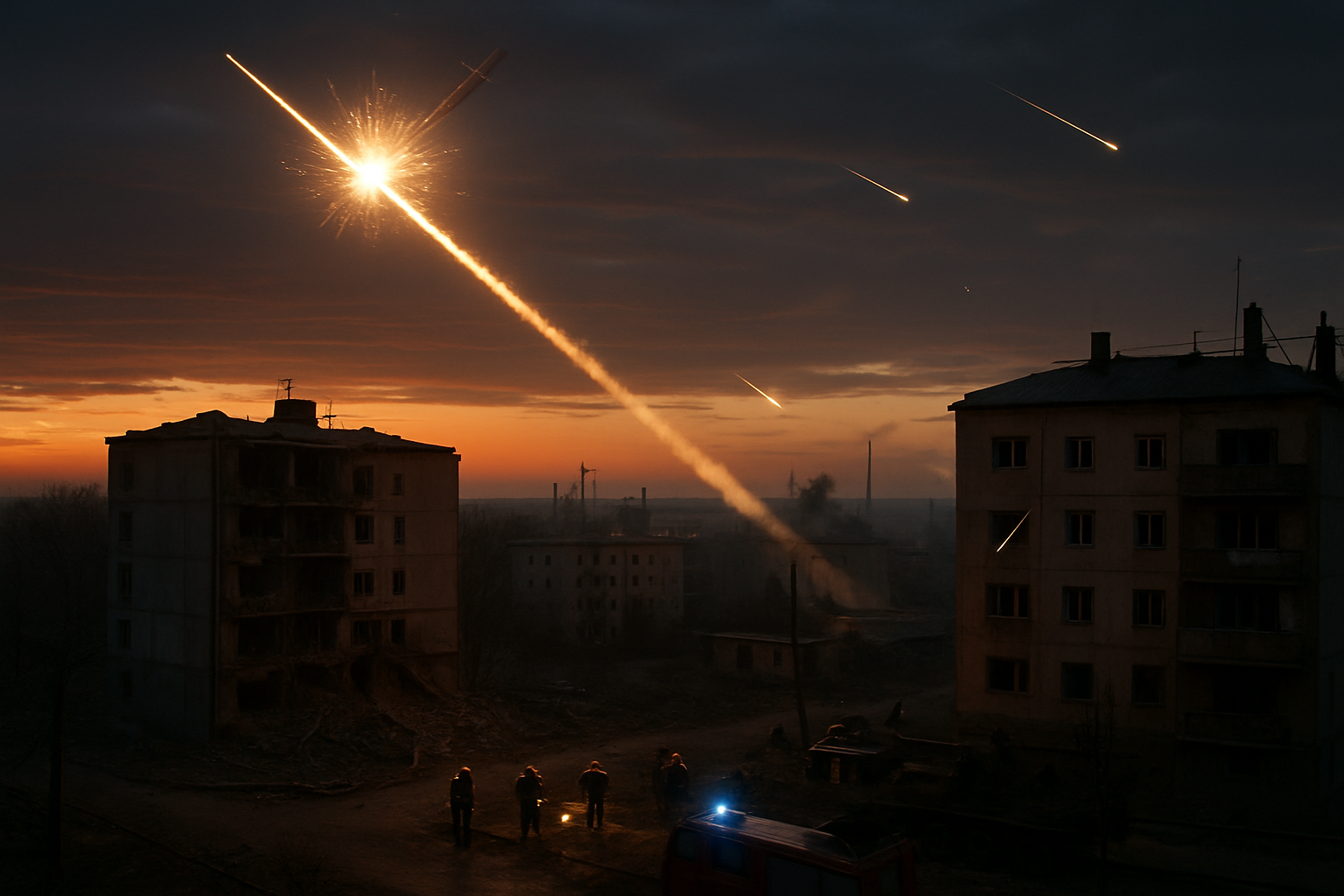
Russian drone strikes on Odesa overnight killed at least 13 civilians and wounded multiple others, including children, as Ukrainian forces successfully repelled 241 combat engagements across the front lines in the past 24 hours, marking one of the most intense periods of fighting in recent weeks.
The overnight assault on Ukraine's southern port city represents a continuation of Russia's systematic targeting of civilian infrastructure, with drones hitting residential buildings, a hotel, vehicles, and port facilities. According to preliminary reports from the Odesa regional military administration, the death toll reached 13 with several children among the injured, while infrastructure critical to Ukraine's grain exports sustained significant damage.
Massive Frontline Operations Intensify
Ukrainian Air Defense Forces demonstrated remarkable effectiveness by intercepting 74 of 94 Russian drones launched since the evening of April 26, achieving a 79% success rate despite the massive scale of the assault. The remaining 20 drones that penetrated defenses caused substantial civilian casualties and infrastructure damage across multiple regions.
The intensity of ground combat reached unprecedented levels with 241 combat engagements recorded on front lines, with Russian forces proving most active in the Pokrovsk sector where Ukrainian defenders successfully repelled 55 separate assaults. Military analysts describe this as one of the highest daily battle counts since the conflict began, indicating a significant escalation in Russian military operations.
Civilian Casualties Mount
Beyond the Odesa attack, Russian forces launched approximately 150 strikes on the Sumy region over 24 hours, resulting in the deaths of two civilians. The systematic targeting of civilian areas continues to violate international humanitarian law, with attacks affecting residential buildings, critical infrastructure, and emergency services across multiple regions.
"The pattern of attacks on civilian infrastructure, particularly energy facilities and residential areas, constitutes a clear violation of the Geneva Conventions,"
— International humanitarian law expert
Ukrainian officials report that Russian forces have also struck a merchant ship in Odesa port, further damaging Ukraine's crucial grain export capabilities that feed millions worldwide. The targeting of port infrastructure represents a direct assault on global food security during a period of international crisis.
Peace Negotiations Remain Stalled
Trilateral peace talks between Ukraine, Russia, and the United States remain indefinitely suspended due to the ongoing Iran crisis consuming American foreign policy attention. The suspension has derailed momentum from significant February 2026 breakthroughs that included a 314-prisoner exchange—the largest in five months—and the restoration of US-Russia military communications after a four-year suspension.
The framework for future negotiations remains preserved, with prisoner exchange mechanisms and Pentagon-Moscow deconfliction protocols intact for reactivation when the Iranian situation permits renewed diplomatic focus. However, fundamental territorial disagreements persist, with Russia demanding recognition of occupied eastern Ukrainian territories while Ukraine maintains its territorial integrity position.
Military Technological Evolution
The conflict continues to showcase revolutionary developments in drone warfare, with Russia now operating 101,000 troops dedicated to drone operations—the largest unmanned force in modern warfare history. Ukrainian forces have responded with their own technological innovations, recently achieving the world's first successful all-robot assault operation using exclusively unmanned systems.
Intelligence reports indicate that over the past 24 hours alone, Russian military losses reached 810 personnel, bringing total combat casualties since February 24, 2022, to approximately 1,326,460 according to Ukrainian military sources. The unsustainable human cost reflects the intensity of current operations.
International Support and Divisions
The European Union's historic €90 billion loan package—the largest single-nation assistance ever—continues despite growing divisions within the bloc. Slovakia, Czech Republic, and Hungary have refused participation, exposing persistent rifts in European unity regarding Ukraine support levels.
Meanwhile, Ukraine's strategic transformation from aid recipient to security provider accelerates, with over 200 military specialists now deployed across five Middle Eastern countries (UAE, Qatar, Jordan, Bahrain, Kuwait) sharing expertise in combating Iranian Shahed drones—the same weapons being used against Ukrainian cities.
Nuclear Governance Crisis Context
The ongoing conflict occurs against the backdrop of an unprecedented nuclear governance crisis following the February 5, 2026 expiration of the New START treaty—the first time in over 50 years without US-Russia nuclear constraints. Both superpowers control 80% of global nuclear weapons, with UN Secretary-General António Guterres warning of a "grave turning point" where nuclear risks are at their "highest in decades."
Energy Infrastructure Under Attack
Russian forces continue their systematic "energy terrorism" campaign, with over 1,170 Kyiv buildings still lacking adequate heating from previous attacks. Ukrainian nuclear plants have been forced to halt electricity production for the first time in the conflict, creating unprecedented risks to civilian populations during extreme weather conditions.
The targeting of energy workers has resulted in documented war crimes, with 15 DTEK energy company employees killed while attempting to restore power to affected areas. This systematic targeting of repair personnel represents a calculated strategy to maximize civilian suffering.
Global Strategic Implications
The suspension of peace talks due to the Iran crisis demonstrates the interconnected nature of 21st-century conflicts and the challenges facing international crisis management in a multipolar world. The stakes extend far beyond Ukraine's borders, encompassing European security architecture redefinition, international law enforcement credibility, and territorial sovereignty principles that will shape conflict resolution approaches for decades.
Success in eventual resumed negotiations could provide a template for ending Europe's deadliest war since World War II, while failure risks continued escalation with global implications for diplomatic solutions to territorial disputes worldwide.
Looking Forward
The timeline for resuming negotiations remains uncertain, dependent on resolving the Iranian crisis that has consumed American diplomatic attention since March 2026. Military escalation continues with systematic civilian targeting while Ukraine expands international partnerships and maintains operational capabilities across multiple fronts.
As the conflict enters its fifth year, the international community faces a critical test of whether diplomatic innovation can ultimately overcome military approaches in determining European security trajectories with implications extending far beyond the current battlefield to affect conflict prevention mechanisms and territorial sovereignty enforcement in the 21st century.