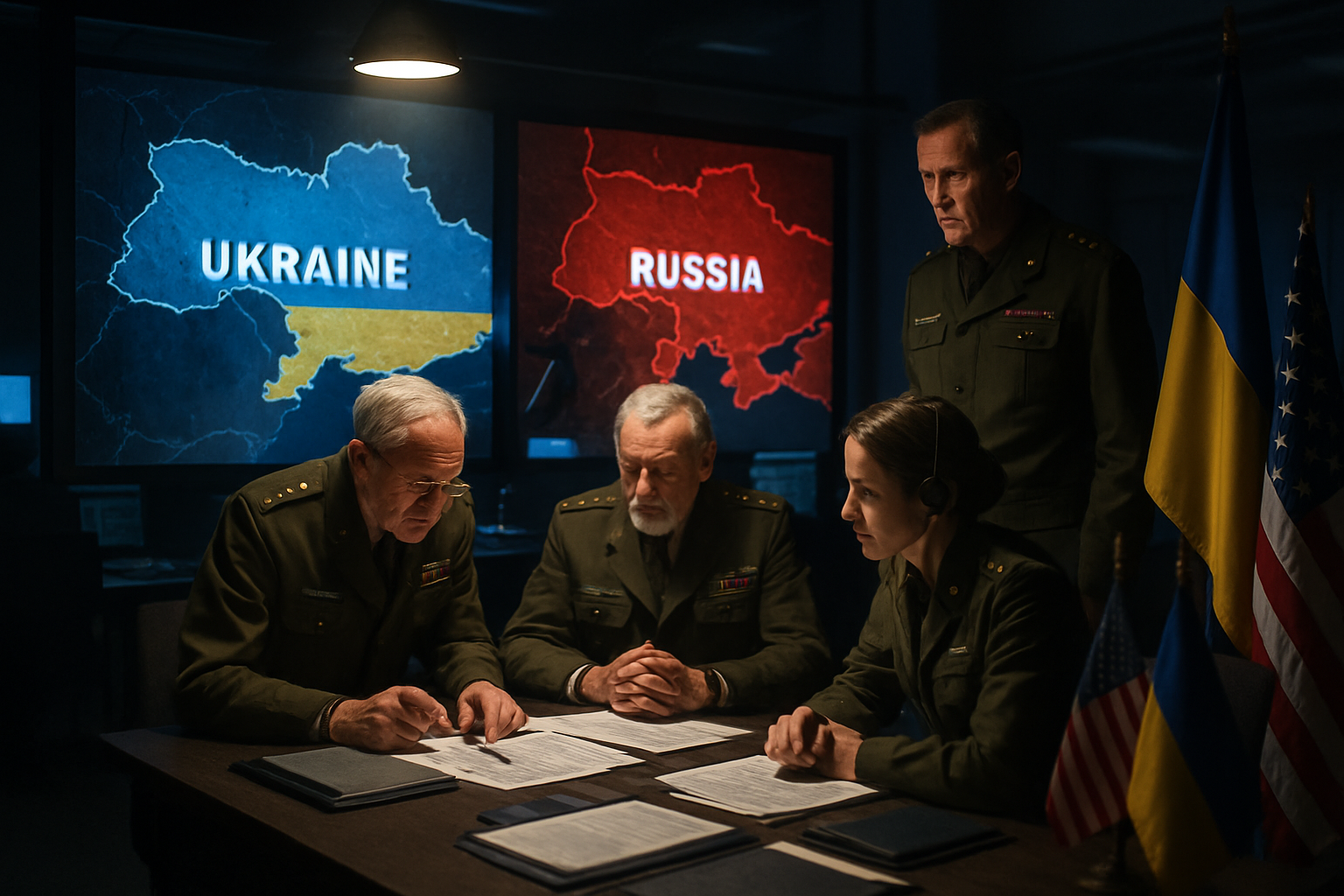
Ukrainian forces struck a Russian ballistic missile production facility in the remote Udmurtia region on Saturday, marking one of their deepest penetration attacks of the conflict, as international diplomatic efforts through Geneva peace talks show mixed results amid continuing military escalation.
According to the Ukrainian General Staff, the strike targeted a plant in Votkinsk that manufactures Iskander short-range ballistic missiles and intercontinental Topol-M systems, located approximately 1,400 kilometers from the Ukrainian border and east of Moscow. The attack utilized domestically produced Flamingo cruise missiles and caused fires at the facility, Ukrainian military officials confirmed.
The strike represents a significant escalation in Ukraine's long-range capabilities, demonstrating continued operational reach despite nearly four years of conflict. Russian officials, including Udmurtia region governor Alexander Brechalov, acknowledged the attack occurred overnight using drones, resulting in "damage and injuries" though specific casualty figures were not disclosed.
Military Operations Intensify Across Multiple Fronts
The Udmurtia strike was part of broader Ukrainian military operations targeting Russian infrastructure and military assets. Ukrainian forces also hit an oil depot in occupied Crimea and struck two Russian border guard ships along with two Be-12 aircraft, according to defense officials.
However, Russian forces continue their own offensive operations, with 175 combat clashes recorded along the front lines. In the Kharkiv region, five civilians were injured in a Russian drone strike on the Lozova district, while continued Russian pressure was reported near Riznykivka and Holubivka in the Donetsk region.
The Ukrainian Defense Forces maintain they are "holding designated positions and maintaining control" despite increased Russian pressure in key sectors. In Dnipropetrovsk region, Russian attacks left a 77-year-old man injured and damaged seven homes, highlighting the continued targeting of civilian areas.
Geneva Peace Talks Show Mixed Progress
The latest military escalation occurs against the backdrop of diplomatic progress through Geneva peace talks held February 17-18. US Special Envoy Steve Witkoff reported "significant progress" on ceasefire monitoring mechanisms, though fundamental territorial disputes remain unresolved.
Building on the breakthrough Abu Dhabi talks that achieved a historic 314-prisoner exchange (the first in five months) and restored US-Russia military communications after a four-year suspension, the Geneva negotiations included European "Big 5" observers (Germany, France, Italy, UK, Poland) for the first time in the trilateral format.
The talks, led by Ukrainian Defense Minister Rustem Umerov, Russian advisor Vladimir Medinsky, and US mediation under Steve Witkoff, represent the most significant diplomatic effort to end the nearly four-year conflict. However, eastern Ukrainian territories under Russian control remain the fundamental sticking point.
"Russia is trying to drag out negotiations that could already have reached the final stage."
— President Volodymyr Zelensky, Ukrainian President
Nuclear Crisis Adds Urgency to Diplomatic Efforts
The diplomatic and military developments unfold against the backdrop of an unprecedented nuclear governance crisis. The New START treaty between the US and Russia expired February 5, 2026 – the first time in over 50 years without nuclear constraints between the two superpowers who control 80% of the world's nuclear weapons.
UN Secretary-General António Guterres has called this a "grave turning point" with nuclear risks now at their "highest in decades." The restoration of US-Russia military communications through the Geneva process represents the only remaining formal diplomatic channel between the nuclear superpowers.
This nuclear governance vacuum adds extraordinary urgency to finding diplomatic solutions, as both nations are now technically free to expand their arsenals without bilateral constraints.
Systematic Civilian Targeting Continues
Despite diplomatic progress, Russian forces continue systematic targeting of civilian infrastructure in what Ukrainian officials term "energy terrorism." The strategy has left over 1,170 buildings in Kyiv without heating during temperatures as low as minus-30°C.
Tragic civilian casualties continue to mount, with recent attacks in Kostiantynivka killing a local woman through artillery shelling. The systematic targeting of civilian infrastructure during extreme winter conditions represents violations of the Geneva Conventions' protections for civilians.
Ukrainian First Lady Olena Zelenska has disclosed that 684 children have been killed since the full-scale invasion began, while President Zelensky previously revealed that 55,000 Ukrainian soldiers have been officially confirmed killed, with a "large number" still classified as missing in action.
International Support Remains Historic
International support for Ukraine continues at unprecedented levels, with the EU approving a historic €90 billion loan package – the largest single-nation assistance ever provided by the European Union. However, Slovakia, Czech Republic, and Hungary refused participation, showing persistent European divisions.
Additional military aid includes Sweden and Denmark's €246 million air defense package featuring Tridon Mk2 systems, and Germany's provision of 35 Patriot missiles. Over 17.8 million Ukrainians are currently accessing winter support programs, demonstrating the massive humanitarian response to the crisis.
June 2026 Deadline Looms
The Trump administration has established a June 2026 deadline for comprehensive peace negotiations, with talks potentially moving to Washington venue, suggesting possible presidential-level engagement. This evolution from Abu Dhabi to Geneva to Washington represents a deliberate diplomatic escalation strategy.
The coming phase will be critical in determining whether sustained diplomatic innovation can overcome military escalation in what has become Europe's deadliest conflict since World War II. The stakes extend beyond Europe, affecting conflict prevention mechanisms, international law enforcement, and territorial sovereignty principles that will shape 21st-century power competition.
Strategic Assessment
The current phase represents the most significant diplomatic opportunity since the conflict began, with concrete humanitarian breakthroughs achieved despite continued military operations. The prisoner exchange framework and restoration of military communications demonstrate that structured diplomatic engagement can produce results even amid active conflict.
However, the fundamental challenge remains bridging Ukrainian demands for territorial integrity with Russian territorial gains and recognition demands. Success could provide a template for 21st-century conflict resolution, while failure may intensify operations globally and undermine diplomatic credibility for territorial disputes worldwide.
The humanitarian-military paradox continues, with diplomatic progress occurring alongside systematic civilian targeting, raising questions about genuine peace commitment versus humanitarian pressure tactics. The international community watches as diplomatic innovation confronts traditional limitations in resolving complex territorial sovereignty challenges.
As the conflict approaches its fourth anniversary, the coming weeks will determine whether the diplomatic momentum can translate into breakthrough territorial compromise solutions or whether continued military escalation will define the trajectory toward the critical June 2026 deadline.