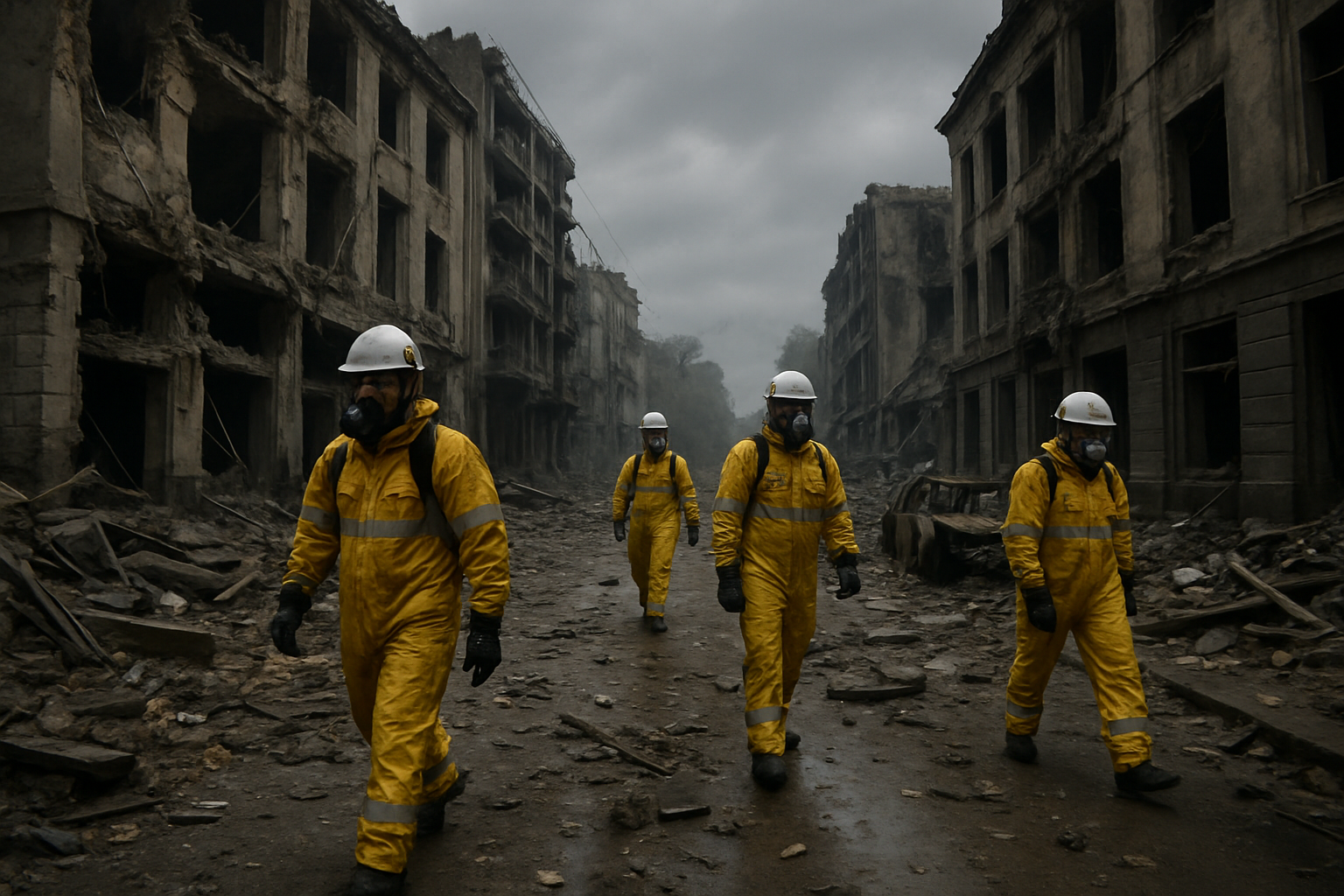
The ongoing Russian-Ukrainian conflict has witnessed a renewed surge of violence over the past 24 hours, with civilian casualties mounting on both sides as military exchanges continue to devastate infrastructure and residential areas across the region.
According to multiple international sources, Russian strikes across Ukraine have resulted in at least three civilian deaths, while Ukrainian forces conducted retaliatory operations that claimed the life of a child in Russian territory. The latest round of violence underscores the persistent humanitarian toll of the conflict that has now entered its third year.
Latest Casualty Reports and Infrastructure Damage
In southern Ukraine, the strategic port city of Odesa bore the brunt of Russian military action, with strikes killing one civilian and injuring 11 others, including a child. Regional military administration head Serhiy Lysak confirmed that the attacks primarily targeted a maternity hospital and residential areas, marking yet another instance of civilian infrastructure being struck during the ongoing hostilities.
Further north in the Dnipropetrovsk region, the industrial city of Kryvyi Rih experienced significant attacks that resulted in two civilian deaths and two additional injuries. Regional military official Oleksandr Ganzha reported that Russian forces specifically targeted industrial and energy infrastructure in the area, continuing a pattern of systematic strikes against Ukraine's critical infrastructure systems.
The violence was not confined to Ukrainian territory. In a tragic escalation, Ukrainian drone operations resulted in civilian casualties within Russian borders. In Yaroslavl, located north of Moscow and far from the traditional front lines, a Ukrainian drone struck a residential house, killing a child and seriously injuring both parents. Local Governor Mikhail Yevreyev confirmed the attack, highlighting how the conflict's reach has expanded well beyond the immediate combat zones.
Historical Context and Diplomatic Stalemate
These latest incidents occur against the backdrop of suspended peace negotiations that had shown promise earlier in 2026. The trilateral talks between Ukraine, Russia, and the United States, which achieved a historic prisoner exchange of 314 individuals in February and restored military communications between Washington and Moscow after a four-year suspension, have been indefinitely postponed due to the Iranian crisis consuming American foreign policy attention.
The diplomatic setback represents a significant blow to what many observers considered the most promising peace initiative since the conflict began. The February breakthrough had included the restoration of Pentagon-Moscow deconfliction protocols covering global operations and had been building toward potential presidential-level engagement scheduled for June 2026 in Washington.
President Volodymyr Zelensky had previously announced that there were "no necessary signals for trilateral meetings" until the security situation allows, directly attributing the suspension to Iran-related developments that have redirected American diplomatic priorities toward the Middle East.
Military Developments and Strategic Implications
The current escalation comes as military analysts report a significant acceleration in Russian territorial gains. Intelligence sources indicate that Russian forces captured approximately 481 square kilometers in January 2026, compared to 260 square kilometers in December 2025—representing an 85% increase that marks the fastest territorial expansion in recent months.
Ukrainian forces have demonstrated continued operational capabilities through sustained long-range strike operations against Russian infrastructure and military targets. Recent attacks have targeted critical industrial facilities within Russian territory, including a ballistic missile manufacturing facility in the Bryansk region that supplies electronic components and semiconductors essential to Russian weapons systems.
The systematic targeting of civilian infrastructure, particularly energy systems during winter conditions, has been characterized by international observers as "energy terrorism." Over 1,170 buildings in Kyiv alone remain without adequate heating, while Ukrainian nuclear facilities have been forced to halt electricity production for the first time since the conflict began—a development that has raised unprecedented safety concerns among international atomic energy officials.
International Response and Support Mechanisms
The international community has maintained unprecedented levels of support for Ukraine despite the diplomatic stalemate. The European Union's historic €90 billion loan package represents the largest single-nation assistance effort in EU history, though divisions remain evident as Slovakia, Czech Republic, and Hungary have refused participation in the financing mechanism.
Additional military support continues to flow, with Sweden and Denmark committing €246 million for advanced air defense systems, while Germany has delivered 35 Patriot missiles to strengthen Ukrainian defensive capabilities. Over 17.8 million Ukrainians are currently accessing winter support programs, highlighting the massive humanitarian scope of the crisis.
In a strategic pivot that demonstrates Ukraine's evolution from aid recipient to security provider, Ukrainian military experts are now deploying to Middle Eastern countries including the UAE, Qatar, Jordan, Bahrain, and Kuwait to share expertise in combating Iranian Shahed drone attacks—the same weapons systems that have been used extensively against Ukrainian infrastructure.
Nuclear Governance Crisis and Global Implications
The current escalation occurs within the context of an unprecedented nuclear governance crisis. The New START treaty between the United States and Russia expired on February 5, 2026, marking the first time in over 50 years that the two superpowers—who control 80% of global nuclear weapons—operate without bilateral nuclear constraints.
UN Secretary-General António Guterres has described this development as a "grave turning point," warning that nuclear risks have reached their highest levels in decades. The only remaining formal diplomatic channel between the nuclear superpowers is the restored military communications that emerged from the February peace talks breakthrough.
Humanitarian Crisis and International Law Concerns
The systematic targeting of civilian infrastructure during extreme winter conditions has been documented by international human rights organizations as violations of the Geneva Conventions' civilian protection provisions. The pattern includes deliberate attacks on energy infrastructure, emergency services personnel, and residential areas during life-threatening weather conditions.
Ukrainian officials have disclosed that 55,000 soldiers have been officially killed since the conflict began, with "large numbers" missing in action. International estimates suggest actual casualty figures may be two to three times higher when accounting for undocumented deaths and missing personnel.
The humanitarian toll extends beyond military casualties, with systematic civilian targeting documented across multiple regions. Recent attacks have included strikes on passenger trains, emergency service facilities, and repair personnel attempting to restore critical infrastructure—actions that constitute war crimes under international humanitarian law.
Regional Security Architecture and Future Trajectory
The suspension of peace talks due to Iran-related concerns demonstrates the interconnected nature of regional conflicts in the current multipolar security environment. The inability to maintain diplomatic momentum on Europe's most significant security challenge since the Cold War while managing simultaneous crises elsewhere highlights the limitations of current international crisis management systems.
European security architecture faces fundamental questions about long-term stability and collective defense mechanisms. The conflict has accelerated discussions about European strategic autonomy, with unprecedented consideration of expanding France's nuclear deterrent beyond national scope for the first time since the Cold War ended.
Strategic Assessment and Coming Phase
The current phase represents a critical juncture where the most significant diplomatic opportunity since the invasion began has been suspended by competing regional priorities. The framework achievements from February 2026—including prisoner exchange mechanisms, structured negotiation formats, and restored military communications—remain intact and could be reactivated when favorable conditions return.
However, the fundamental territorial disputes that have defined the conflict remain unchanged. Eastern Ukrainian territories under Russian control continue to represent the core disagreement, with Russia demanding territorial recognition and Ukraine maintaining its territorial integrity position while seeking long-term security guarantees.
The success or failure of eventual resumed talks carries global implications for 21st-century territorial dispute resolution templates. The stakes extend beyond Ukraine and Russia to encompass European security architecture redefinition, international law enforcement credibility, and territorial sovereignty principles that will influence power competition dynamics for decades to come.
As military escalation continues with systematic civilian targeting while Ukraine expands its international partnerships and maintains operational capabilities, the coming phase remains uncertain. The timeline for renewed diplomatic engagement depends on the resolution of the Iranian crisis and broader Middle East stability, leaving one of Europe's most critical security challenges in a state of suspended animation while civilian casualties mount on both sides of the conflict.