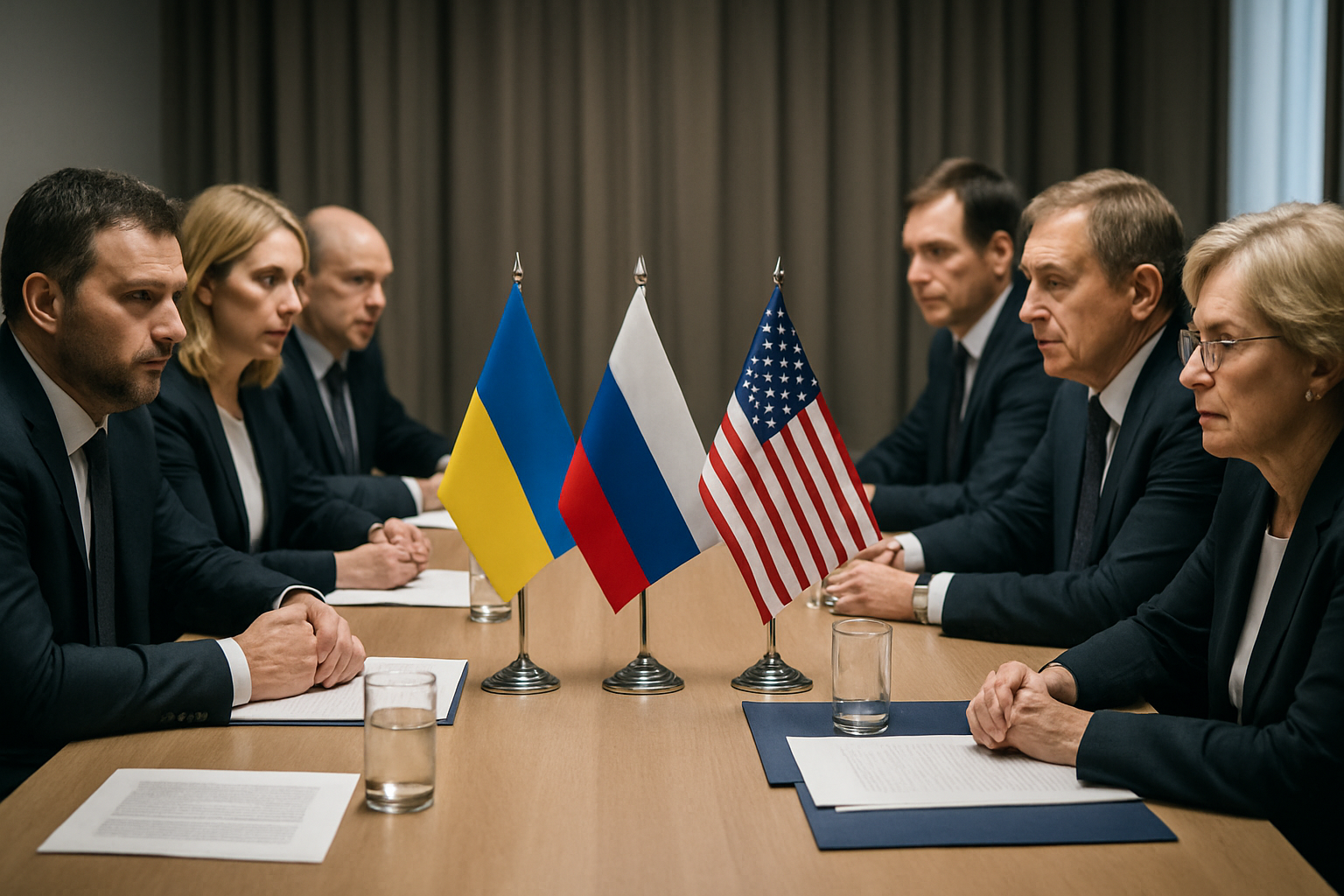
Ukrainian President Volodymyr Zelensky announced that Russian forces have suffered approximately 8,000 casualties in the past week alone, as diplomatic talks between Ukraine and United States representatives concluded their second day in Florida on Sunday.
The negotiations, led by US Special Envoy Steve Witkoff and President Trump's son-in-law Jared Kushner, mark a significant evolution in diplomatic efforts to end the nearly four-year conflict. Notably absent from these talks were Russian representatives, who were originally expected to participate in negotiations initially planned for Abu Dhabi.
Diplomatic Momentum Despite Setbacks
The current talks build on unprecedented diplomatic breakthroughs achieved in February 2026, including a historic 314-prisoner exchange—the first in five months—and the restoration of US-Russia military communications after a four-year suspension. These achievements, secured through previous trilateral negotiations in Abu Dhabi and Geneva, established crucial frameworks for ongoing diplomatic engagement.
"It is clear that the attention of the American side is focused on the war in Iran," Zelensky noted following the Florida meetings, acknowledging how Middle East tensions have complicated the broader peace process.
"There are indications that prisoner exchanges may continue."
— President Volodymyr Zelensky
Military Casualties and Battlefield Dynamics
According to Italian media reports citing Zelensky's statements, Moscow has initiated a "purge of commanders" alongside suffering the reported 8,000 casualties in recent fighting. These figures highlight the ongoing intensity of combat operations even as diplomatic efforts continue.
The conflict has taken an enormous toll on both sides. Previous Ukrainian disclosures revealed 55,000 Ukrainian soldiers officially killed, with a "large number" still missing in action. International research estimates suggest actual casualties could be 2-3 times higher when including undocumented losses.
NATO Delegation Visits Ukraine
In a historic first, a NATO delegation led by Supreme Allied Commander Transformation, French Admiral Pierre Vandier, visited Ukraine. This marks the highest-level NATO visit since Russia's invasion began, demonstrating continued Western military support despite diplomatic uncertainties.
The visit coincides with sustained international support, including the EU's historic €90 billion loan package—the largest single-nation assistance ever provided—though Slovakia, Czech Republic, and Hungary have refused participation, highlighting divisions within European support.
Nuclear Crisis Context
These diplomatic developments unfold against the backdrop of an unprecedented nuclear governance crisis. The New START treaty between the US and Russia expired on February 5, 2026, marking the first time in over 50 years without bilateral nuclear constraints between the superpowers, who control 80% of global nuclear weapons.
UN Secretary-General António Guterres has described this as a "grave turning point," with nuclear risks now at their "highest in decades." The restored military communications channel remains the only formal diplomatic mechanism between the nuclear superpowers.
Territorial Disputes Remain Central Challenge
Despite humanitarian breakthroughs in prisoner exchanges and communication restoration, fundamental territorial disputes remain unresolved. Eastern Ukrainian territories under Russian control continue to represent the core disagreement preventing broader peace agreement.
Russia demands recognition of territorial gains and insists that any Putin-Zelensky talks must occur in Moscow. Ukraine maintains its territorial integrity position while seeking comprehensive long-term security guarantees from Western allies.
Russian territorial gains have accelerated dramatically, capturing 481 square kilometers in January 2026 compared to 260 square kilometers in December 2025—an 85% increase representing the fastest territorial expansion in months.
Systematic Civilian Targeting Continues
Even as diplomatic talks proceed, systematic targeting of civilian infrastructure continues. The so-called "energy terrorism" strategy has left over 1,170 buildings in Kyiv without adequate heating during sub-zero winter temperatures. Ukrainian nuclear plants have been forced to halt electricity production for the first time in the conflict.
These attacks represent clear violations of Geneva Conventions protecting civilian populations, with documented patterns including targeting of repair personnel and emergency services—calculated humanitarian pressure tactics during ongoing negotiations.
Iran Crisis Impact on Peace Process
The current Florida talks represent a scaled-back version of broader trilateral negotiations that have been indefinitely suspended due to the Iran crisis. President Zelensky confirmed that there are currently "no necessary signals for trilateral meetings" until the Middle East security situation allows.
This development has forced Ukraine to pivot strategically, with Ukrainian military experts now deploying to UAE, Qatar, Jordan, Bahrain, and Kuwait to combat Iranian Shahed drones—the same weapons devastating Ukrainian infrastructure. This evolution from aid recipient to security provider demonstrates Ukraine's adaptation to changing geopolitical realities.
Trump Administration's June 2026 Deadline
The Trump administration has established a June 2026 deadline for comprehensive peace negotiations, with potential presidential-level engagement in Washington. This timeline represents a deliberate diplomatic escalation from the Abu Dhabi-Geneva framework toward the highest levels of US involvement.
However, the Iranian crisis has created uncertainty about this timeline, as competing Middle East priorities may further delay the most significant diplomatic opportunity since the invasion began.
European Security Architecture at Stake
The stakes of these diplomatic efforts extend far beyond Ukraine's borders. Success could provide a template for 21st-century conflict resolution and end Europe's deadliest war since World War II. Failure may intensify military operations globally and undermine diplomatic credibility for territorial disputes worldwide.
The Munich Security Conference's theme of "Era of Disruptive Politics" reflected the most sobering assessment in the conference's 62-year history, with German Chancellor Merz declaring that the "post-war order no longer exists."
Humanitarian-Military Paradox
The current situation exemplifies the complex paradox of modern conflict resolution: concrete humanitarian breakthroughs achieved amid continued military escalation. Prisoner exchanges and communication restoration demonstrate that structured diplomatic engagement can produce results even during active combat operations.
Over 17.8 million Ukrainians continue to access winter support programs, highlighting the massive humanitarian scope of the conflict's impact on civilian populations.
Looking Forward
As Ukrainian negotiators prepare for continued engagement with US officials, the preserved framework from previous breakthrough negotiations—prisoner exchange mechanisms, structured negotiation formats, and Pentagon-Moscow deconfliction protocols—remains intact for reactivation when conditions permit.
The success or failure of eventual resumed trilateral talks carries global implications for territorial dispute resolution innovation versus continued military approaches, ultimately determining European security redefinition and international sovereignty enforcement principles for decades to come.
The coming phase remains decisive: whether diplomatic innovation can bridge fundamental territorial positions or continued military escalation will determine the trajectory of not only this conflict but conflict resolution mechanisms worldwide.