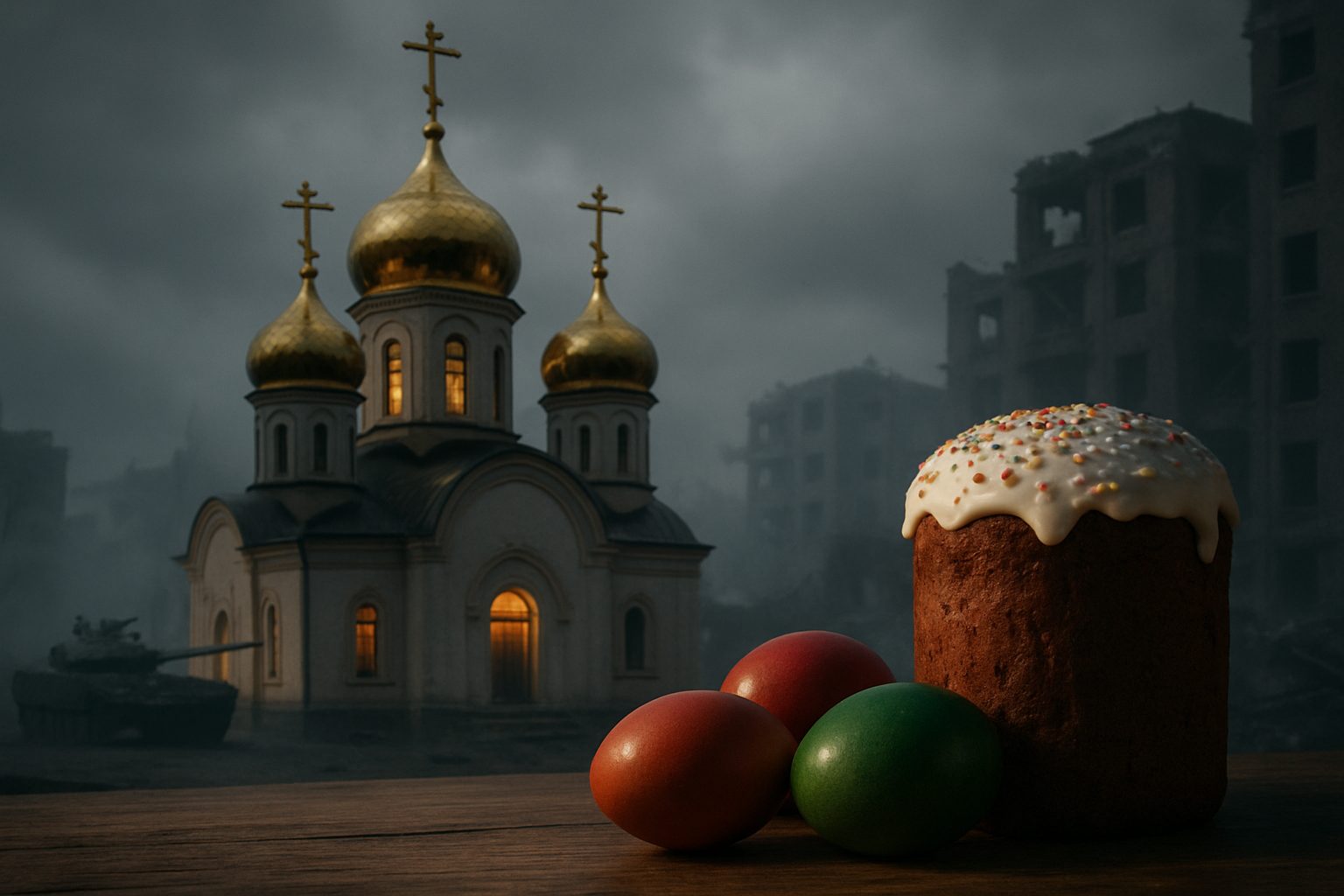
Ukraine's armed forces reported 469 violations of the Orthodox Easter ceasefire by Russian forces during the 36-hour religious truce that began Saturday, marking yet another failure of humanitarian pauses in the nearly four-year conflict that has devastated both nations.
The ceasefire, which ran from 4:00 PM Moscow time on Saturday April 11 until midnight Sunday April 12, 2026, was declared by Russian President Vladimir Putin to honor Orthodox Easter weekend. Ukrainian President Volodymyr Zelensky had confirmed Ukraine would respect the temporary truce, stating that "people need Easter without threats and a real move towards peace."
Immediate Violations Despite Religious Significance
Even before the official ceasefire began, Russian drone strikes killed at least two people in the Ukrainian port city of Odesa during overnight attacks, according to local authorities. Ukrainian officials documented continued Russian military activity throughout the sacred period, including air strikes, drone attacks, and artillery bombardments across multiple regions.
Russia, meanwhile, accused Ukraine of its own ceasefire violations. Russian regional officials reported that five Russians, including a child, were injured in Ukrainian attacks in the Kursk and Belgorod regions. Governor Alexander Hinshtein of Kursk region claimed a Ukrainian drone attacked a gas station in the city of Lgov, wounding three people including a one-year-old child.
Context of Failed Diplomatic Efforts
The violated Easter truce represents another setback for peace efforts in a conflict that has seen the most significant diplomatic opportunity since the invasion suspended indefinitely. Trilateral peace talks between Ukraine, Russia, and the United States remain stalled due to the Iran crisis consuming American foreign policy attention since March 2026.
February 2026 had witnessed unprecedented diplomatic breakthroughs, including a historic 314-prisoner exchange and the restoration of US-Russia military communications after a four-year suspension. Geneva talks in February achieved "significant progress" on ceasefire monitoring mechanisms, with European "Big 5" observers participating for the first time.
"The ceasefire is not being respected by the Russian side. Russia has committed 469 violations of the ceasefire that came into force on Saturday afternoon."
— Ukrainian General Staff, Facebook statement
Broader Military Escalation Continues
The Easter violations occurred against a backdrop of accelerating military operations. Russian territorial gains reached 481 square kilometers in January 2026 versus 260 square kilometers in December 2025, representing an 85% increase in the fastest monthly expansion. Russian forces have expanded their unmanned capabilities to 101,000 troops by April 2026, creating the largest dedicated drone force in modern warfare.
Ukraine has disclosed that 55,000 soldiers have been officially killed, with a "large number" missing in action. International estimates suggest actual casualties may be two to three times higher. The systematic targeting of civilian infrastructure has continued throughout the conflict, with energy terrorism leaving over 1,170 Kyiv buildings with inadequate heating during harsh winter conditions.
International Response and Nuclear Context
The failed ceasefire comes as the international community grapples with an unprecedented nuclear governance crisis. The New START treaty between the United States and Russia expired on February 5, 2026, marking the first time in over 50 years without nuclear constraints between the superpowers who control 80% of global nuclear weapons.
Despite the suspended peace talks, international support for Ukraine remains substantial. The European Union has provided a historic €90 billion loan package, the largest single-nation assistance ever, though Slovakia, Czech Republic, and Hungary refused participation. Additional support includes Sweden-Denmark's €246 million air defense systems and Germany's provision of 35 Patriot missiles.
Religious Significance Overshadowed by Conflict
Orthodox Easter holds deep spiritual significance for over 500 million Orthodox Christians worldwide, representing shared religious and cultural traditions that transcend political boundaries. The failure to maintain even a brief humanitarian pause during this holy period highlights the entrenched nature of the conflict and the challenges facing any future peace initiatives.
Zelensky had challenged Russia to extend the ceasefire beyond Easter as a "test of genuine peace commitment," but Moscow was unlikely to grant a longer ceasefire, citing concerns that Ukraine could use such pauses to regroup and build fortifications.
Strategic Implications for Future Peace Efforts
The collapsed Easter ceasefire underscores the fundamental challenges facing diplomatic resolution of the conflict. Eastern Ukrainian territories under Russian control remain the primary sticking point, with Russia demanding recognition of its territorial gains while Ukraine maintains its position on territorial integrity.
Ukraine has undergone a strategic transformation from aid recipient to security provider, deploying over 200 military specialists to UAE, Qatar, Jordan, Bahrain, and Kuwait to combat Iranian Shahed drones—the same weapons being used against Ukrainian infrastructure. This evolution has created new strategic partnerships that may provide Ukraine with additional diplomatic leverage when peace negotiations eventually resume.
"Ukraine will respond 'blow for blow' to any violation of the truce."
— President Volodymyr Zelensky, prior to ceasefire
Looking Ahead
The framework for peace talks remains preserved despite the current suspension. The prisoner exchange mechanisms, Pentagon-Moscow deconfliction protocols covering Syria, Arctic, and Africa operations, and the structured negotiation format pioneered in Abu Dhabi can be reactivated when the Iran crisis permits favorable conditions to return.
The stakes of eventual resumed talks carry global implications for 21st-century territorial dispute resolution templates. Success could end Europe's deadliest war since World War II and provide a conflict resolution model for future disputes. Failure risks continued escalation with worldwide implications for diplomatic solutions to territorial conflicts.
As both sides trade accusations over Easter ceasefire violations, the international community remains focused on whether diplomatic innovation can ultimately overcome military escalation in determining European security architecture for decades to come. The test of whether sustained diplomatic engagement can produce breakthrough solutions versus continued military deadlock will define the trajectory of this conflict and set precedents for international conflict resolution in the modern era.