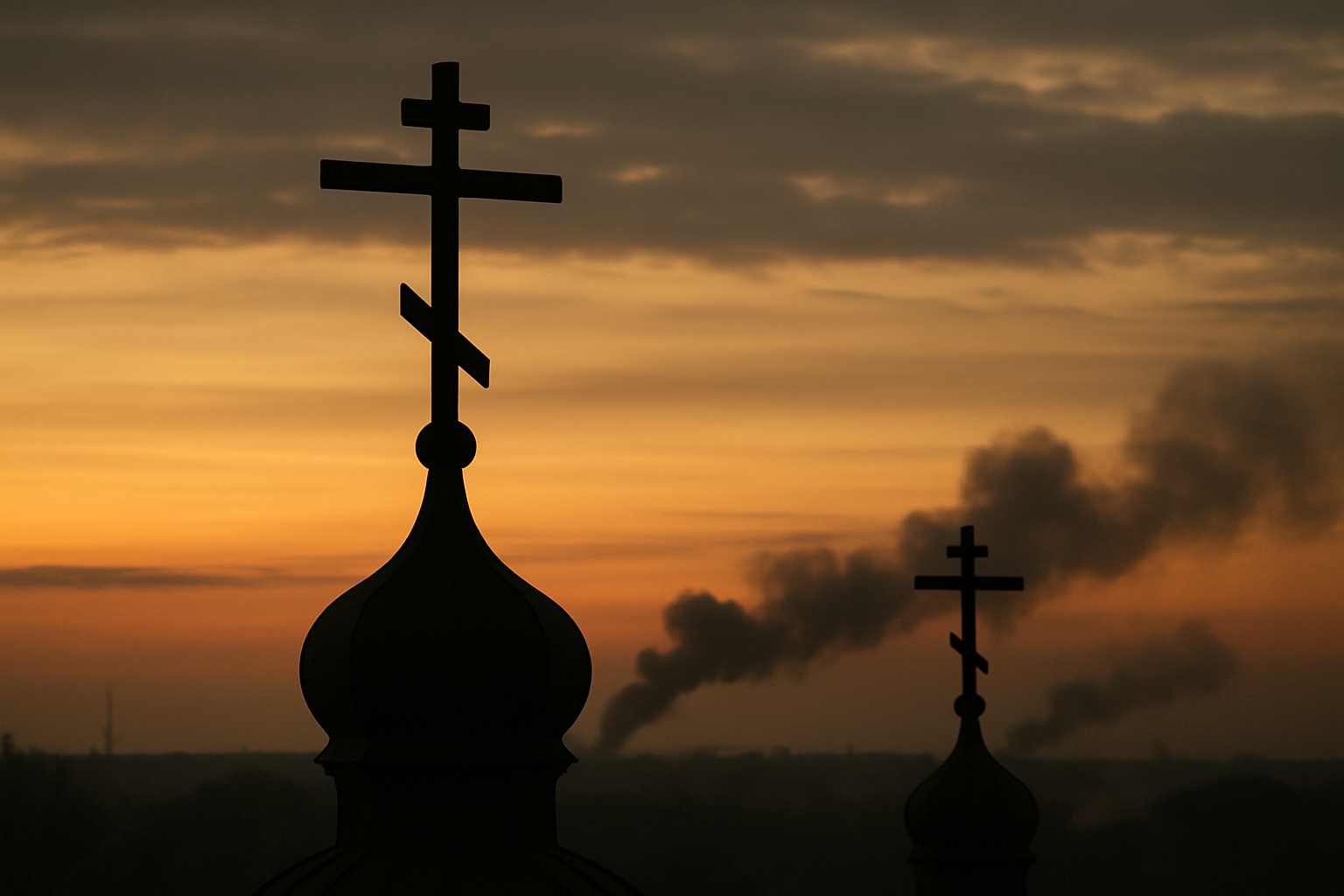
The temporary Orthodox Easter ceasefire between Russia and Ukraine expired on Monday afternoon amid widespread reports of violations from both sides, marking yet another failed attempt at a humanitarian pause during the ongoing four-year conflict.
The 32-hour truce, which began at 4 PM Moscow time on Saturday and ended at midnight Sunday, was declared by Russian President Vladimir Putin following weeks of advocacy by Ukrainian President Volodymyr Zelensky. Despite the religious significance of Orthodox Easter for over 500 million Christians worldwide, the ceasefire was marked by continued military activity along the 1,200-kilometer front line.
Extensive Violations Reported by Both Sides
Ukrainian military sources reported a staggering 7,696 violations by Russian forces during the ceasefire period, with 91 combat clashes recorded across multiple sectors. The violations included continued drone operations, artillery strikes, and ground assaults that directly contradicted the humanitarian pause agreement.
Russia, for its part, accused Ukraine of conducting its own violations, citing attacks on civilian infrastructure and military positions during the supposed ceasefire. The mutual accusations highlight the deep entrenchment of the conflict and the challenges of implementing even temporary truces.
According to sources from both Bolivia's La Razón and France 24, the ceasefire saw a relative decrease in large-scale air and missile strikes, but ground-level hostilities continued with drones and artillery remaining active throughout the Orthodox Easter weekend.
Historical Context of Failed Easter Truces
This marks the fourth consecutive failed Orthodox Easter ceasefire since Russia's full-scale invasion began in February 2022. Previous attempts in 2023, 2024, and 2025 similarly collapsed within hours of implementation, establishing a troubling pattern where religious observances fail to provide even temporary respite from the conflict.
The failure is particularly significant given that Orthodox Easter represents one of the most sacred periods in the Eastern Christian calendar, observed by millions of believers in both Russia and Ukraine who share common religious and cultural traditions that historically transcended political boundaries.
Suspended Peace Talks Cast Shadow
The Easter ceasefire occurred against the backdrop of a major diplomatic crisis, with trilateral peace talks between Ukraine, Russia, and the United States indefinitely suspended due to the ongoing Iran crisis consuming American foreign policy attention.
The suspension represents a significant setback following unprecedented diplomatic breakthroughs in February 2026, including a historic 314-prisoner exchange—the largest in five months—and the restoration of US-Russia military communications after a four-year suspension. Geneva talks in February had achieved "significant progress" on ceasefire monitoring mechanisms, with European "Big 5" observers participating for the first time.
Trump administration officials had previously established a June 2026 deadline for comprehensive peace negotiations, potentially involving presidential-level engagement in Washington. However, competing priorities in the Middle East have effectively derailed this timeline, leaving the diplomatic framework intact but without a clear path forward.
Nuclear Governance Crisis Backdrop
The failed ceasefire unfolds against an unprecedented nuclear governance crisis. The New START treaty between the United States and Russia expired on February 5, 2026, marking the first time in over 50 years that the two nuclear superpowers operate without bilateral nuclear constraints.
With both nations controlling approximately 80% of global nuclear weapons—Russia possessing 4,380 warheads and the US 3,708—UN Secretary-General António Guterres has described the current situation as a "grave turning point" with nuclear risks at their "highest in decades."
Military Situation Continues to Deteriorate
Despite diplomatic efforts, the military situation on the ground continues to worsen. Russian territorial gains have accelerated dramatically, with forces capturing 481 square kilometers in January 2026 compared to 260 square kilometers in December 2025—representing an 85% increase and the fastest monthly expansion in recent periods.
Ukrainian forces have officially disclosed 55,000 soldiers killed since the conflict began, with a "large number" still classified as missing in action. International research estimates suggest actual military casualties could be two to three times higher when accounting for missing personnel and undocumented deaths.
The conflict has also seen systematic targeting of civilian infrastructure, particularly energy systems, leaving over 1,170 buildings in Kyiv without adequate heating during harsh winter conditions. These attacks have been characterized as "energy terrorism" and represent violations of the Geneva Conventions regarding civilian protections.
International Support Amid Divisions
Despite the diplomatic setbacks, international support for Ukraine remains substantial, though not without complications. The European Union has approved a historic €90 billion loan package—the largest single-nation assistance package ever—though Slovakia, Czech Republic, and Hungary refused to participate, exposing deep divisions within the bloc.
Ukraine has also undergone a strategic transformation from aid recipient to security provider, deploying over 200 military specialists to UAE, Qatar, Jordan, Bahrain, and Kuwait to combat Iranian Shahed drones—the same weapons being used against Ukrainian infrastructure. This evolution demonstrates Ukraine's growing role in global security partnerships.
Framework Preservation for Future Negotiations
While the current diplomatic crisis has suspended active negotiations, experts note that the achievements of February 2026 remain intact. The prisoner exchange mechanisms, structured negotiation formats, and Pentagon-Moscow deconfliction protocols covering Syria, Arctic, and Africa operations can be reactivated when conditions permit.
The UAE methodology—utilizing working groups organized by topic with joint position synchronization—has proven effective for achieving concrete humanitarian results even amid ongoing military operations. This framework provides a foundation for future engagement once the Iranian crisis allows for renewed focus on European security challenges.
Religious Significance Overshadowed
The failure of the Orthodox Easter ceasefire underscores how deeply entrenched the conflict has become, with military considerations overriding even the most sacred religious observances. For over 500 million Orthodox Christians worldwide, Easter represents the pinnacle of their faith, emphasizing themes of resurrection, forgiveness, and peace.
President Zelensky had challenged Russia to extend the ceasefire beyond the Easter period as a "test of genuine peace commitment," but Moscow showed no indication of willingness to grant longer pauses, citing concerns about allowing Ukrainian forces time to regroup and strengthen defensive positions.
Global Implications for Conflict Resolution
The failed Easter ceasefire and suspended peace talks carry implications far beyond the Ukraine-Russia conflict. The situation serves as a test case for 21st-century territorial dispute resolution, European security architecture redefinition, and international law enforcement credibility.
Success in eventual resumed negotiations could provide a template for ending Europe's deadliest war since World War II and offer innovative approaches to modern conflict resolution. Failure, however, risks intensifying military operations globally and undermining diplomatic credibility for territorial disputes worldwide.
Looking Ahead
The timeline for renewed negotiations remains uncertain and dependent on resolution of the Iran crisis and broader Middle East stability. Military escalation continues with systematic civilian targeting while Ukraine expands its international security partnerships, potentially creating new leverage for future diplomatic engagement.
The stakes remain maximum: the establishment of territorial sovereignty principles for the 21st century, the redefinition of European security architecture, and the credibility of international law enforcement mechanisms. Whether diplomatic innovation can ultimately overcome military escalation will determine the trajectory of European security for decades to come.
As both sides return to active military operations following the failed Easter ceasefire, the international community faces the sobering reality that even the most sacred religious observances cannot pause a conflict that has fundamentally reshaped European security and challenged the foundations of international law.