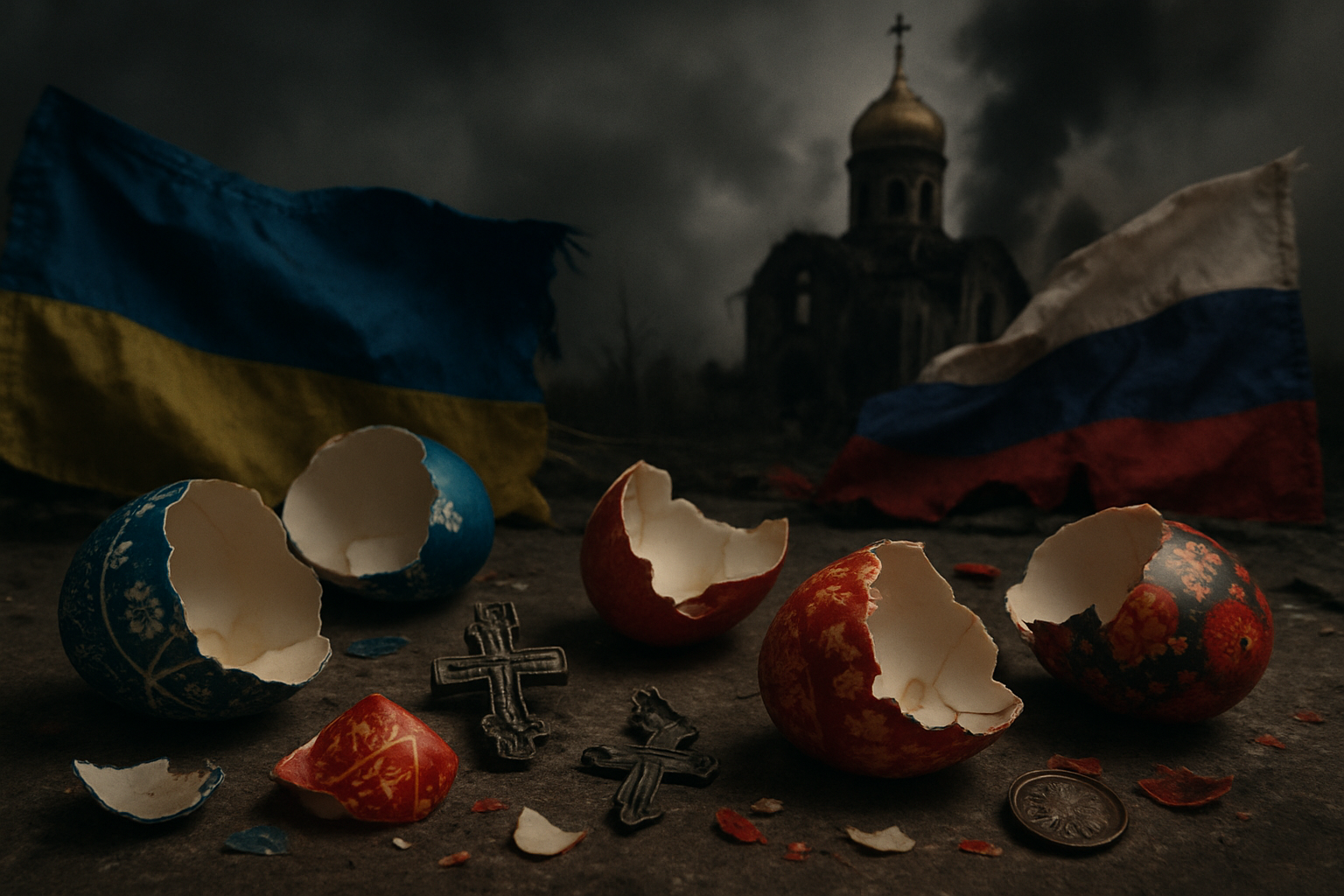
Ukraine and Russia have accused each other of systematically violating the Orthodox Easter ceasefire, with Ukrainian military reporting 2,299 violations by Russian forces while Russia claimed nearly 2,000 Ukrainian breaches, marking another failed attempt at humanitarian pause during the four-year conflict.
The 32-hour truce, which began at 4 PM Moscow time on Saturday, April 11, and was scheduled to end at midnight on Sunday, April 12, 2026, was declared by Russian President Vladimir Putin after Ukrainian President Volodymyr Zelensky had advocated for an Easter ceasefire for over a week.
Scale of Violations Unprecedented
Ukrainian military commanders documented a staggering number of ceasefire breaches within hours of the truce beginning. According to Ukraine's General Staff, by 7 AM on April 12, they had recorded "2,299 violations of the ceasefire," including 28 enemy assault actions, 479 artillery shelling attacks, 747 drone strikes, and 1,045 FPV (first-person view) drone attacks.
Russian defense ministry sources countered with their own figures, claiming to have documented 1,971 violations by Ukrainian forces, though Moscow maintained that Russian troops were "respecting the ceasefire" and only responding to Ukrainian provocations.
"The ceasefire was violated 469 times by Russian forces on Saturday alone, including 22 assault actions, 153 shelling attacks, and 275 FPV drone strikes."
— Ukraine General Staff, Facebook statement
Pattern of Easter Ceasefire Failures
This marks the fourth temporary ceasefire since Russia's full-scale invasion began in February 2022, and follows a disturbing pattern of Orthodox Easter truces that have consistently failed. Historical context from previous Easter ceasefires reveals similar accusations and violations have occurred annually, suggesting systematic challenges in implementing humanitarian pauses during the conflict.
The ceasefire was intended to provide respite for Orthodox Christians worldwide to observe Easter without the immediate threat of violence. Over 260 million Orthodox Christians globally celebrated Easter during this period, making the violations particularly significant from a religious and cultural perspective.
Diplomatic Context and Suspended Peace Talks
The failed Easter truce comes against the backdrop of indefinitely suspended trilateral peace negotiations between Ukraine, Russia, and the United States. These talks, which had achieved significant breakthroughs in February 2026—including a 314-prisoner exchange and the restoration of US-Russia military communications after a four-year suspension—remain stalled due to the Iran crisis consuming American foreign policy attention.
The suspension represents a major setback to what had been described as the most significant diplomatic opportunity since the invasion began. The framework for negotiations remains preserved, with prisoner exchange mechanisms and Pentagon-Moscow deconfliction protocols intact, but the timeline for resumed talks depends on resolution of the Middle East situation.
Military Escalation During Sacred Period
Despite the declared ceasefire, both sides continued military operations throughout the Easter weekend. Ukrainian forces documented Russian air strikes, drone attacks, and artillery bombardments across multiple regions, while Russian sources reported Ukrainian drone strikes on targets including the Nova Kakhovka area and a gas station in Lgov, which allegedly wounded three people, including a one-year-old child.
The violations underscore the systematic nature of the conflict, where even religious observances fail to provide meaningful pause in hostilities. Energy infrastructure remained a primary target, with continued attacks on Ukraine's power grid affecting civilian populations during what should have been a period of spiritual reflection and peace.
International Response and Nuclear Context
The failure of the Easter ceasefire occurs within an unprecedented nuclear governance crisis. The New START treaty between the United States and Russia expired on February 5, 2026, marking the first time in over 50 years without bilateral nuclear constraints between the superpowers who control 80% of the world's nuclear weapons. UN Secretary-General António Guterres has warned this represents a "grave turning point" with nuclear risks at their "highest in decades."
International support for Ukraine continues despite the stalled peace process. The European Union's historic €90 billion loan package—the largest single-nation assistance ever provided—remains in place, though divisions persist with Slovakia, the Czech Republic, and Hungary refusing participation.
Humanitarian Impact and War Crimes
The systematic targeting of civilian infrastructure during the Easter period represents what Ukrainian officials term "energy terrorism." Over 1,170 buildings in Kyiv remain without adequate heating from previous attacks, and Ukrainian nuclear plants have been forced to halt electricity production for the first time in the conflict.
These attacks during extreme winter conditions constitute violations of the Geneva Conventions' provisions for civilian protection. The targeting of energy workers attempting repairs—with 15 DTEK workers killed while restoring power—has been documented as war crimes by international observers.
"This pattern of violations during a religious ceasefire demonstrates the systematic nature of attacks on civilian infrastructure, which violates international humanitarian law."
— International humanitarian law experts
Ukraine's Strategic Evolution
As peace talks remain suspended, Ukraine has undergone a strategic transformation from aid recipient to global security provider. Over 200 Ukrainian military specialists have been deployed to Middle Eastern countries including the UAE, Qatar, Jordan, Bahrain, and Kuwait to share expertise in combating Iranian Shahed drones—ironically, the same weapons being used to attack Ukrainian territory.
This evolution creates potential new diplomatic leverage for Ukraine while demonstrating the global implications of the conflict's technological warfare innovations.
Territorial Disputes Remain Unresolved
The fundamental sticking point in any future peace negotiations remains unchanged: eastern Ukrainian territories currently under Russian control. Russia demands recognition of these territorial gains and insists any Putin-Zelensky summit occur in Moscow, while Ukraine maintains its territorial integrity position and categorically rejects territorial concessions.
Russian territorial gains have accelerated, with 481 square kilometers captured in January 2026 compared to 260 square kilometers in December 2025—an 85% increase representing the fastest expansion in months. This military momentum potentially strengthens Russia's negotiating position whenever talks resume.
Looking Ahead: Uncertain Timeline
The timeline for resumed peace negotiations depends entirely on resolution of the Iran crisis that has derailed diplomatic momentum. While the framework for trilateral talks remains preserved and can be reactivated when conditions permit, the failure of the Easter ceasefire highlights the deep entrenchment of the conflict.
President Zelensky had challenged Russia to extend the ceasefire beyond Easter as a "test of genuine peace commitment," but Moscow's rejection of extending the pause, combined with the massive scale of violations, suggests limited Russian interest in meaningful humanitarian gestures during the current phase of the war.
The stakes extend far beyond Ukraine and Russia to include fundamental questions about 21st-century territorial dispute resolution, European security architecture redefinition, and international law enforcement credibility. Success in eventual resumed talks could end Europe's deadliest war since World War II and provide a template for future conflict resolution. Failure may intensify military operations globally and undermine confidence in diplomatic solutions to territorial disputes.
As both sides continue to document violations and exchange accusations, the failed Easter truce serves as a stark reminder that the conflict's resolution will require more than symbolic gestures—it demands fundamental political compromises that neither side appears ready to make while military momentum continues to shift on the ground.