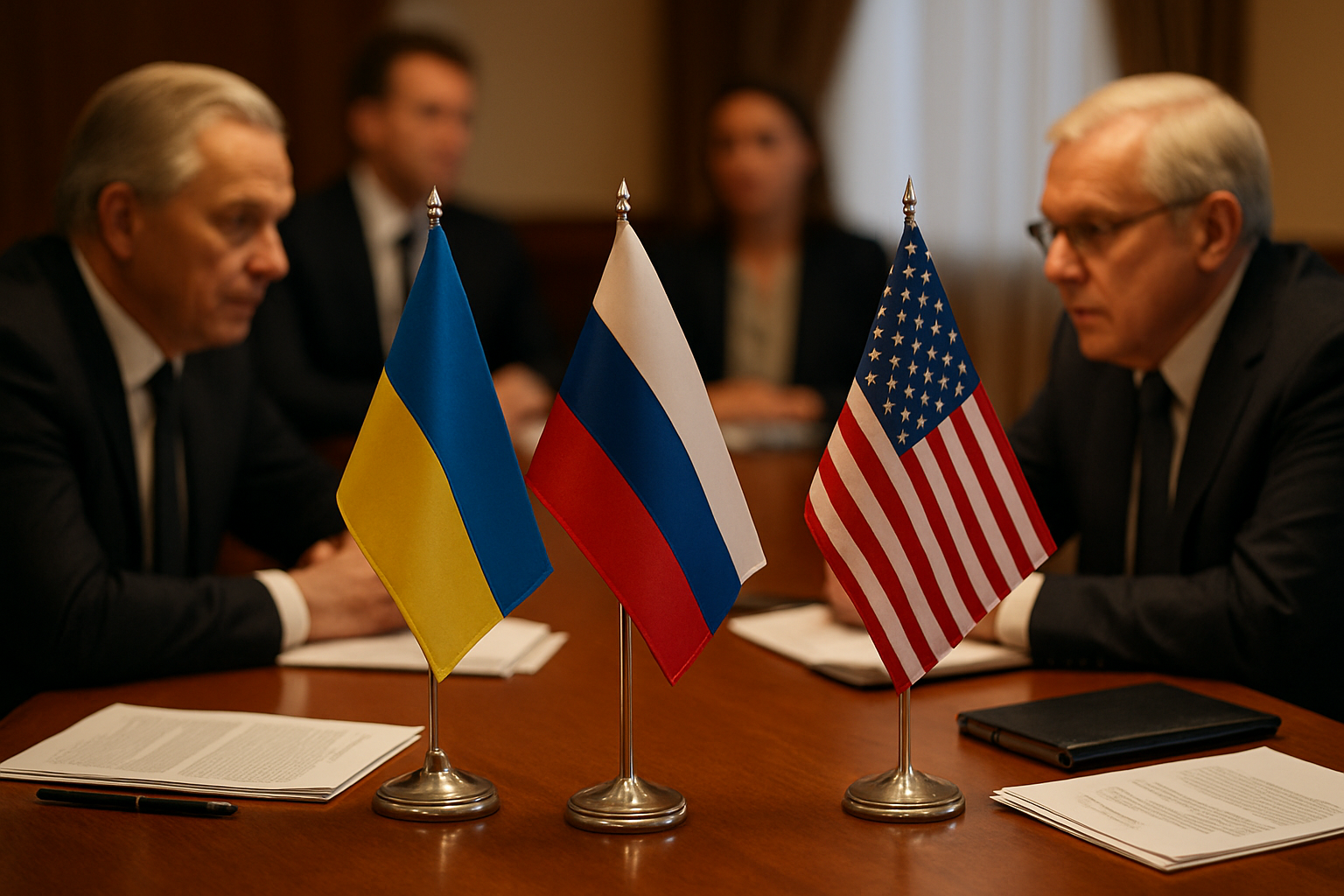
Ukrainian President Volodymyr Zelensky announced Saturday that the United States has established a June deadline for Ukraine and Russia to reach a peace agreement, while confirming that both sides have been invited to Washington for trilateral talks next week - marking the first time such negotiations will occur on American soil.
Speaking to journalists, Zelensky revealed that "America proposed for the first time that the two negotiating teams – Ukraine and Russia – meet in the United States of America, probably in Miami, in a week. We confirmed our participation." The announcement represents a significant escalation from the recent Abu Dhabi framework to higher-level negotiations in the US capital.
The Ukrainian leader disclosed that "the Americans are proposing that the parties end the war by the beginning of this summer, and will probably put pressure on the parties according to this schedule." This June deadline comes after months of diplomatic efforts that have achieved notable breakthroughs while the nearly four-year conflict continues to devastate Ukraine.
Abu Dhabi Diplomatic Foundation
The Washington talks build upon the recent success of trilateral negotiations in Abu Dhabi between Ukraine, Russia, and the United States. These talks, involving Ukrainian Defense Minister Rustem Umerov, Russian military intelligence director Igor Kostyukov, and US Special Envoy Steve Witkoff, achieved significant humanitarian progress including the exchange of 314 prisoners of war - the first such swap in five months.
Most significantly, the Abu Dhabi talks resulted in the restoration of US-Russia military communications after a four-year suspension since autumn 2021. The Pentagon confirmed this dialogue provides "means to increase transparency and reduce escalation" through deconfliction measures, incident prevention protocols, and advance notification systems.
"These talks were substantial and productive, covering detailed discussions on methods for implementing ceasefire and monitoring cessation of hostilities."
— Rustem Umerov, Ukrainian Defense Minister
Military Context and Territorial Disputes
The diplomatic push occurs against a backdrop of continued military escalation. Russian forces captured 481 square kilometers in January 2026 compared to 260 square kilometers in December 2025, showing accelerated territorial gains. Over 10,000 Russian drones and bombs were launched in January alone, with Russia shifting to what Ukrainian officials describe as "logistics terror" targeting transportation infrastructure.
Despite the prisoner exchange success, Russia launched what DTEK called the "most powerful blow" of 2026 against Ukrainian energy infrastructure, leaving more than 1,170 buildings in Kyiv without heating during minus-30°C temperatures. This attack broke an informal Trump-Putin energy truce and occurred just as diplomatic efforts were gaining momentum.
The main sticking point remains the fate of eastern Ukrainian territories currently under Russian control. Russia insists that any Putin-Zelensky talks must occur in Moscow, while Zelensky indicates future negotiations will "most likely" take place in the United States, suggesting an evolution toward higher-level diplomatic engagement.
Trump Administration's Diplomatic Strategy
The June deadline reflects the Trump administration's accelerated timeline for achieving foreign policy victories. Zelensky noted that Kyiv understands the proposed timeline is influenced by political considerations in the United States, including the start of campaigning ahead of US midterm elections later this year.
The timing also coincides with other major diplomatic initiatives, including the recent expiration of the New START nuclear treaty between the US and Russia on February 5, 2026 - the first time in over 50 years without bilateral nuclear constraints between the superpowers. Additionally, the US is pursuing nuclear negotiations with Iran, creating a complex multilateral diplomatic landscape.
Sources familiar with the negotiations indicate that the US negotiating framework may include provisions for organizing a nationwide referendum in Ukraine within the coming months, representing a significant shift from the wartime martial law conditions that have been in place since February 2022.
International Response and European Divisions
The peace initiative has revealed divisions within Europe regarding engagement with Russia. Germany continues to oppose direct talks with Putin due to what officials describe as "maximalist demands," while France and Italy have expressed support for diplomatic engagement. NATO Secretary-General Mark Rutte recently made a surprise visit to Kyiv, condemning Russian attacks as sending a "bad signal" before negotiations.
France has taken a particularly active role, with President Emmanuel Macron pursuing what Zelensky describes as an "alternative dialogue with Russia" to ensure France "is part of the process of ending the war and has its voice heard." This suggests multiple diplomatic tracks operating simultaneously as international partners seek to influence the peace process.
The European Union has demonstrated its commitment to Ukraine's long-term security by approving a historic €90 billion loan package for defense and reconstruction - the largest EU financial assistance package in history. This funding represents European investment in Ukraine's future regardless of the outcome of current negotiations.
Russian Economic Leverage Strategy
According to Zelensky, Russia has attempted to influence US policy through economic incentives, proposing a $12 trillion economic deal to the United States. "The proposal echoes earlier discussions on easing sanctions and launching long-term partnerships, despite Kyiv's objections to restoring economic ties with Moscow," Ukrainian sources revealed.
This economic diplomacy runs parallel to Russia's continued military pressure, including attempts to gain US recognition of Crimea as Russian territory. Ukrainian officials argue that "any peace framework that rewards aggression would undermine stability, as international law and the UN reject Russia's attempts to legitimize its 2014 annexation of Crimea."
Humanitarian and Economic Impact
The conflict has taken an enormous human toll. Zelensky recently disclosed that 55,000 Ukrainian soldiers have been officially confirmed killed since Russia's February 2022 invasion, with a "large number" still classified as missing in action. International researchers estimate actual military deaths could be 2-3 times higher when including missing personnel and undocumented casualties.
The humanitarian crisis extends beyond military casualties, with over 17.8 million Ukrainians accessing winter support programs as Russia continues targeting civilian infrastructure. The systematic attacks on energy facilities during extreme winter conditions represent what Ukrainian officials describe as the use of winter as a "weapon of war."
Economic Reconstruction Challenges
The scale of reconstruction needs is unprecedented. Ukraine faces massive infrastructure rebuilding requirements, with energy security guarantees critical for any sustainable peace framework. The EU's €90 billion commitment represents just the beginning of long-term rebuilding efforts that could span decades.
Nuclear Arms Control Context
The peace negotiations occur within a broader crisis in global nuclear governance. The expiration of the New START treaty has eliminated verification mechanisms and confidence-building measures that have prevented nuclear miscalculation since the Cold War era. UN Secretary-General António Guterres called the treaty's end a "grave turning point," stating that nuclear weapon use risk is "higher than at any time in decades."
This nuclear dimension adds urgency to the Ukraine peace process, as the restoration of US-Russia military communications represents the only remaining major diplomatic channel between the nuclear superpowers. The success or failure of Ukraine negotiations could influence broader strategic stability between Washington and Moscow.
Coming Weeks Critical for Peace Process
The Washington venue suggests potential direct involvement by senior US leadership, possibly including President Trump himself. The evolution from technical discussions in Abu Dhabi to high-level political negotiations in the US capital indicates the diplomatic process is reaching a critical juncture.
Success could provide a template for resolving other international conflicts and demonstrate that sustained diplomatic engagement can produce concrete results even amid military operations. However, failure might intensify military operations and undermine confidence in diplomatic solutions to territorial disputes.
The June deadline creates pressure for innovative compromise solutions on territorial issues that have remained deadlocked for nearly four years. The international community is watching closely to see whether the diplomatic momentum from Abu Dhabi can translate into the territorial compromises necessary for a sustainable peace agreement.
"We understand that American internal issues have an impact and will certainly become even more relevant for them as we approach their political calendar."
— Volodymyr Zelensky, Ukrainian President
As negotiators prepare for next week's Washington summit, the stakes could not be higher. The talks represent the most significant opportunity to end Europe's deadliest conflict since World War II, with implications extending far beyond Ukraine's borders to the future of international law, territorial sovereignty, and the global security architecture that has governed relations between major powers for decades.