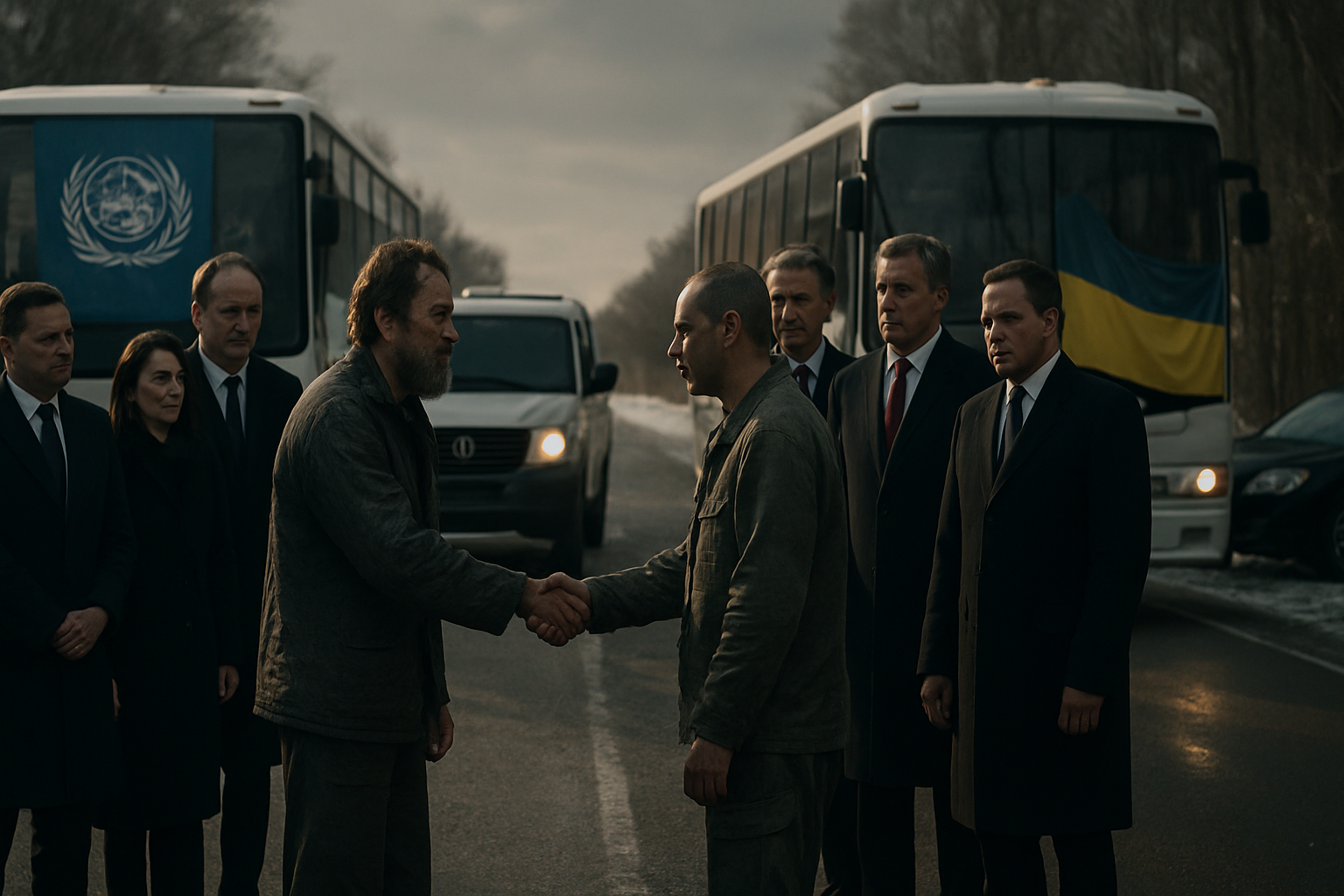
Ukraine and Russia have completed a massive prisoner exchange involving 500 personnel from each side, representing the largest such swap in months and signaling continued diplomatic engagement despite ongoing military operations.
The exchange, confirmed by multiple sources across Europe, was conducted over two days with 200 personnel exchanged on Thursday and an additional 300 on Friday. The operation was facilitated through mediation by the United Arab Emirates and the United States, according to Russia's Defense Ministry.
Ukrainian President Volodymyr Zelensky confirmed the exchange in a statement, saying "Today 200 Ukrainian families received the most anticipated message: their loved ones are returning home." The president shared photographs of the released Ukrainian personnel, highlighting the human dimension of this diplomatic breakthrough.
Diplomatic Context and Mediation
The prisoner exchange stems from agreements reached during trilateral talks between Russia, Ukraine, and the United States, according to Ukrainian sources. These negotiations represent part of broader diplomatic efforts that have seen renewed engagement since February 2026.
Vladimir Medinsky, head of the Russian delegation, confirmed that the exchange was conducted within the framework of agreements reached during recent negotiations in Geneva. The operation follows the pattern established in previous exchanges, with neutral parties facilitating the complex logistics required for such operations.
Scale and Significance
With a total of 1,000 personnel involved, this exchange ranks among the largest single prisoner swaps since the conflict began in February 2022. Previous exchanges have typically involved smaller numbers, making this operation particularly significant both in scale and timing.
The exchange represents the continuation of humanitarian dialogue that has persisted even during periods of intense military activity. Such operations serve as confidence-building measures that can help maintain channels of communication between the warring parties.
Norwegian and Romanian sources confirmed the scale of the operation, with detailed reporting on the two-phase implementation over consecutive days. The structured approach demonstrates the careful planning and coordination required for such complex humanitarian operations.
"This exchange provides hope for families on both sides who have been waiting for news of their loved ones. It shows that even in the midst of conflict, humanitarian considerations can still prevail."
— European diplomatic source
Historical Context of Prisoner Exchanges
This exchange continues a pattern of regular prisoner swaps that have occurred throughout the conflict. Previous notable exchanges include a February 2026 operation involving 314 prisoners, which was the first such swap in five months and helped restore US-Russia military communications after a four-year suspension.
The success of these exchanges often depends on careful diplomatic preparation and the involvement of neutral mediators. The UAE has played a particularly important role in facilitating such operations, leveraging its diplomatic relationships with both sides.
According to historical records, this represents the 71st prisoner exchange since the full-scale invasion began, demonstrating the ongoing humanitarian dimension of diplomatic efforts even amid continued military operations.
Broader Peace Efforts
The prisoner exchange occurs against the backdrop of broader diplomatic initiatives, including recent trilateral talks that achieved what negotiators described as "significant progress" on ceasefire monitoring mechanisms, though fundamental territorial disputes remain unresolved.
Recent diplomatic efforts have involved European observers from major nations, adding institutional weight to the negotiation process while maintaining proven frameworks for humanitarian breakthroughs.
The timing of this exchange coincides with ongoing international efforts to find a diplomatic solution to the conflict. The Trump administration has established ambitious timelines for comprehensive peace agreements, with potential high-level talks scheduled for later in 2026.
Challenges and Future Prospects
While prisoner exchanges represent important humanitarian achievements, significant challenges remain in the broader peace process. Territorial disputes over eastern Ukrainian regions continue to pose fundamental disagreements between the parties.
The success of humanitarian measures like prisoner exchanges provides hope that structured diplomatic engagement can produce concrete results, even when broader political settlements remain elusive. These confidence-building measures often serve as stepping stones toward more comprehensive agreements.
International observers note that such exchanges require extensive preparation and coordination, demonstrating that channels of communication remain open even during periods of intense conflict. The involvement of multiple mediating parties also highlights the international community's continued engagement in seeking peaceful solutions.
International Response
The international community has welcomed news of the prisoner exchange as a positive development in an otherwise challenging diplomatic landscape. European Union officials have consistently supported humanitarian initiatives while maintaining broader policy positions on the conflict.
The role of neutral mediators like the UAE continues to be crucial in facilitating such operations. These countries' diplomatic relationships with multiple parties allow them to serve as effective intermediaries in complex negotiations.
The exchange also demonstrates the importance of maintaining humanitarian protocols even during active conflicts, reflecting international legal obligations and moral imperatives to address the human costs of warfare.
As diplomatic efforts continue, this prisoner exchange serves as a reminder that progress remains possible on humanitarian issues, even when broader political solutions prove more elusive. The operation provides hope for the families involved while maintaining important channels of communication between the parties to the conflict.