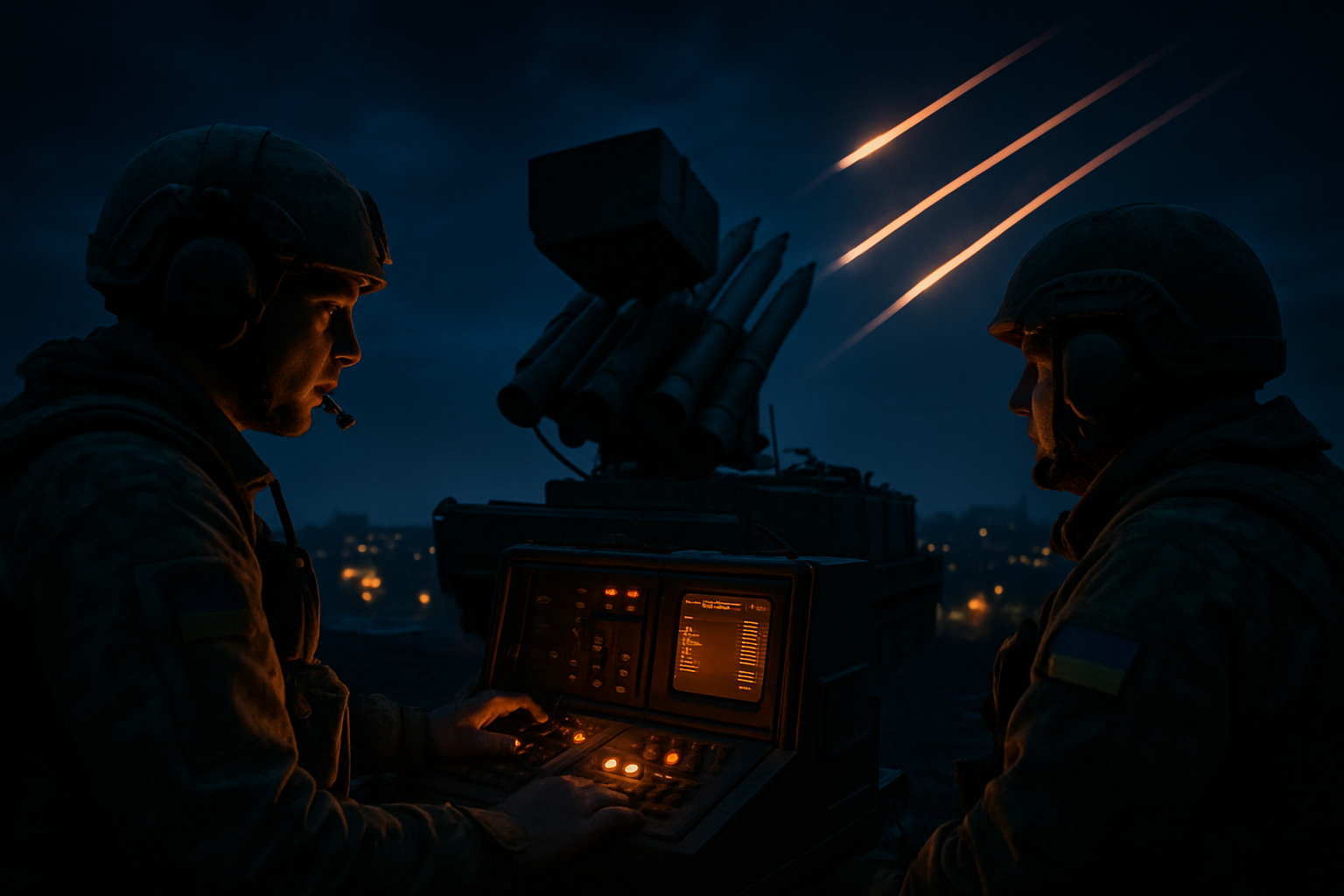
Russian forces have intensified military operations against Ukrainian positions with an unprecedented scale of attacks, launching nearly 1,900 strike drones and 60 missiles over the past week while Ukrainian defense forces demonstrate remarkable resilience in maintaining key defensive positions across multiple operational theaters.
According to President Volodymyr Zelensky, last week marked one of Russia's most intensive assault campaigns of 2026, deploying approximately 1,900 strike drones, nearly 1,400 guided aerial bombs, and about 60 missiles of various types against Ukrainian targets. Despite this overwhelming offensive, Ukraine's air defense systems achieved over 90% effectiveness in destroying incoming drones, demonstrating the continued sophistication of the country's defensive capabilities.
Southern Front Operations Intensify
Military spokesman Nazar Voloshyn confirmed that Russian forces have significantly increased assault intensity on the southern axis, with Ukrainian Defense Forces successfully holding defensive lines while, in some areas, regaining control of previously lost positions. The situation has particularly escalated near the settlements of Hryshyne and Rodynske in the Donetsk region, where Russian forces are attempting to develop offensive operations and establish new positions.
South and west of Huliaipole, Russian forces have intensified assault operations using small tactical groups, but Ukrainian Defense Forces continue conducting effective search-and-strike operations that prevent enemy forces from establishing permanent positions. Similarly, on the southern front, Russian units are attempting to use seasonal foliage cover to infiltrate deeper into Ukrainian defenses, particularly in the area of the Velykomykhailivka forest.
Air Defense Excellence Amid Massive Attacks
Ukrainian air defense systems intercepted 189 of 215 Russian drones launched in a recent major assault, highlighting the continued effectiveness of Western-supplied defense systems integrated with Ukrainian capabilities. The attacks targeted multiple regions including energy infrastructure and civilian areas, following the established pattern of systematic targeting of critical infrastructure.
"Despite regular Russian shelling and airstrikes, no combat clashes have been reported in the city of Orikhiv in the Zaporizhzhia region, and the enemy would have to overcome several lines of defense to advance toward it."
— Nazar Voloshyn, Military Spokesman
Technological Warfare Evolution
The conflict has witnessed unprecedented technological developments, with Ukrainian forces achieving what President Zelensky described as a historic first in modern warfare - successfully capturing Russian positions using only unmanned systems, without deploying human soldiers on the ground. This achievement represents a paradigm shift in military operations and demonstrates Ukraine's advancement in autonomous warfare capabilities.
Intelligence reports indicate that Russia now operates approximately 101,000 troops dedicated to drone operations - the largest unmanned force in modern warfare. This massive deployment of drone units reflects the technological arms race that has emerged as a defining characteristic of the current phase of the conflict.
International Defense Cooperation
Ukraine's strategic evolution from aid recipient to security provider has accelerated significantly, with over 200 Ukrainian military specialists now deployed to UAE, Qatar, Jordan, Bahrain, and Kuwait, sharing expertise in combating Iranian Shahed drones - the same weapons systems being used against Ukrainian territory. This transformation creates potential new diplomatic leverage for future negotiation scenarios.
The United Kingdom has revealed the existence of four operational maintenance, repair, and overhaul (MRO) facilities on Ukrainian territory servicing Western-supplied equipment, with a fifth facility planned. This represents the first public acknowledgment of extensive military infrastructure established on Ukrainian soil and demonstrates long-term international commitment to Ukrainian defense capabilities.
Nuclear Power Plant Vulnerabilities
Recent incidents near the Zaporizhzhia nuclear plant have raised serious safety concerns, with reports of drone attacks in the vicinity resulting in at least one worker fatality. According to Russian-installed management, Ukrainian forces targeted the captured facility, though these claims cannot be independently verified. The situation at Europe's largest nuclear power plant remains a critical concern for international observers.
The targeting of energy infrastructure has forced Ukrainian nuclear plants to halt electricity production for the first time since the conflict began, representing an unprecedented development in the systematic campaign against Ukraine's energy sector.
Mobilization and Military Personnel
Ukraine's Military Ombudsman has indicated that up to 1.6 million people could potentially join the armed forces, which would enable significant rotation of military units and address current personnel challenges. This assessment comes as the country faces what has been described as a mobilization crisis, highlighting the human cost of sustaining defensive operations across extensive front lines.
The disclosure of 55,000 officially killed Ukrainian soldiers, with a "large number" missing, underscores the significant human toll of the conflict. Military experts estimate actual casualties may be 2-3 times higher than official figures, reflecting the challenging nature of casualty reporting in active combat zones.
Defensive Industry Partnerships
Strategic partnerships have emerged with Norway and Poland for defense industrial cooperation. Ukraine and Norway signed an agreement for the first Norwegian-Ukrainian project under the "Build with Ukraine" initiative, establishing Ukrainian drone production facilities in Norway. Similarly, Ukraine and Poland are developing a "Polish model" of defense cooperation, with initial contracts expected to be signed during the Ukraine Recovery Conference in Gdańsk at the end of June.
Humanitarian and Environmental Impact
Russian attacks on the Odesa region triggered a significant sunflower oil spill in the waters of the port of Chornomorsk, demonstrating the environmental consequences of infrastructure targeting. The systematic targeting of civilian infrastructure, including the recent attack that damaged a maternity hospital in Odesa, continues to raise serious concerns about compliance with international humanitarian law.
Energy infrastructure attacks have left over 1,170 Kyiv buildings with inadequate heating during harsh winter conditions, affecting hundreds of thousands of civilians and representing what Ukrainian officials characterize as "energy terrorism" - the deliberate targeting of civilian infrastructure to create humanitarian pressure.
Strategic Assessment and Future Outlook
The current phase of military operations represents a significant escalation in both the scale and technological sophistication of combat operations. Russian territorial gains of 481 square kilometers in January 2026 compared to 260 square kilometers in December 2025 - an 85% increase - indicate accelerated offensive operations, while Ukrainian forces maintain operational capabilities through innovative defensive strategies and international support.
The conflict has evolved into a testing ground for 21st-century military technologies, with implications extending far beyond the immediate theater of operations. The successful integration of autonomous systems, advanced air defense networks, and international support mechanisms provides valuable insights for future conflict prevention and resolution strategies.
Despite the suspension of trilateral peace negotiations due to competing international priorities, the framework for diplomatic engagement remains intact. The prisoner exchange mechanisms, restored military communications between major powers, and structured negotiation formats can be reactivated when conditions permit, preserving hope for eventual diplomatic resolution.
As the conflict approaches its fourth anniversary, the military updates demonstrate both the resilience of Ukrainian defense capabilities and the continuing challenges posed by large-scale, technologically advanced assault operations. The international community's response, including unprecedented financial support and sophisticated defense cooperation, reflects the global stakes involved in the outcome of this conflict for European security architecture and international law enforcement in the 21st century.