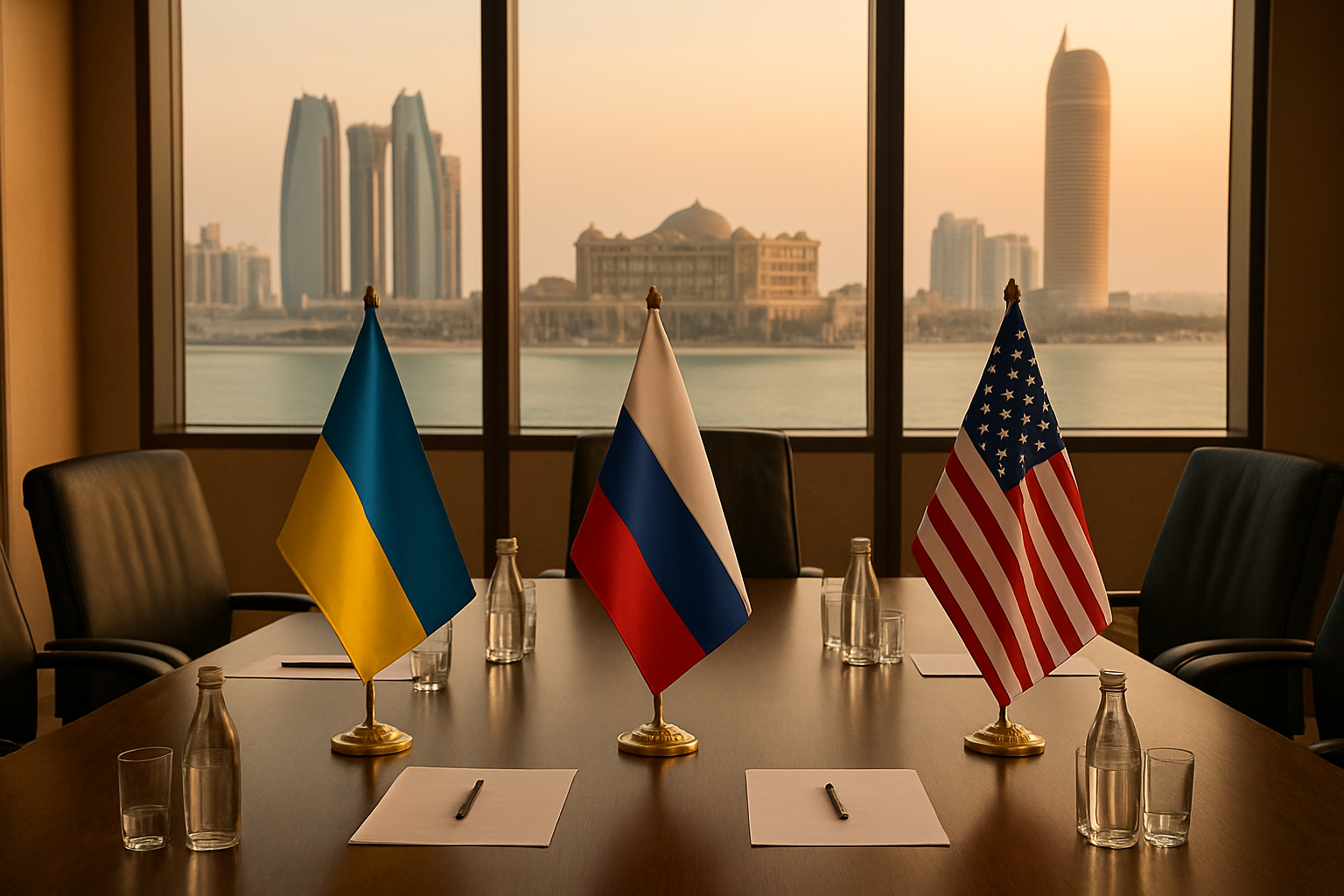
As trilateral peace talks between Ukraine, Russia, and the United States prepare to resume in Abu Dhabi this week, Russian forces have escalated attacks on civilian transportation infrastructure, with Ukrainian President Volodymyr Zelensky warning of a new form of "logistics terror" targeting the country's railway system and energy facilities.
The talks, scheduled for Wednesday and Thursday in the UAE capital, represent the second round of substantive negotiations aimed at ending the nearly four-year conflict that began with Russia's invasion in February 2022. President Zelensky announced Monday that he has approved the framework for discussions and specific tasks for Ukraine's negotiating team, expressing cautious hope that "it is possible to achieve lasting and dignified peace."
Shifting Russian Strategy Amid Peace Overtures
Despite diplomatic efforts, Russian forces have intensified attacks on civilian infrastructure, particularly targeting Ukraine's transportation networks. Ukrainian railway operator Ukrzaliznytsia warned passengers that routes in eastern Ukraine are becoming increasingly "high risk," urging travelers to use buses instead of trains. At least 20 people have been killed in Russian attacks over the past five days, according to Ukrainian officials.
President Zelensky characterized this as Russia "freeing up resources" previously used for energy attacks to redirect toward transportation terror. "The Russians are shifting to transport terror in Ukraine amid 'peace talks,'" Zelensky stated, noting that the occupiers have reallocated personnel and resources following what he described as "de-escalation measures" regarding energy infrastructure attacks.
Recent strikes have hit both energy and railway facilities across Ukraine's frontline regions, causing civilian casualties in Zaporizhzhia and Dnipro. The attacks come as Ukraine faces extreme winter weather, with northern regions expecting temperatures as low as minus 30 degrees Celsius while thousands of households remain without electricity following Russian bombardments.
Diplomatic Momentum Builds Despite Challenges
The upcoming Abu Dhabi talks will include US Special Envoy Steve Witkoff, who has been instrumental in facilitating the diplomatic process. The negotiations were originally scheduled for earlier dates but were postponed following preliminary discussions between US and Russian officials in Miami on January 31, which were described as "constructive."
President Zelensky expressed cautious optimism about the diplomatic process, stating that recent "de-escalation measures" - an apparent reference to temporary pauses in energy infrastructure attacks - "help build people's confidence in the negotiation process." The Ukrainian leader emphasized that his country believes "lasting and dignified peace" is achievable through these negotiations.
However, significant obstacles remain. The Kremlin has maintained a hardline position, with Putin's spokesman Dmitri Peskov declaring that direct negotiations between Putin and Zelensky can only take place in Moscow. Russian officials have also indicated that key issues, including NATO troop deployment and territorial questions, remain unresolved.
International Support and Military Realities
Ukraine continues to face military challenges while pursuing diplomatic solutions. Ukrainian Defense Forces recently repelled Russian attempts to advance near the settlements of Stupochky on the Kramatorsk axis and Toretsk on the Kostiantynivka axis, demonstrating ongoing combat operations despite peace talks.
The upcoming Ramstein meeting in Brussels will address three key Ukrainian priorities: air defense capabilities to intercept Russian cruise missiles, consolidation of European and NATO support, and continued military assistance. Ukrainian officials have emphasized that Kiev currently lacks conventional missiles capable of intercepting Russian cruise missiles, making air defense a critical topic for international partners.
Reports from Russian state media suggest significant military personnel challenges, with claims that 20,000 out of 30,000 mobilized Ukrainian soldiers per month are going AWOL, though these figures cannot be independently verified and may represent Russian propaganda efforts.
European Diplomatic Divisions
The peace process has revealed divisions within European leadership regarding engagement with Russia. While France and Italy are reportedly pushing for reopening diplomatic channels with Moscow, Germany has taken the opposite position, opposing direct talks with Russia due to what German officials characterize as Putin's "maximalist demands."
The trilateral format involving the UAE as a neutral venue has emerged as a compromise approach, allowing substantive political negotiations with full US participation while avoiding the bilateral dynamics that have proven unsuccessful in previous attempts.
Humanitarian Impact Continues
Despite diplomatic efforts, the human cost of the conflict continues to mount. The shift to attacking transportation infrastructure has particular implications for civilian populations already struggling with winter conditions and damaged energy systems. Slovakia reported that northern Ukrainian regions are facing the harshest frosts of the winter, with thousands of households left without electricity following Russian attacks.
The targeting of railway infrastructure represents a strategic shift that could severely impact civilian movement and humanitarian aid delivery, while also disrupting military logistics. Ukrainian officials have characterized these attacks as deliberately targeting civilian infrastructure in violation of international humanitarian law.
Looking Ahead: Cautious Optimism
As negotiators prepare for the Abu Dhabi talks, the international community is watching closely for signs of genuine progress. The involvement of US Special Envoy Witkoff represents a significant American diplomatic investment in the process, while the UAE's role as neutral host provides a venue acceptable to all parties.
However, the continuation of Russian attacks on civilian infrastructure even as talks approach underscores the challenges facing negotiators. The success of these discussions may depend largely on whether all parties can demonstrate genuine commitment to reducing hostilities while addressing the fundamental territorial and security issues that have driven the conflict.
The talks represent a critical juncture in international efforts to end Europe's largest conflict since World War II. With both military and diplomatic tracks continuing simultaneously, the coming days in Abu Dhabi may prove decisive in determining whether the nearly four-year war can transition toward a negotiated resolution or will continue to exact its devastating toll on Ukrainian civilians and the broader international order.