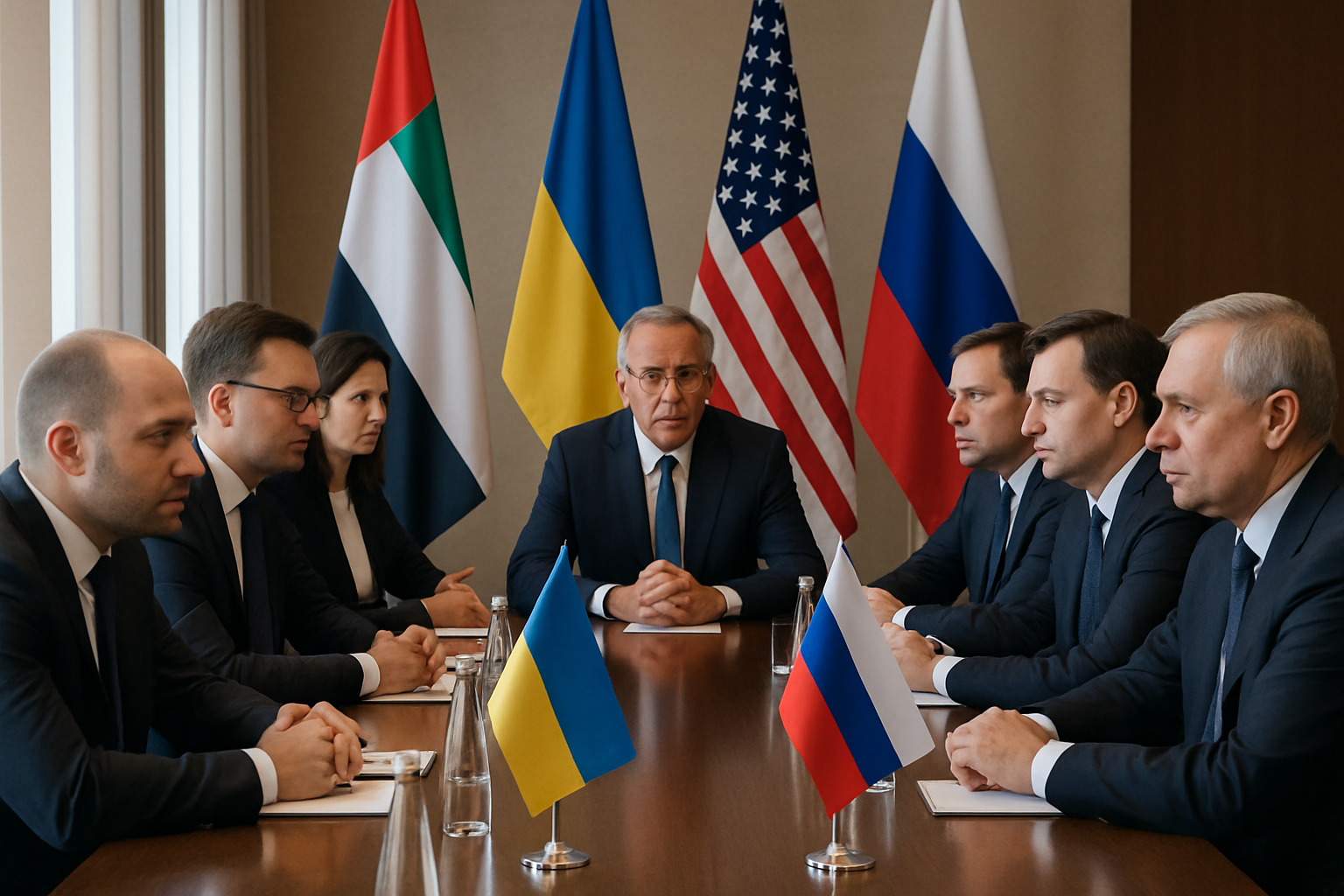
Ukrainian and Russian officials resumed crucial peace negotiations in Abu Dhabi on Thursday for a second day of US-brokered talks, following what Kiev's lead negotiator described as "productive" discussions, even as President Volodymyr Zelensky revealed the staggering human cost of the conflict with an official death toll of 55,000 Ukrainian soldiers.
The trilateral negotiations, involving Ukrainian Defense Minister Rustem Umerov, Russian military intelligence director Igor Kostyukov, and US Special Envoy Steve Witkoff, represent the most significant diplomatic effort to end the nearly four-year conflict since Russia's full-scale invasion began in February 2022.
Zelensky's Stark Casualty Disclosure
In a watershed moment for transparency about the war's toll, President Zelensky disclosed in a France 2 television interview that exactly 55,000 Ukrainian soldiers have been officially confirmed killed on the battlefield. This marks the first official casualty count in nearly a year, representing only confirmed deaths among both professional soldiers and conscripts.
"In Ukraine, officially the number of soldiers killed on the battlefield – either professionals or those conscripted – is 55,000,"
— President Volodymyr Zelensky, France 2 Interview
Zelensky emphasized that this figure represents only confirmed battlefield deaths, noting that a "large number of people" remain officially classified as missing in action. International research centers estimate that actual military deaths could be two to three times higher when including missing personnel and undocumented casualties.
Diplomatic Progress Amid Escalation
The peace talks gained momentum despite—or perhaps because of—Russia's massive energy infrastructure attack that coincided with the negotiations. On Wednesday, Russia launched what DTEK energy company described as the "most powerful blow" of 2026 against Ukrainian infrastructure, leaving over 1,170 buildings in Kyiv without heating during life-threatening minus-30°C temperatures.
The attack broke an informal Trump-Putin energy truce and affected eight oblasts including major cities. NATO Secretary-General Mark Rutte made a surprise visit to Kyiv, condemning the strikes as a "bad signal" before the crucial negotiations.
Hope for Peace Within a Year
Despite the escalation, President Zelensky expressed cautious optimism about the diplomatic process, stating that peace could be achieved "in less than a year" through diplomatic means. This timeline represents a significant shift from earlier assessments that the conflict could continue indefinitely.
Ukrainian officials described the first day of talks as "substantial and productive," with discussions focusing on practical steps toward peace and a possible prisoner exchange. The talks aim to establish a framework for higher-level negotiations while addressing the main sticking point: the fate of eastern Ukrainian territories currently under Russian control.
International Stakes and Support
The UAE's role as neutral host reflects the evolution of diplomatic efforts from technical discussions to substantive political negotiations. European divisions persist, with Germany opposing direct Putin talks while France and Italy support engagement.
International support mechanisms have intensified alongside the diplomatic push. The EU recently approved a historic €90 billion loan for Ukraine defense and reconstruction—the largest EU aid package in history. Sweden and Denmark announced a €246 million air defense package, while Poland deployed fighter jets in response to the Russian attacks.
Military Context
The negotiations occur against a backdrop of accelerated Russian territorial gains. Russian forces captured 481 square kilometers in January 2026 compared to 260 square kilometers in December 2025, according to the Institute for Study of War. Over 10,000 Russian drones and bombs were launched in January 2026 alone.
Russia has shifted to what experts call "logistics terror," targeting transportation infrastructure and killing over 20 civilians in recent days. The strategy appears designed to maximize civilian suffering during extreme winter conditions to strengthen Russia's negotiating position.
Prisoner Exchange Breakthrough
A significant humanitarian breakthrough emerged from the talks: expectations for the first prisoner exchange between Ukraine and Russia in four months. Zelensky announced that such an exchange could occur "in the near future," potentially serving as a confidence-building measure for broader diplomatic progress.
The prisoner exchange negotiations represent one area where practical cooperation remains possible despite the broader military conflict, offering a potential template for incremental progress.
Regional and Global Implications
The Abu Dhabi talks occur within a complex international diplomatic landscape. The timing coincides with Iran-US nuclear negotiations scheduled for Friday in Oman, highlighting the interconnected nature of Middle Eastern and European security challenges.
The success or failure of these negotiations will have profound implications for European security architecture and international law. The conflict represents Europe's deadliest since World War II, with over 17.8 million Ukrainians currently accessing winter support programs.
Path Forward
As negotiations continue, both sides maintain significant demands that appear difficult to reconcile. Russia insists that any Putin-Zelensky summit must occur in Moscow, while Ukraine demands restoration of territorial integrity. The main challenge remains finding a framework that addresses both security concerns and territorial questions.
The talks may establish groundwork for future higher-level negotiations, potentially determining whether the trajectory leads toward diplomatic resolution or further military escalation. Success would require unprecedented compromise from both parties, while failure could intensify the conflict with global consequences.
The revelation of Ukraine's massive casualty figure adds urgency to the diplomatic efforts, providing concrete data on the human cost of nearly four years of conflict. With winter conditions creating additional humanitarian pressure, the window for diplomatic breakthrough may be narrowing as military and civilian suffering continues to mount on both sides.