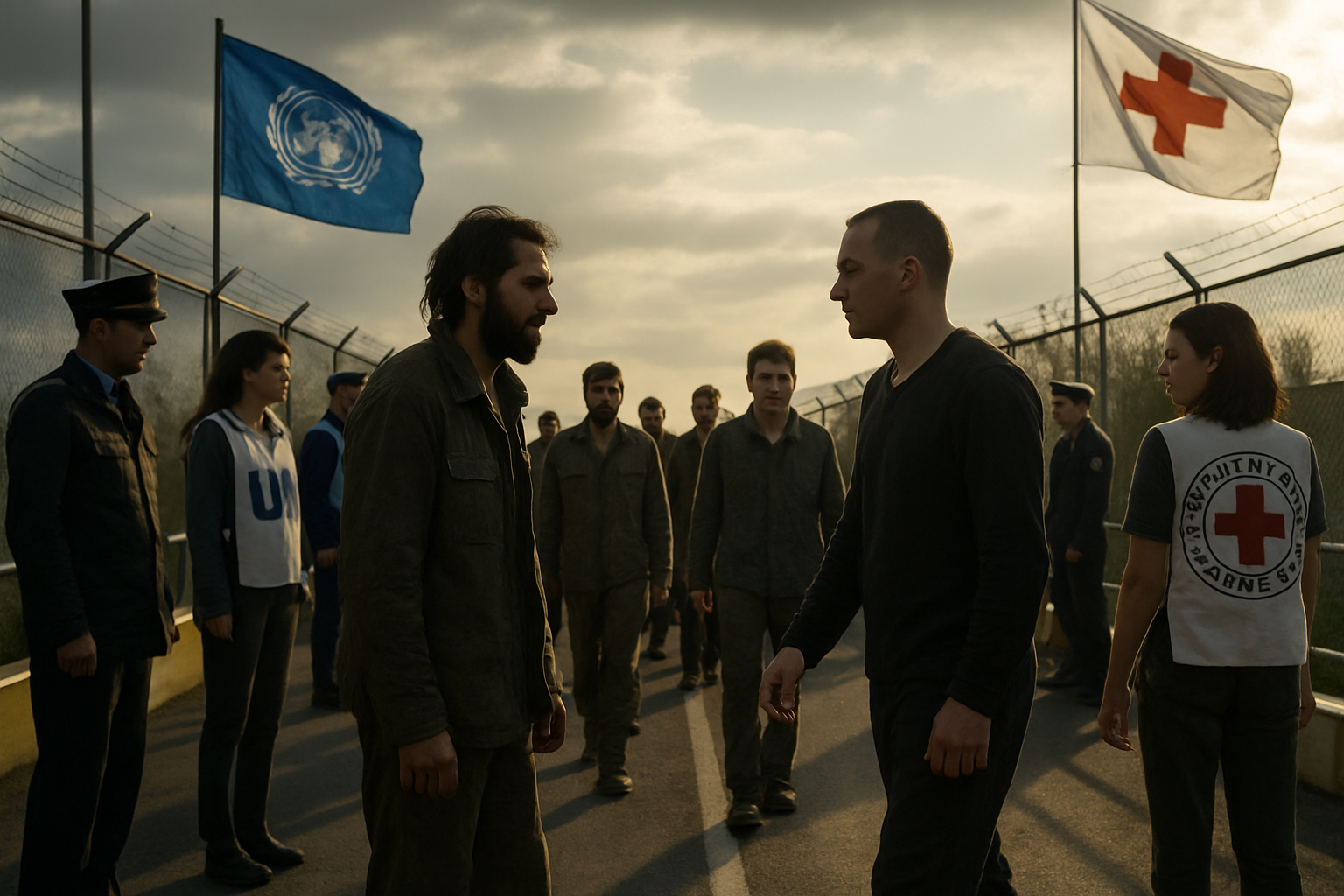
Russia and Ukraine have completed one of the largest body exchanges since the conflict began, with over 1,000 remains transferred between the two countries as humanitarian diplomacy continues despite the suspension of formal peace negotiations due to the ongoing Iran crisis.
According to sources from The Moscow Times, the transfer came after officials in Russia indicated they were nearing a final agreement with Ukraine on a significant prisoner-of-war exchange. This latest exchange represents the continuation of established diplomatic frameworks that have achieved concrete humanitarian results even as broader political negotiations remain stalled.
Diplomatic Framework Under Strain
The body exchange occurs against the backdrop of indefinitely suspended trilateral peace talks between Ukraine, Russia, and the United States. These negotiations, which had shown unprecedented promise in February 2026, were derailed by the Iran crisis that has consumed American foreign policy attention and resources.
The February 2026 diplomatic breakthrough had achieved historic results, including a 314-prisoner exchange—the largest in five months—and the restoration of US-Russia military communications after a four-year suspension. Geneva talks in February had also made "significant progress" on ceasefire monitoring mechanisms, with European "Big Five" observers (Germany, France, Italy, UK, Poland) participating for the first time.
"Due to the situation around Iran, there are still no necessary signals for trilateral meeting until the security situation allows,"
— President Volodymyr Zelensky
Humanitarian Efforts Continue
Despite the suspension of high-level political negotiations, humanitarian exchanges have proven resilient. The prisoner exchange mechanisms and structured negotiation formats established through the UAE-mediated Abu Dhabi talks have remained intact and can be reactivated when conditions permit.
Since the full-scale invasion began in February 2022, this marks approximately the 72nd prisoner exchange between the warring parties. Ukraine has received around 18,000 bodies since the conflict's escalation, according to Kremlin advisor Vladimir Medinsky, making these exchanges crucial confidence-building measures for families of the missing and deceased.
Military Context and Ongoing Conflict
The exchange takes place amid continued military escalation. Russian forces have shown accelerated territorial gains, capturing 481 square kilometers in January 2026 compared to 260 square kilometers in December 2025—an 85% increase representing the fastest monthly expansion in recent months.
The humanitarian situation remains dire, with President Zelensky having disclosed that 55,000 Ukrainian soldiers have been officially killed, with a "large number" still missing. International estimates suggest actual casualties could be 2-3 times higher than official figures.
Systematic civilian targeting continues to violate Geneva Convention protections. Energy infrastructure attacks have left over 1,170 Kyiv buildings with inadequate heating, while Ukrainian nuclear plants were forced to halt electricity production for the first time in the conflict.
Nuclear Governance Crisis
The prisoner exchange occurs within an unprecedented nuclear governance crisis. The New START treaty between the US and Russia expired on February 5, 2026, marking the first time in over 50 years without bilateral nuclear constraints between the superpowers who control 80% of global nuclear weapons.
UN Secretary-General António Guterres has described this as a "grave turning point," with nuclear risks at their "highest in decades." The restored military communications channel between Pentagon and Russian General Staff operations remains the only formal diplomatic link between the nuclear superpowers.
International Support and Divisions
International support for Ukraine continues despite competing global priorities. The European Union has provided a historic €90 billion loan—the largest single-nation assistance package ever—though Slovakia, Czech Republic, and Hungary refused participation, exposing deep European divisions.
Additional support includes Sweden and Denmark's €246 million air defense package, Germany's delivery of 35 Patriot missiles, and the UK's revelation of four operational maintenance, repair, and overhaul (MRO) facilities in Ukraine servicing Western equipment, with a fifth planned.
Ukraine's Strategic Evolution
Ukraine has evolved from aid recipient to global security provider, deploying over 200 military specialists to UAE, Qatar, Jordan, Bahrain, and Kuwait to help defend against Iranian Shahed drone attacks—the same weapons devastating Ukrainian infrastructure. This strategic pivot demonstrates how Ukraine is leveraging its battlefield experience into new international partnerships.
Territorial Disputes Remain Unchanged
The fundamental sticking point in all negotiations remains unchanged: eastern Ukrainian territories under Russian control. Russia demands territorial recognition and insists that any Putin-Zelensky talks must occur in Moscow, while Ukraine maintains its territorial integrity position and seeks long-term security guarantees.
President Zelensky has categorically rejected territorial concessions, stating that the Ukrainian people would reject "handing over territories" as a "failure story." The accelerated Russian territorial gains potentially strengthen Moscow's bargaining position should formal negotiations resume.
Framework Preservation for Future Negotiations
Despite the suspension of trilateral talks, diplomatic achievements remain intact. The prisoner exchange mechanisms, Pentagon-Moscow deconfliction protocols covering Syria, Arctic, and Africa operations, and structured negotiation formats proven effective through UAE methodology can be reactivated when favorable conditions return.
The Trump administration's June 2026 deadline for comprehensive peace talks with a Washington venue potentially involving presidential-level engagement remains uncertain due to Middle East priorities consuming American diplomatic resources.
Global Implications
The success or failure of eventual resumed talks carries global implications for 21st-century territorial dispute resolution templates. Stakes include European security architecture redefinition, international law enforcement credibility, and territorial sovereignty principles that will influence power competition frameworks for decades.
The current situation demonstrates the interconnected nature of regional conflicts in a multipolar security environment, where the Iran crisis can derail the most significant European diplomatic opportunity since the Cold War ended.
Looking Ahead
The timeline for resumed negotiations depends on resolution of the Iran situation. Military escalation continues with systematic civilian targeting while Ukraine maintains operational capabilities and expands international security partnerships.
The prisoner exchange, while representing a humanitarian achievement, underscores both the resilience of diplomatic channels and the urgent need for comprehensive solutions to Europe's deadliest conflict since World War II. The preservation of established frameworks offers hope that when geopolitical conditions improve, the momentum toward peace can be restored.