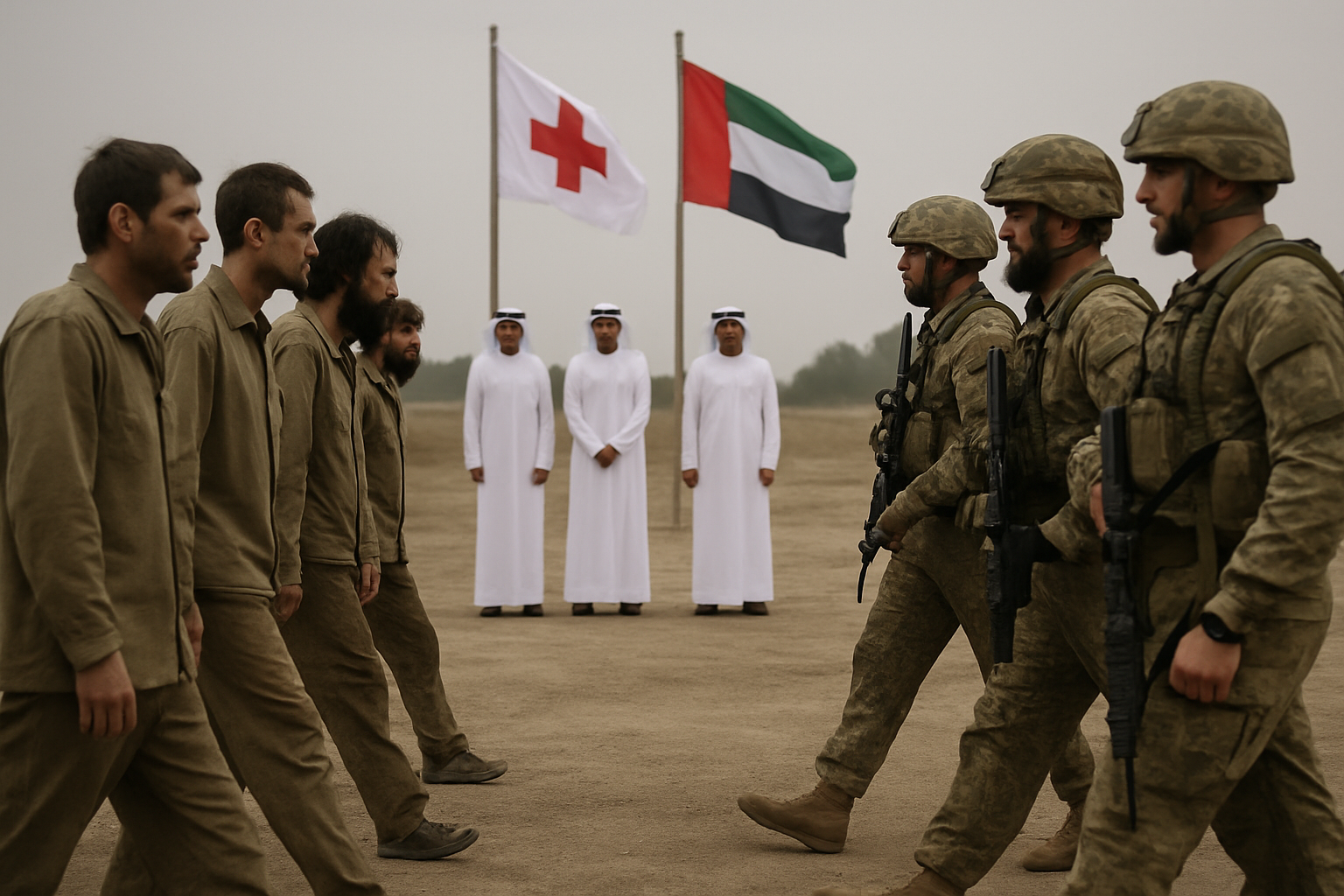
Russia and Ukraine conducted a significant prisoner exchange on Saturday, with each side releasing 175 prisoners of war hours before the start of a temporary Orthodox Easter ceasefire, marking a rare moment of humanitarian cooperation amid the ongoing four-year conflict.
The United Arab Emirates facilitated the exchange, which saw 175 Ukrainian soldiers and civilians return home in exchange for 175 Russian military personnel. The prisoner swap occurred on April 11, 2026, representing the latest in a series of humanitarian gestures that have continued despite the suspension of major trilateral peace negotiations between Ukraine, Russia, and the United States.
Orthodox Easter Ceasefire Context
The prisoner exchange took place just hours before the implementation of a 36-hour Orthodox Easter ceasefire that President Vladimir Putin announced would run from April 11-12, 2026. Ukrainian President Volodymyr Zelensky confirmed Ukraine would respect the temporary truce, stating that "people need Easter without threats and a real move towards peace."
However, the ceasefire was marred by immediate violations, with reports of casualties in Ukraine's Dnipropetrovsk region where Russian airstrikes killed 2 people and wounded 3 others despite the announced religious truce. Bulgarian media sources documented deadly overnight attacks that brought "new casualties and destruction, casting a heavy shadow over hopes for a brief pause in the war."
UAE's Continued Mediation Role
The United Arab Emirates has emerged as a crucial mediator in prisoner exchanges throughout the conflict, building on the success of February 2026's historic 314-prisoner exchange that marked the largest such swap in five months. The UAE's methodology, which involves working groups organized by topic and joint position synchronization, has proven effective in achieving concrete humanitarian results even amid continued military operations.
"The UAE's neutral hosting has been crucial for structured negotiations and has demonstrated that diplomatic engagement can produce humanitarian breakthroughs despite fundamental disagreements on territorial issues."
— Ukrainian Defense Minister Rustem Umerov
This latest exchange represents the 72nd prisoner swap since Russia's February 2022 invasion, with Ukraine having received approximately 18,000 bodies total according to Kremlin advisor Vladimir Medinsky. The systematic approach to prisoner exchanges has served as a confidence-building measure that enables continued diplomatic engagement despite the suspension of broader peace talks.
Suspended Peace Negotiations
The prisoner exchange occurs against the backdrop of indefinitely suspended trilateral peace talks between Ukraine, Russia, and the United States. These negotiations, which achieved significant breakthroughs in February 2026, have been postponed due to the Iran crisis consuming American foreign policy attention.
The February achievements included the restoration of US-Russia military communications after a four-year suspension and the establishment of Pentagon-European Command deconfliction protocols covering operations in Syria, the Arctic, and Africa. European "Big 5" observers—Germany, France, Italy, the UK, and Poland—participated in Geneva talks for the first time, achieving what US Special Envoy Steve Witkoff described as "significant progress" on ceasefire monitoring mechanisms.
However, fundamental territorial disputes remain unresolved. Russia continues to demand recognition of its control over eastern Ukrainian territories and insists that any direct talks between Presidents Putin and Zelensky must occur in Moscow. Ukraine maintains its position on territorial integrity while seeking long-term security guarantees from Western allies.
Nuclear Governance Crisis
The prisoner exchange takes place amid an unprecedented nuclear governance crisis following the February 5, 2026 expiration of the New START treaty between the United States and Russia. This marks the first time in over 50 years that the two nuclear superpowers, which control 80% of global nuclear weapons, operate without bilateral nuclear constraints.
UN Secretary-General António Guterres has described this as a "grave turning point," with nuclear risks at their "highest in decades." The restored military communications through Pentagon-Russian General Staff channels represent the only remaining formal diplomatic channel between the superpowers, making the preservation of these humanitarian exchange mechanisms critically important.
Military Situation and Territorial Dynamics
Despite the prisoner exchange and temporary ceasefire, the military situation continues to evolve rapidly. Russian forces have accelerated territorial gains, capturing 481 square kilometers in January 2026 compared to 260 square kilometers in December 2025—an 85% increase representing the fastest monthly expansion in months.
Ukraine has disclosed that 55,000 of its soldiers have been officially killed, with a "large number" missing in action. International estimates suggest actual casualties may be two to three times higher. The systematic targeting of civilian infrastructure continues, with over 1,170 buildings in Kyiv lacking adequate heating from previous energy attacks, and Ukrainian nuclear plants forced to halt electricity production for the first time in the conflict.
Ukraine's Strategic Evolution
Amid the ongoing conflict, Ukraine has undergone a strategic transformation from aid recipient to security provider on the global stage. The country has deployed over 200 military specialists to Middle Eastern nations including the UAE, Qatar, Jordan, Bahrain, and Kuwait to share expertise in combating Iranian Shahed drones—the same weapons systems that have been attacking Ukrainian infrastructure.
This evolution represents a significant shift in Ukraine's international partnerships and potentially creates new leverage for future diplomatic negotiations. The UK has also revealed four operational Maintenance, Repair, and Operations (MRO) facilities within Ukraine servicing Western-supplied equipment, with a fifth facility planned, marking the first public acknowledgment of such extensive military infrastructure cooperation.
International Support and Divisions
International support for Ukraine remains substantial despite growing divisions among allies. The European Union has approved a historic €90 billion loan package—the largest single-nation assistance in EU history—though Slovakia, the Czech Republic, and Hungary have refused to participate, exposing significant European divisions.
Additional military support continues with Sweden and Denmark providing €246 million in air defense systems, and Germany delivering 35 Patriot missiles. Over 17.8 million Ukrainians are currently accessing winter support programs as the international community maintains humanitarian assistance despite competing global priorities.
Religious and Cultural Significance
The timing of the prisoner exchange ahead of Orthodox Easter carries particular cultural and religious significance. Orthodox Easter represents shared religious and cultural traditions that transcend political boundaries, with over half a million Orthodox Christians worldwide participating in Easter celebrations. The temporary ceasefire provides a moment for religious observance without the immediate threat of violence, though the reported violations highlight the persistent challenges in implementing even brief humanitarian pauses.
The moral weight of the humanitarian pause during the holy period has been recognized internationally, even as military operations continue to cast shadows over hopes for sustained peace.
Framework Preservation for Future Negotiations
Despite the indefinite suspension of major peace talks due to the Iran crisis, diplomatic achievements remain intact and can be reactivated when favorable conditions return. The prisoner exchange mechanisms, structured negotiation formats, and Pentagon-Moscow deconfliction protocols represent the most substantial US-Russia agreements since the conflict began.
The Trump administration's June 2026 deadline for comprehensive peace negotiations in Washington remains uncertain due to competing Middle East priorities. However, the preservation of humanitarian frameworks demonstrates that diplomatic innovation can overcome military escalation when international circumstances permit sustained engagement.
Looking Forward
The April 11 prisoner exchange represents both the potential and limitations of current diplomatic efforts. While humanitarian cooperation continues to produce concrete results—reuniting families and maintaining some level of communication between the warring sides—the broader territorial and political disputes that fuel the conflict remain unresolved.
The success or failure of eventual resumed talks carries global implications for 21st-century territorial dispute resolution, European security architecture redefinition, and international law enforcement credibility. As the conflict approaches its fourth anniversary, the international community continues to watch for diplomatic innovation that might provide a template for resolving complex territorial disputes with global implications for conflict prevention and territorial sovereignty principles.
The prisoner exchange ahead of Orthodox Easter, while a welcome humanitarian gesture, underscores both the persistence of diplomatic channels and the urgent need for broader solutions to Europe's deadliest conflict since World War II.