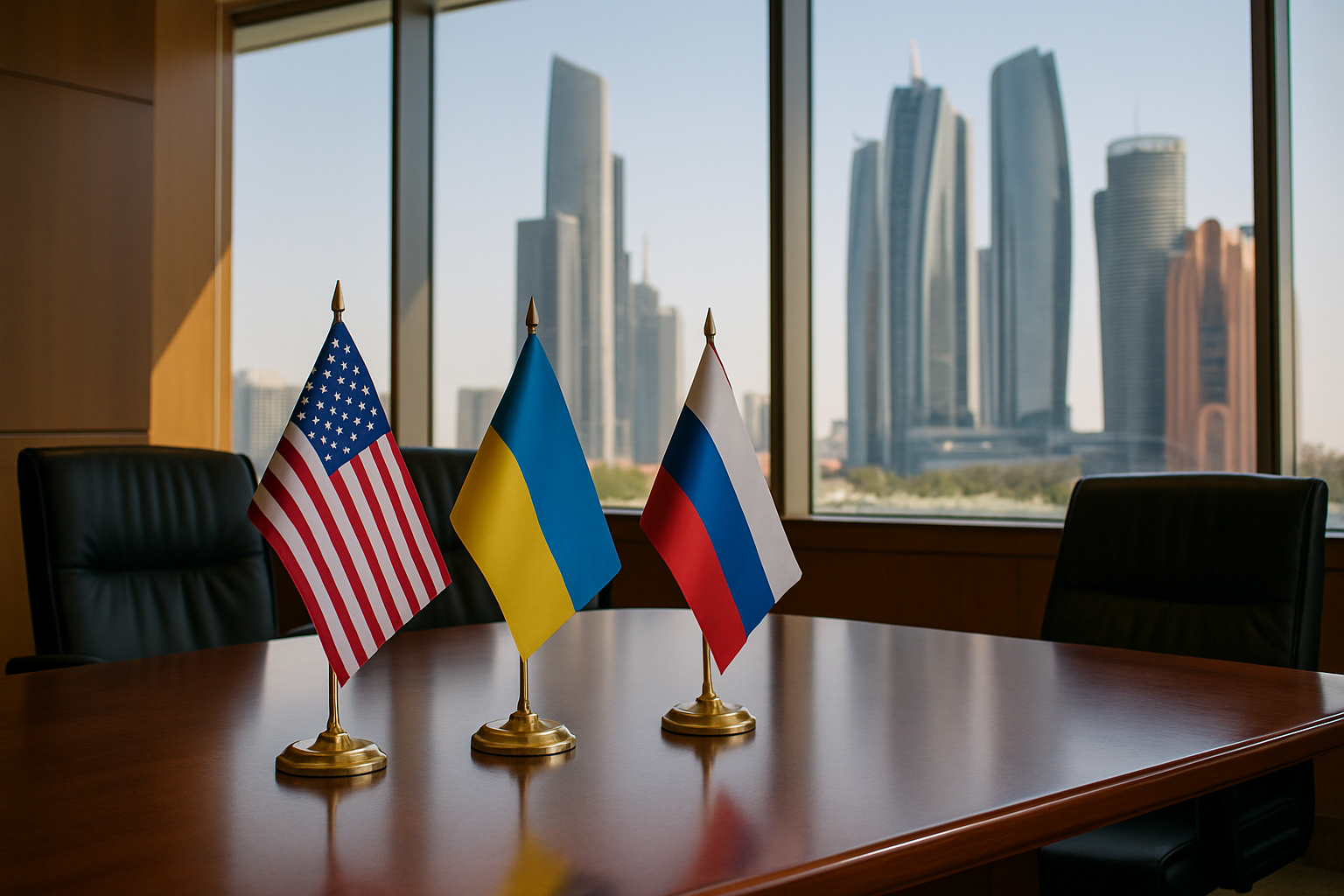
The second round of US-mediated peace talks between Ukraine, Russia, and the United States began Wednesday in Abu Dhabi, marking a crucial diplomatic effort to end Europe's deadliest conflict since World War II as the war approaches its fourth anniversary.
Ukrainian Defense Minister Rustem Umerov, leading Kyiv's delegation, announced the start of trilateral negotiations in the UAE capital, confirming the talks would follow the same format as the previous round held last month. The discussions are expected to span multiple days, with negotiations occurring in separate working groups focused on specific issues before reconvening for joint position synchronization.
"The negotiation process has started in a trilateral format - Ukraine, USA and Russia. Further - work in separate groups by directions, after which a repeated joint synchronization of positions is planned," Umerov stated.
Timing Amid Massive Russian Escalation
The talks commence against a backdrop of unprecedented Russian aggression, with Moscow launching what DTEK energy company described as the "most powerful blow" of 2026 against Ukrainian energy infrastructure just hours before negotiations began. The massive coordinated attack, involving hundreds of drones and missiles, left over 1,170 buildings in Kyiv without heating during extreme winter conditions with temperatures plummeting to minus-30°C in some regions.
The timing of the assault, occurring just one day before the scheduled peace talks, broke an informal agreement between President Trump and Russian President Putin to avoid targeting energy infrastructure. The attack affected eight Ukrainian oblasts, with critical facilities including the Darnytska CHP-4 power plant in Kyiv temporarily shut down and a thermal power plant in Kharkiv forced offline.
"This is terror and escalation by Moscow. We are adjusting our strategy at the negotiations accordingly."
— President Volodymyr Zelensky
In Kharkiv, the three-hour bombardment forced 820 buildings to drain their heating systems to prevent pipe bursts, while Zaporizhzhia reported one civilian death from drone strikes. Emergency warming centers were activated across the affected regions as energy workers scrambled to restore services during the harsh winter weather.
Diplomatic Stakes and International Involvement
NATO Secretary-General Mark Rutte made a surprise visit to Kyiv on Tuesday, addressing the Ukrainian Parliament and condemning the Russian attacks as sending a "bad signal" before negotiations. His appearance underscored Western support for Ukraine's negotiating position and highlighted the international attention focused on the Abu Dhabi talks.
The United States delegation is led by Special Envoy Steve Witkoff, who has been tasked with facilitating dialogue between the warring parties. The inclusion of direct US participation marks a significant escalation in diplomatic engagement compared to previous negotiating formats that primarily involved European mediators.
France24 reports indicate that the long-term fate of territory in eastern Ukraine remains the primary sticking point in achieving a comprehensive peace agreement. Russian forces have maintained control over significant portions of Ukrainian territory since the February 2022 invasion, with territorial control becoming increasingly entrenched as the conflict has prolonged.
Regional Divisions and Support
European allies remain divided on engagement strategies with Russia. While Germany continues to oppose direct talks with President Putin, citing Moscow's "maximalist demands," France and Italy have advocated for maintaining diplomatic channels. The United Kingdom and France have pledged potential troop deployments to enforce any future peace agreement, a commitment that has drawn Russian threats of escalation.
The UAE's role as neutral host demonstrates the Gulf state's growing diplomatic influence and its positioning as a mediator in international conflicts. Abu Dhabi's selection as venue reflects its relationships with all parties and its track record of facilitating sensitive diplomatic discussions.
Military Context and Battlefield Developments
The negotiations occur as Russian forces have accelerated territorial gains, capturing 481 square kilometers in January compared to 260 square kilometers in December, according to the Institute for Study of War. This represents a concerning trend for Ukrainian forces, who have been under increasing pressure along multiple front lines.
Over 10,000 Russian drones and bombs were launched against Ukrainian targets in January 2026 alone, demonstrating Moscow's continued commitment to military pressure alongside diplomatic engagement. The sustained bombardment has particularly targeted civilian infrastructure, including energy facilities crucial for heating during the harsh winter months.
Poland responded to the latest attacks by deploying fighter jets preemptively, while Sweden and Denmark announced a €246 million air defense package including advanced Tridon Mk2 systems. These measures reflect growing regional concerns about conflict escalation and the need for enhanced defensive capabilities.
Ukrainian Position and Expectations
Despite the pre-negotiation escalation, President Zelensky has maintained what he describes as "cautious optimism" for achieving a "dignified and lasting peace." However, Ukrainian officials have made clear that territorial integrity and sovereignty remain non-negotiable elements of any agreement.
Ukraine has implemented new security measures, including a Starlink terminal registration system developed in cooperation with SpaceX to prevent Russian forces from utilizing captured terminals for drone operations. Defense Minister Umerov has praised Elon Musk as "a true champion of freedom and a true friend of the Ukrainian people" for cooperation in blocking unauthorized Russian access to the satellite internet service.
The World Bank has allocated $40 million for Ukrainian energy system restoration, reflecting international commitment to supporting Ukraine's resilience amid ongoing attacks on critical infrastructure. Over 17.8 million Ukrainians have accessed winter support programs, highlighting the humanitarian dimensions of the conflict.
Russian Strategic Calculations
Russian sources, including government news agency TASS, have confirmed participation in the talks while maintaining that any direct negotiations between Presidents Putin and Zelensky must occur in Moscow. This position reflects Russia's attempt to dictate terms and venue selection for higher-level diplomatic engagement.
The timing of the massive infrastructure attack suggests a calculated strategy to strengthen Russia's negotiating position through demonstrating military capability and imposing humanitarian pressure during extreme weather conditions. Military analysts describe this as "winter weapon warfare" designed to break civilian morale and pressure Ukrainian leadership toward concessions.
Russia has shifted tactics in recent weeks toward what Ukrainian officials term "logistics terror," targeting transportation infrastructure and supply routes rather than focusing exclusively on military targets. This approach has killed over 20 civilians in the past five days and represents an evolution in Moscow's strategic approach.
International Implications and Future Prospects
The Abu Dhabi talks represent the most significant diplomatic initiative to end the conflict since Russia's February 2022 invasion. However, the pre-negotiation escalation and entrenched positions of both sides suggest that immediate breakthrough remains unlikely.
Success would require addressing fundamental disagreements over territorial control, security guarantees, war crimes accountability, and post-conflict reconstruction responsibilities. The inclusion of direct US mediation adds diplomatic weight but also raises expectations for meaningful progress.
European security architecture remains a central concern, with implications extending beyond bilateral Ukraine-Russia relations to broader questions of international law, territorial sovereignty, and the effectiveness of multilateral security institutions.
The talks are expected to continue through the week, with the potential to establish frameworks for future higher-level negotiations. However, both sides maintain significant military capabilities and show no indication of abandoning their core objectives despite diplomatic engagement.
As emergency warming centers continue operating across Ukraine and international partners provide additional military and humanitarian support, the Abu Dhabi negotiations represent a critical test of whether diplomacy can prevail over military solutions in Europe's most devastating conflict in generations.