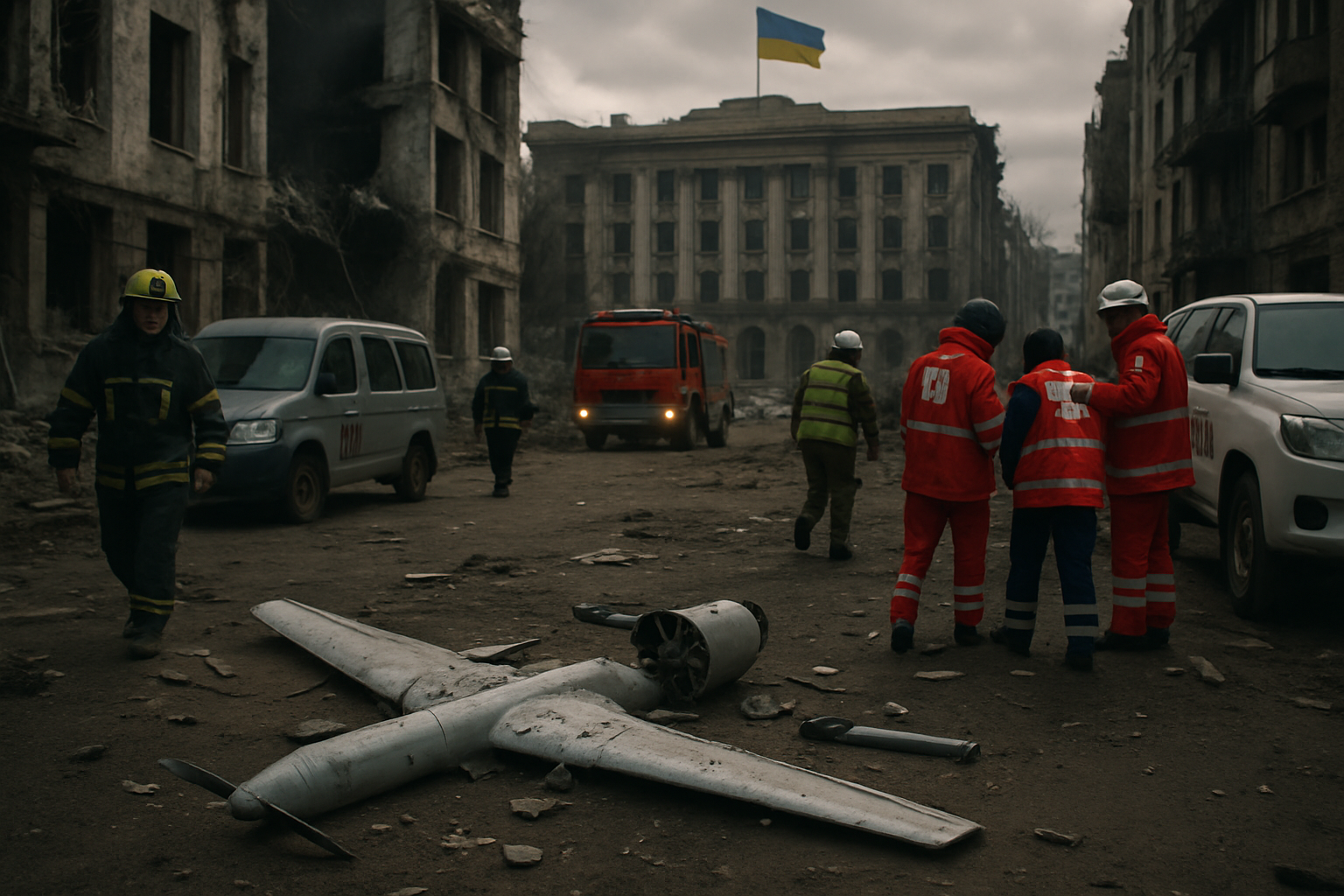
Ukraine reported over 35,000 Russian military casualties in March 2026—the highest monthly toll since the full-scale invasion began in February 2022—as diplomatic efforts remain suspended indefinitely due to the Iran crisis consuming international attention.
President Volodymyr Zelensky announced the staggering casualty figures as Ukraine faces a complex battlefield situation, with Russian forces continuing to make territorial gains despite suffering unprecedented losses. The suspension of trilateral peace talks between Ukraine, Russia, and the United States has dealt a major blow to diplomatic efforts that had achieved historic breakthroughs just months earlier.
Record Russian Losses and Continued Territorial Gains
March 2026 marked the deadliest month for Russian forces throughout the nearly four-year conflict, with Zelensky confirming that over 35,000 personnel were killed or severely wounded. This unprecedented toll comes despite Russian territorial advances of 481 square kilometers in January compared to 260 square kilometers in December 2025—an 85% increase representing the fastest monthly expansion in recent periods.
The apparent contradiction between massive casualties and territorial gains reflects what military analysts describe as Russia's willingness to accept "unsustainable human costs" to achieve tactical advances. According to Ukrainian sources, Russian forces deployed 7,987 guided aerial bombs (GABs) in March alone—more than 1,500 higher than February—while launching over 1,750 strike drones and 39 missiles in a single week.
Ukrainian Defense Forces reported eliminating 870 Russian soldiers in the past 24 hours alone, with total Russian casualties since February 24, 2022, reaching approximately 1,302,370 personnel according to official Ukrainian counts.
Peace Talks Suspended by Iran Crisis
The most promising diplomatic initiative since the invasion began has been indefinitely postponed due to the Iran crisis consuming American foreign policy attention. The suspension derails momentum from February 2026's historic breakthroughs, including a 314-prisoner exchange—the largest in five months—and the restoration of US-Russia military communications after a four-year suspension.
Geneva talks in February had achieved what US Special Envoy Steve Witkoff described as "significant progress" on ceasefire monitoring mechanisms, with European "Big 5" observers (Germany, France, Italy, UK, and Poland) participating for the first time. However, fundamental territorial disputes remained unresolved.
"Due to the situation around Iran, there are still no necessary signals for trilateral meeting until the security situation allows,"
— President Volodymyr Zelensky
The suspension represents a major setback for what had been the Trump administration's comprehensive peace timeline, with a June 2026 Washington venue deadline that included potential presidential-level engagement now uncertain due to Middle East priorities.
Massive Drone Warfare Escalation
Russia has dramatically escalated its use of unmanned aircraft, with recent attacks involving over 700 drones in 24-hour periods—representing some of the most intensive drone assaults of the entire conflict. The Russian Defense Ministry claimed to have intercepted 85 Ukrainian drones overnight, while Ukrainian air defenses neutralized the majority of incoming Russian drones.
These attacks have targeted civilian infrastructure across multiple regions, with particular focus on energy systems as part of what Ukrainian officials describe as systematic "energy terrorism." The strategy has left over 1,170 Kyiv buildings with inadequate heating during harsh winter conditions, while Ukrainian nuclear plants were forced to halt electricity production for the first time in the conflict.
Recent strikes killed multiple civilians, including a devastating attack in Zaporizhzhia using guided aerial bombs that killed 9 people and wounded dozens more. In Sumy region, Russian strikes killed 3 people and injured 22 others, while Kramatorsk suffered attacks that killed 3 civilians, including a 13-year-old boy.
Ukraine's Strategic Transformation
Amid the military challenges, Ukraine has undertaken a strategic transformation from aid recipient to security provider, particularly in the Middle East. Ukrainian military experts have been deployed to five countries—the UAE, Qatar, Jordan, Bahrain, and Kuwait—to share expertise in combating Iranian Shahed drones, the same weapons being used against Ukrainian infrastructure.
This evolution demonstrates Ukraine's growing role as a regional security partner, leveraging battlefield experience gained through nearly four years of conflict. The UK has also revealed four operational Military Repair Organization (MRO) facilities in Ukraine servicing Western-supplied equipment, with a fifth planned—the first public acknowledgment of such extensive military infrastructure on Ukrainian soil.
International Support Amid Divisions
International backing for Ukraine remains substantial but increasingly divided. The European Union approved a historic €90 billion loan package—the largest single-nation assistance package in EU history—though Slovakia, Czech Republic, and Hungary refused participation, exposing deep divisions within the bloc.
Canada has allocated more than 51 million Canadian dollars (approximately $39 million USD) for humanitarian aid projects in Ukraine, while Sweden and Denmark continue providing €246 million in air defense systems. Germany has delivered 35 Patriot missiles as part of ongoing military support.
However, competing global crises strain resources and attention. Gulf states have used more PAC-3 missiles against Iranian attacks in recent days than Ukraine received from the US over four years of conflict, highlighting resource allocation challenges in managing multiple simultaneous crises.
Nuclear Governance Crisis
The conflict continues amid an unprecedented nuclear governance crisis following the expiration of the New START treaty on February 5, 2026—the first time in over 50 years without US-Russia nuclear constraints. Both nations control approximately 80% of global nuclear weapons, with Russia possessing 4,380 warheads and the US holding 3,708.
UN Secretary-General António Guterres has warned of a "grave turning point" with nuclear risks at their "highest in decades." The restored military communications between the Pentagon and Russian General Staff represent the only remaining formal diplomatic channel between the nuclear superpowers.
Humanitarian Crisis Deepens
The human cost of the conflict continues to mount, with Ukraine having officially disclosed 55,000 military casualties, though a "large number" remain missing and international estimates suggest actual casualties could be 2-3 times higher. Over 17.8 million Ukrainians are currently accessing winter support programs due to systematic attacks on civilian infrastructure.
Russian propaganda has launched information campaigns attempting to justify systematic shelling of cities like Zaporizhzhia by falsely claiming "almost no civilians left" in targeted areas. These attacks continue to violate international humanitarian law, with documented targeting of repair personnel, emergency services, and residential areas during extreme weather conditions.
Recent incidents include attacks on a veterinary clinic near Kyiv that resulted in dozens of animal deaths, demonstrating the conflict's impact extends beyond human casualties to civilian infrastructure and services.
Territorial Disputes Remain Unchanged
Despite the suspension of formal negotiations, fundamental disagreements persist over eastern Ukrainian territories currently under Russian control. Russia continues to demand territorial recognition and insists that any Putin-Zelensky talks occur only in Moscow, while Ukraine maintains its territorial integrity position and seeks long-term security guarantees.
President Zelensky has categorically rejected territorial concessions, stating that the Ukrainian people would reject "handing over territories" as a "failure story." This core sticking point remains the primary obstacle to any comprehensive peace agreement.
Framework Preservation and Future Prospects
While formal trilateral negotiations remain suspended, diplomatic achievements from earlier breakthroughs remain intact. The prisoner exchange mechanisms, Pentagon-Moscow deconfliction protocols covering operations in Syria, the Arctic, and Africa, and structured negotiation formats developed through UAE methodology can be reactivated when the Iranian crisis permits.
The February Geneva talks proved that concrete humanitarian results are possible even amid continued military operations, though territorial compromise innovation will require unprecedented diplomatic solutions bridging fundamental positions that remain far apart.
Global Implications
The suspension of the most significant diplomatic opportunity since the invasion began carries implications far beyond Ukraine's borders. The conflict has become a template for 21st-century territorial disputes, with success or failure potentially affecting global conflict prevention mechanisms, international law enforcement credibility, and territorial sovereignty principles for decades to come.
The stakes include European security architecture redefinition, the credibility of international legal frameworks, and the effectiveness of diplomatic innovation versus traditional military approaches in resolving complex territorial disputes. The interconnected nature of regional conflicts in a multipolar security environment has been starkly demonstrated by how the Iran crisis can derail European diplomatic initiatives.
Looking Ahead
The timeline for resumed negotiations depends entirely on resolution of the Iran situation and broader Middle East stability. Military escalation continues with systematic civilian targeting while Ukraine maintains operational capabilities and expands international security partnerships.
The eventual success or failure of resumed talks will carry global implications for territorial sovereignty enforcement, conflict prevention mechanisms, and whether diplomatic innovation can overcome military approaches in determining European security architecture for the 21st century.
As the conflict enters what many observers consider a critical phase, the international community faces the challenge of managing multiple simultaneous crises while preserving momentum for what remains Europe's most significant security challenge since the Cold War. The coming months will likely determine whether the framework for peace can be reactivated or if the conflict will continue its devastating trajectory with implications extending far beyond Ukraine's borders.