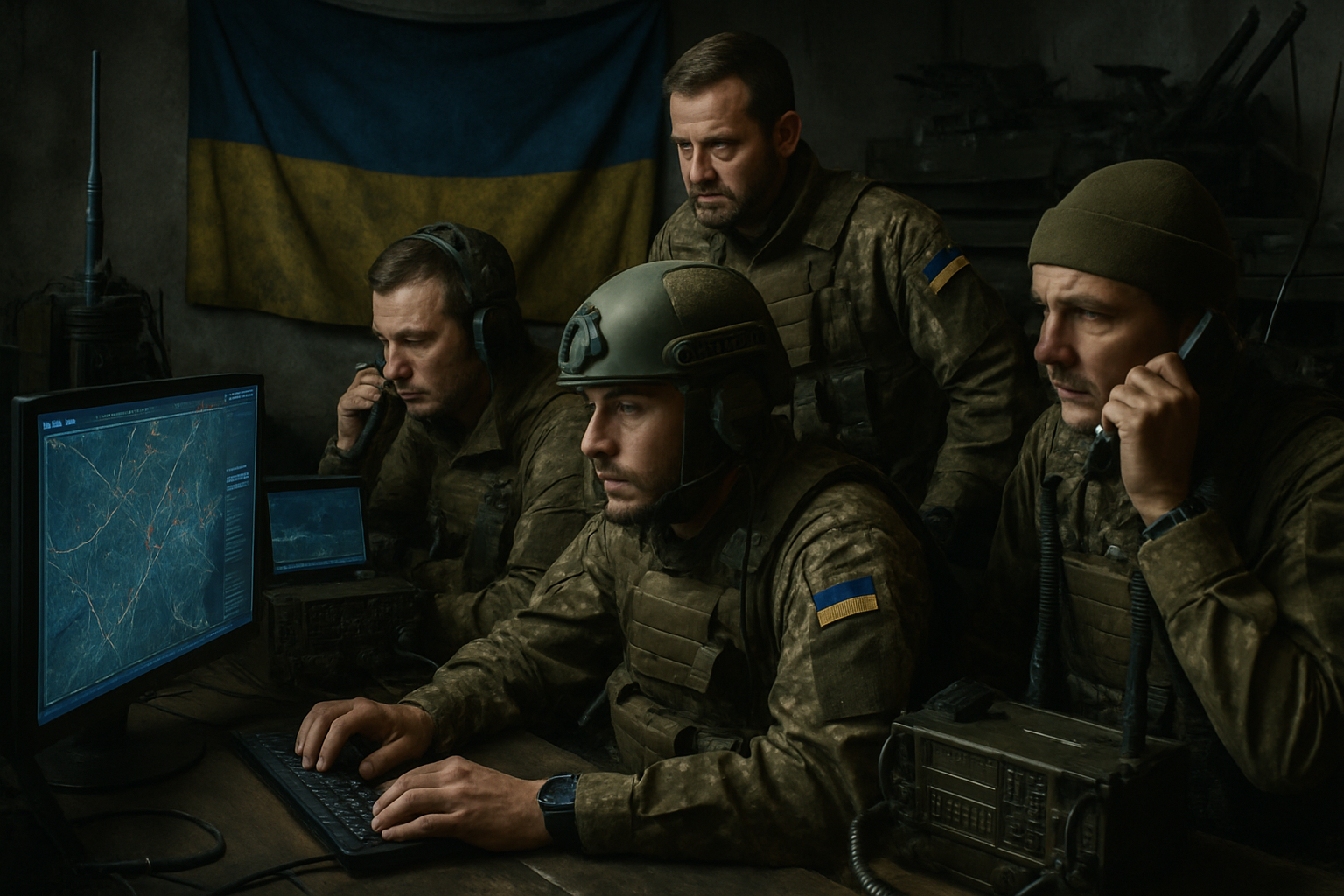
Peace talks between Ukraine, Russia, and the United States have been suspended indefinitely due to the Iran crisis, President Volodymyr Zelensky announced, marking a significant setback to diplomatic momentum that had achieved historic breakthroughs just weeks earlier.
The suspension of trilateral negotiations represents a major blow to international diplomatic efforts that had shown unprecedented progress through February 2026. The framework, built on the success of Abu Dhabi talks that achieved a historic 314-prisoner exchange and restored US-Russia military communications after a four-year suspension, now faces an uncertain future as global attention shifts to the Middle East crisis.
Military Operations Continue Amid Diplomatic Uncertainty
Despite the diplomatic setback, military operations have intensified across multiple fronts. Ukrainian forces reported 43 combat engagements since the beginning of Saturday, with the most intense fighting concentrated in Donetsk Oblast. Russian attacks on Saturday left two people dead in Zaporizhzhia and caused widespread power outages in the northern Chernihiv region, affecting thousands of residents.
The attacks underscore the ongoing humanitarian crisis as energy infrastructure remains a primary target. Over 47,000 customers lost electricity following strikes on Zaporizhzhia, while separate attacks damaged critical infrastructure in multiple regions. Ukrainian officials confirmed that Russian forces conducted more than 30 attacks on the Dnipropetrovsk region since morning, resulting in two deaths and five injuries.
Cross-Border Strikes Escalate Tensions
The conflict has witnessed significant escalation in cross-border operations. Ukrainian strikes on Russian territory have intensified, with Foreign Minister Andrii Sybiha stating that Ukraine will continue to expand the scale of deep strikes on legitimate targets inside Russia. These operations have resulted in civilian casualties on Russian soil, including drone strikes that killed civilians in the Bryansk and Belgorod regions.
Russian authorities reported that a Ukrainian drone strike in the Bryansk Region killed one civilian and damaged household buildings and agricultural equipment. Separately, attacks in Belgorod Region resulted in two deaths and one injury, with regional officials confirming damage to social facilities and commercial sites.
Historic Diplomatic Framework at Risk
The suspended peace talks had represented the most significant diplomatic opportunity since the conflict began in February 2022. The February breakthrough in Abu Dhabi achieved concrete humanitarian results that had built momentum for more substantive negotiations. The 314-prisoner exchange was the first in five months, while the restoration of US-Russia military communications established crucial deconfliction protocols for operations in Syria, the Arctic, and Africa.
The Geneva talks in February, which included European "Big 5" observers (Germany, France, Italy, UK, and Poland) for the first time, had achieved "significant progress" on ceasefire monitoring mechanisms according to US Special Envoy Steve Witkoff. However, fundamental territorial disputes remained unresolved, with eastern Ukrainian territories under Russian control serving as the primary sticking point.
International Support Amid Growing Divisions
International support for Ukraine continues at historic levels, with the EU's €90 billion loan package representing the largest single-nation assistance in European history. However, divisions within the alliance have become increasingly apparent. Slovakia, Czech Republic, and Hungary refused to participate in the EU loan package, highlighting persistent disagreements over engagement strategies.
Sweden and Denmark have committed €246 million for air defense systems, while Germany has delivered 35 Patriot missiles as part of continued military support. Despite these commitments, over 17.8 million Ukrainians remain dependent on winter support programs due to systematic attacks on civilian infrastructure.
Nuclear Governance Crisis Adds Urgency
The diplomatic suspension occurs against the backdrop of an unprecedented nuclear governance crisis. The New START treaty between the US and Russia expired on February 5, 2026, marking the first time in over 50 years without bilateral nuclear constraints between the superpowers. Both nations control approximately 80% of global nuclear weapons, with UN Secretary-General António Guterres describing this as a "grave turning point" with nuclear risks at their "highest in decades."
The restored military communications channel represents the only remaining formal diplomatic avenue between the nuclear superpowers, making the suspension of broader negotiations particularly concerning for global security analysts.
Ukraine's Strategic Evolution
Amid the diplomatic uncertainty, Ukraine has begun expanding its role from aid recipient to security provider. Military experts are being deployed to the UAE, Qatar, Jordan, Bahrain, and Kuwait to share expertise in combating Iranian Shahed drones—the same weapons systems being used against Ukrainian infrastructure. This strategic pivot demonstrates Ukraine's evolution into a global security partner while leveraging battlefield experience gained through nearly two years of conflict.
The UK has revealed the existence of four operational maintenance, repair, and overhaul (MRO) facilities in Ukraine servicing Western-supplied equipment, with a fifth facility planned. This represents the first public acknowledgment of such extensive military infrastructure and signals long-term commitment to Ukrainian defense capabilities beyond current conflict requirements.
Iran Crisis Derails Peace Momentum
The suspension of Ukraine-Russia negotiations highlights the interconnected nature of regional conflicts in the current multipolar security environment. The Iran crisis has consumed American foreign policy attention and resources, preventing the high-level trilateral engagement necessary for territorial dispute resolution. Zelensky emphasized that talks would resume "as soon as the security situation allows," but provided no timeline for when conditions might permit renewed negotiations.
This development demonstrates the challenges facing international community efforts to manage multiple simultaneous crises while preserving momentum on Europe's most significant security challenge since the Cold War.
Territorial Disputes Remain Unchanged
The fundamental disagreement over eastern Ukrainian territories under Russian control remains unchanged despite months of diplomatic engagement. Russia continues to demand territorial recognition and insists that any Putin-Zelensky meeting must occur in Moscow. Ukraine maintains its territorial integrity position while seeking long-term security guarantees from Western allies.
Russian territorial gains have accelerated in recent months, with forces capturing 481 square kilometers in January 2026 versus 260 square kilometers in December 2025—an 85% increase representing the fastest territorial advances in months. These gains potentially strengthen Moscow's bargaining position should negotiations eventually resume.
Humanitarian Impact Deepens
The human cost of the conflict continues to mount. President Zelensky has disclosed that 55,000 Ukrainian soldiers have been officially killed, with a "large number" still missing. International estimates suggest actual casualty figures may be two to three times higher. The systematic targeting of civilian infrastructure, characterized by officials as "energy terrorism," has left over 1,170 buildings in Kyiv without adequate heating during extreme winter conditions.
Recent attacks have demonstrated the calculated nature of civilian targeting. The Bohodukhiv drone strike in February killed four civilians, including three children (two one-year-olds and one two-year-old) along with their 34-year-old father. This represented the second deadly attack on the same town within three days, illustrating the systematic pattern of family targeting that violates Geneva Conventions.
Strategic Implications for Global Security
The suspension of what many considered the most significant diplomatic opportunity since the conflict began carries implications far beyond Ukraine and Russia. Success could have provided a template for 21st-century territorial dispute resolution and ended Europe's deadliest war since World War II. Failure to maintain diplomatic momentum may lead to further military escalation and undermine confidence in diplomatic solutions to territorial disputes globally.
The stakes extend to fundamental questions about European security architecture, international law enforcement, and territorial sovereignty principles that will shape power competition for decades to come. The framework achievements—prisoner exchange mechanisms, structured negotiation formats, and Pentagon-Moscow deconfliction protocols—remain intact and could be reactivated when favorable conditions permit.
Looking Ahead: Uncertain Timeline
The timeline for resumed peace negotiations depends entirely on the resolution of the Iran situation in the Middle East. Military escalation continues between Ukrainian and Russian forces while Ukraine expands its international partnerships and maintains operational capabilities across multiple theaters. The success or failure of eventual resumed talks carries global implications for whether territorial disputes are resolved through diplomatic innovation or continued military approaches.
The preservation of the diplomatic framework offers hope that engagement can resume when geopolitical conditions stabilize. However, the longer negotiations remain suspended, the greater the risk that military dynamics will fundamentally alter the strategic landscape in ways that make compromise more difficult to achieve.
As the conflict enters what many observers describe as a critical phase, the international community faces the challenge of maintaining support for diplomatic solutions while managing the reality of ongoing military operations. The ability to revive peace talks may ultimately determine whether this conflict becomes a template for diplomatic innovation or a cautionary tale about the limits of international mediation in an increasingly volatile world.