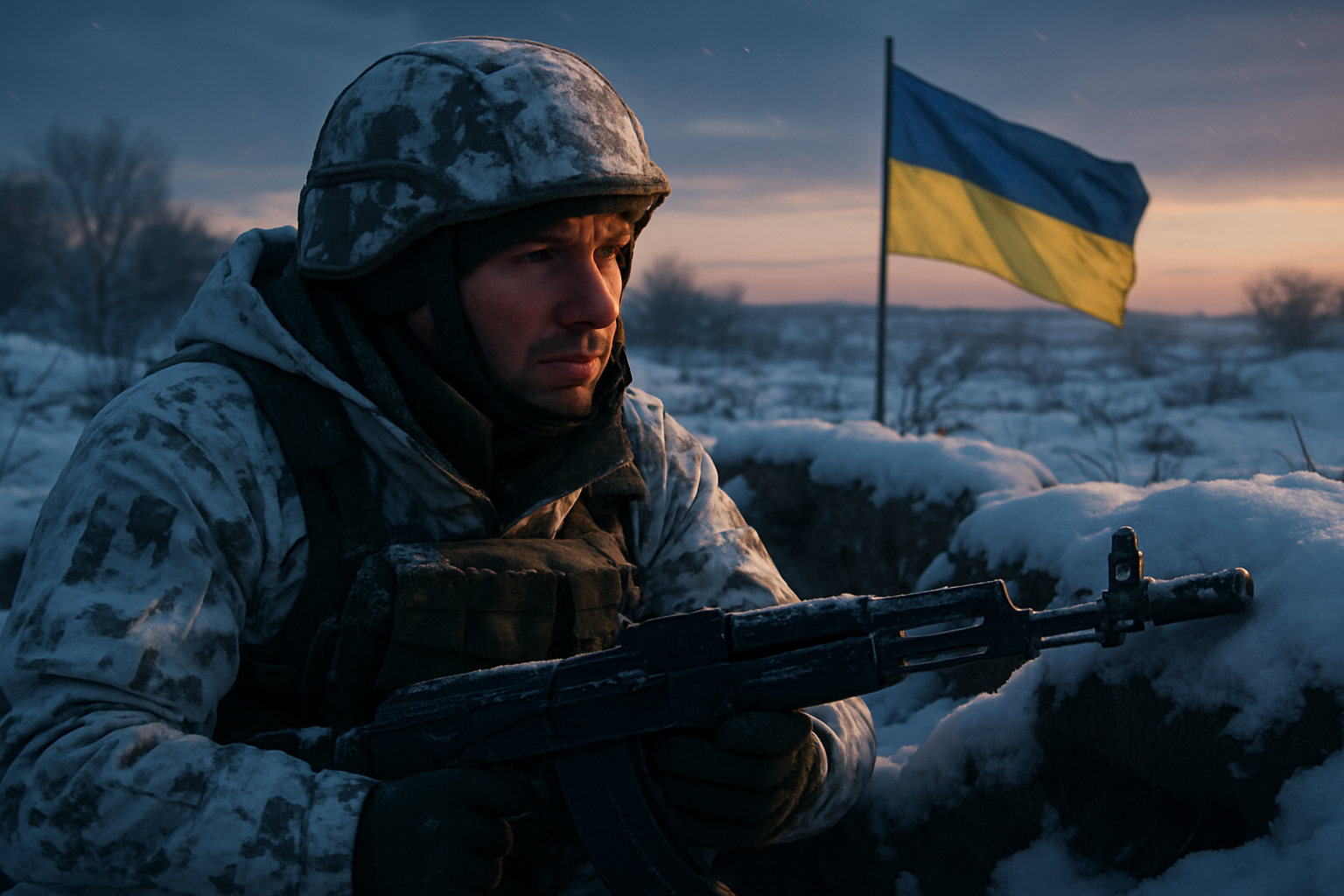
Ukrainian President Volodymyr Zelensky has established a clear red line for future peace negotiations, demanding a minimum 20-year security guarantee from the United States as a prerequisite for any treaty with Russia, while fighting continues across multiple fronts despite recent diplomatic breakthroughs.
The demand for extended security guarantees emerged during the Munich Security Conference, where Zelensky emphasized that Ukraine requires concrete, long-term commitments rather than temporary assurances. This represents a significant escalation in Ukraine's negotiating position as the conflict approaches its fourth year with no clear resolution in sight.
Diplomatic Breakthroughs Amid Military Escalation
Despite ongoing military operations, February 2026 has witnessed unprecedented diplomatic progress through trilateral negotiations in Abu Dhabi involving Ukraine, Russia, and the United States. The talks achieved a historic 314-prisoner exchange—the first in five months—and restored US-Russia military communications after a four-year suspension.
Ukrainian Defense Minister Rustem Umerov described the Abu Dhabi talks as "substantial and productive," with discussions covering detailed ceasefire monitoring mechanisms. The restoration of Pentagon-Russian General Staff communications includes deconfliction protocols for military operations in Syria, the Arctic, and Africa, representing the most significant US-Russia military agreement since the conflict began.
"We achieved concrete humanitarian results while continuing to address the fundamental territorial challenges,"
— Rustem Umerov, Ukrainian Defense Minister
Accelerating Military Operations
Military escalation has intensified alongside diplomatic efforts, creating a complex paradox. Russian forces captured 481 square kilometers in January 2026 compared to 260 square kilometers in December 2025, demonstrating accelerated territorial gains. Intelligence reports indicate Russia has launched over 10,000 drones and bombs since January 2026 alone.
The conflict has taken a devastating human toll, with President Zelensky revealing that 55,000 Ukrainian soldiers have been officially confirmed killed, with a "large number" still missing in action. International researchers estimate actual casualties could be two to three times higher when including undocumented losses.
Systematic targeting of civilian infrastructure continues through what Ukrainian officials describe as "winter warfare." Energy attacks have left over 1,170 buildings in Kyiv without heating during temperatures reaching minus-30°C. This strategy of attacking civilian infrastructure during extreme weather conditions has prompted international condemnation for violating Geneva Conventions.
International Support and Nuclear Crisis Context
The European Union has approved a historic €90 billion loan package for Ukraine—the largest such assistance package ever provided to a single nation. However, Slovakia, Czech Republic, and Hungary refused to participate, highlighting persistent divisions within the European Union regarding the scope of support.
Additional international backing includes Sweden-Denmark's €246 million air defense package featuring Tridon Mk2 systems, Germany's provision of 35 Patriot missiles, and Poland's fighter jet deployments for border security. Over 17.8 million Ukrainians are currently accessing winter support programs.
The diplomatic efforts occur against the backdrop of a nuclear governance crisis. The New START Treaty between the United States and Russia expired on February 5, 2026—marking the first time in over 50 years without bilateral nuclear constraints between the superpowers. UN Secretary-General António Guterres described this as a "grave turning point" with nuclear risks at their "highest in decades."
Territorial Disputes and Future Negotiations
The fundamental sticking point remains the status of eastern Ukrainian territories currently under Russian control. Russia demands territorial recognition and insists that any Putin-Zelensky summit must occur in Moscow. Ukraine maintains its position on territorial integrity while seeking the comprehensive security guarantees that Zelensky outlined.
The Trump administration has established a June 2026 deadline for a comprehensive peace agreement, with talks potentially moving to Washington, D.C. This evolution from Abu Dhabi to a Washington venue suggests the possibility of presidential-level engagement in the peace process.
European Security Architecture Under Pressure
The Munich Security Conference revealed unprecedented discussions about European strategic autonomy, including conversations about expanding France's nuclear deterrent beyond national scope. German Chancellor Friedrich Merz confirmed direct talks with French President Emmanuel Macron about nuclear cooperation—the first such discussions since the Cold War ended.
These conversations reflect broader concerns about the reliability of American security guarantees and represent a fundamental reassessment of post-World War II Western alliance structures. Poland and Finland have also engaged in preliminary conversations about extended deterrence arrangements.
Economic Warfare and Sanctions
Beyond military operations, the conflict has evolved into comprehensive economic warfare. Ukrainian intelligence reports that Russian authorities are expanding property confiscation as a punishment mechanism to plug holes in their war-strained budget. Meanwhile, Ukraine has imposed sanctions on foreign suppliers of drone and missile components to Russia, demonstrating expanded supply chain disruption efforts.
The EU has implemented its 20th sanctions package, including a complete ban on maritime services for Russian crude oil exports and blacklisting 43 additional shadow fleet vessels. Anti-circumvention mechanisms now target digital control machinery exports.
Humanitarian and Cultural Dimensions
The conflict's humanitarian scope continues expanding, with systematic targeting of repair personnel and emergency services. Fifteen DTEK energy workers have been killed while attempting to restore power infrastructure, demonstrating the systematic nature of attacks on civilian repair efforts.
Ukrainian officials acknowledge the need for "systematic cultural projects abroad to compete with Russia," representing a shift in messaging from "resilience" to "freedom as responsibility." This evolution in soft power strategy reflects preparations for potential post-conflict international positioning.
Looking Ahead: Critical Diplomatic Phase
The coming months represent the most significant diplomatic opportunity since the conflict began. The June 2026 deadline creates unprecedented pressure for innovative territorial dispute resolution. Success could end Europe's deadliest war since World War II and provide a template for 21st-century conflict resolution.
However, fundamental positions remain far apart. Ukraine's demand for 20-year security guarantees reflects deep skepticism about temporary arrangements, while Russia's territorial demands and insistence on Moscow venues for high-level talks suggest continued maximalist positions.
The restoration of US-Russia military communications and prisoner exchanges demonstrate that sustained diplomatic engagement can produce concrete humanitarian results even amid continued military operations. Whether this momentum can translate to breakthrough solutions for territorial disputes remains the critical test for international diplomacy.
As the conflict approaches its fourth year, the stakes extend far beyond Ukraine and Russia. The outcome will influence European security architecture, international law enforcement, and territorial sovereignty principles for decades to come. The world watches whether diplomatic innovation can prevail over continued military escalation in resolving one of the most consequential conflicts of the 21st century.