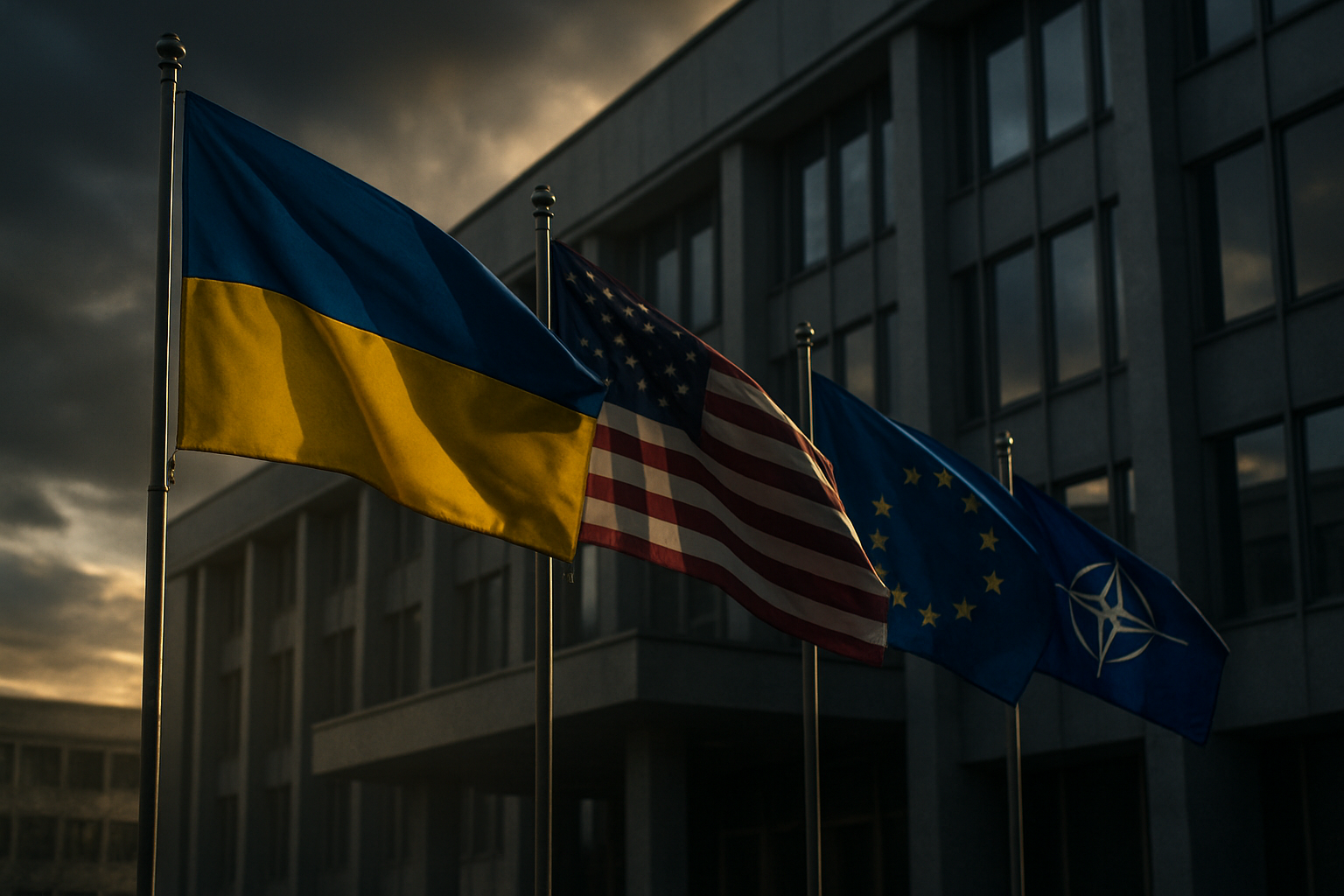
Ukrainian President Volodymyr Zelensky announced his readiness for an Easter ceasefire with Russia while revealing that Western allies have requested Ukraine reduce attacks on Russian energy infrastructure, marking a potential shift in strategy as the war approaches its fourth anniversary.
Speaking in an interview published Monday, Zelensky stated that Ukraine is prepared to reciprocate if Moscow halts its systematic attacks on Ukrainian energy systems. "We are ready for an Easter ceasefire if Russia stops attacking our energy system," he declared, signaling a willingness to explore temporary cessations of hostilities.
Peace Talks Indefinitely Suspended
The Ukrainian president's Easter ceasefire proposal comes as trilateral peace negotiations between Ukraine, Russia, and the United States remain indefinitely postponed due to the escalating crisis in the Middle East. The suspension represents a significant setback after historic February 2026 diplomatic breakthroughs that had raised hopes for a resolution to Europe's deadliest conflict since World War II.
The suspended talks had achieved unprecedented progress, including a 314-prisoner exchange—the first in five months—and the restoration of US-Russia military communications after a four-year suspension. Pentagon officials confirmed the establishment of deconfliction protocols covering operations in Syria, the Arctic, and Africa, representing the most substantial US-Russia military agreement since the conflict began.
Western Pressure on Energy Targets
In a candid admission, Zelensky revealed that Ukraine's Western allies have sent "signals" requesting the country reduce strikes on Russian oil and energy infrastructure. This marks a notable development in Western strategy, as previous military aid and intelligence sharing had implicitly supported Ukrainian long-range capabilities.
"Our allies have asked us to reduce attacks on Russian energy sectors. We understand their concerns about global energy markets, but we must protect our own infrastructure first."
— Volodymyr Zelensky, Ukrainian President
The request appears to reflect Western concerns about potential escalation and the global economic impact of disrupted Russian energy exports, even as Moscow continues its systematic targeting of Ukrainian civilian infrastructure.
Military Situation Deteriorates
Despite diplomatic overtures, the military situation on the ground continues to deteriorate. Recent Ukrainian reports indicate 120 combat clashes occurred in a single day, with Russian forces attempting 24 attacks in the Pokrovsk sector alone. Ukrainian forces reportedly eliminated 65 Russian troops on the Pokrovsk axis during intense fighting.
The conflict has exacted an enormous toll, with Zelensky previously disclosing that 55,000 Ukrainian soldiers have been officially killed, with a "large number" missing. International estimates suggest actual casualties may be two to three times higher than official figures.
International Security Developments
Ukraine's security services have been active in countering Russian intelligence operations, recently arresting a Russian Federal Security Service (FSB) agent in Khmelnytskyi who was allegedly planning to blow up vehicles belonging to the Armed Forces. Such operations underscore the continued threat of sabotage and espionage activities behind Ukrainian lines.
Strategic Defense Focus
Ukrainian military leadership has indicated a strategic shift toward defensive operations aimed at containing Russian advances. Army Commander-in-Chief Oleksandr Syrskyi stated that Ukrainian forces will "concentrate on strategic defensive operations and counteroffensives on weak fronts" in 2026.
This defensive posture reflects the reality of limited resources and the need to preserve Ukrainian forces while maintaining territorial integrity. The strategy represents a pragmatic approach to a conflict that has seen Russian territorial gains accelerate in recent months.
Nuclear Governance Crisis
The war continues against the backdrop of an unprecedented nuclear governance crisis. The New START treaty between the United States and Russia expired on February 5, 2026, marking the first time in over 50 years that the world's two largest nuclear powers operate without bilateral constraints on their arsenals.
Both nations control approximately 80% of global nuclear weapons, with Russia possessing 4,380 warheads and the United States 3,708. UN Secretary-General António Guterres has warned of a "grave turning point," stating that nuclear risks are at their "highest in decades."
Middle East Impact on European Diplomacy
The suspension of Ukraine-Russia peace talks due to the Iran crisis illustrates the interconnected nature of global conflicts in today's multipolar security environment. The Middle East situation has diverted Western attention and resources, including critical air defense systems that might otherwise be supplied to Ukraine.
Ukrainian officials have noted that Gulf states used more Patriot PAC-3 missiles against Iranian attacks in recent days than Ukraine has received from the United States over four years of conflict. This resource competition highlights the challenges of managing multiple simultaneous crises.
Ukraine's Global Security Pivot
In response to shifting geopolitical dynamics, Ukraine has begun deploying military experts to Persian Gulf states including the UAE, Qatar, Jordan, Bahrain, and Kuwait to help combat Iranian Shahed drones—the same weapons that have devastated Ukrainian infrastructure. This evolution from aid recipient to security provider represents a strategic pivot that could provide Ukraine with new diplomatic leverage.
International Support Continues
Despite the diplomatic setbacks, international support for Ukraine remains substantial. The European Union's historic €90 billion loan package, the largest single-nation assistance program in EU history, demonstrates continued commitment to Ukrainian sovereignty. However, the refusal of Slovakia, Czech Republic, and Hungary to participate reveals persistent divisions within the European alliance.
Additional support includes Sweden and Denmark's €246 million air defense package featuring Tridon systems, and Germany's provision of 35 Patriot missiles. Over 17.8 million Ukrainians continue to access winter support programs, highlighting the massive humanitarian dimension of the conflict.
Looking Ahead
The coming phase of the conflict remains highly uncertain, with the timeline for renewed peace negotiations dependent on the resolution of the Iranian crisis. Military escalation continues with systematic civilian targeting, while Ukraine maintains operational capabilities and expands its international security partnerships.
The framework for peace negotiations remains preserved, with prisoner exchange mechanisms and structured negotiation formats ready for reactivation when conditions permit. The UAE methodology has proven effective for achieving humanitarian results, providing a foundation for future diplomatic engagement.
Success or failure in eventual resumed talks will carry global implications for 21st-century territorial dispute resolution, determining whether diplomatic innovation can overcome military escalation in shaping European security architecture for decades to come.