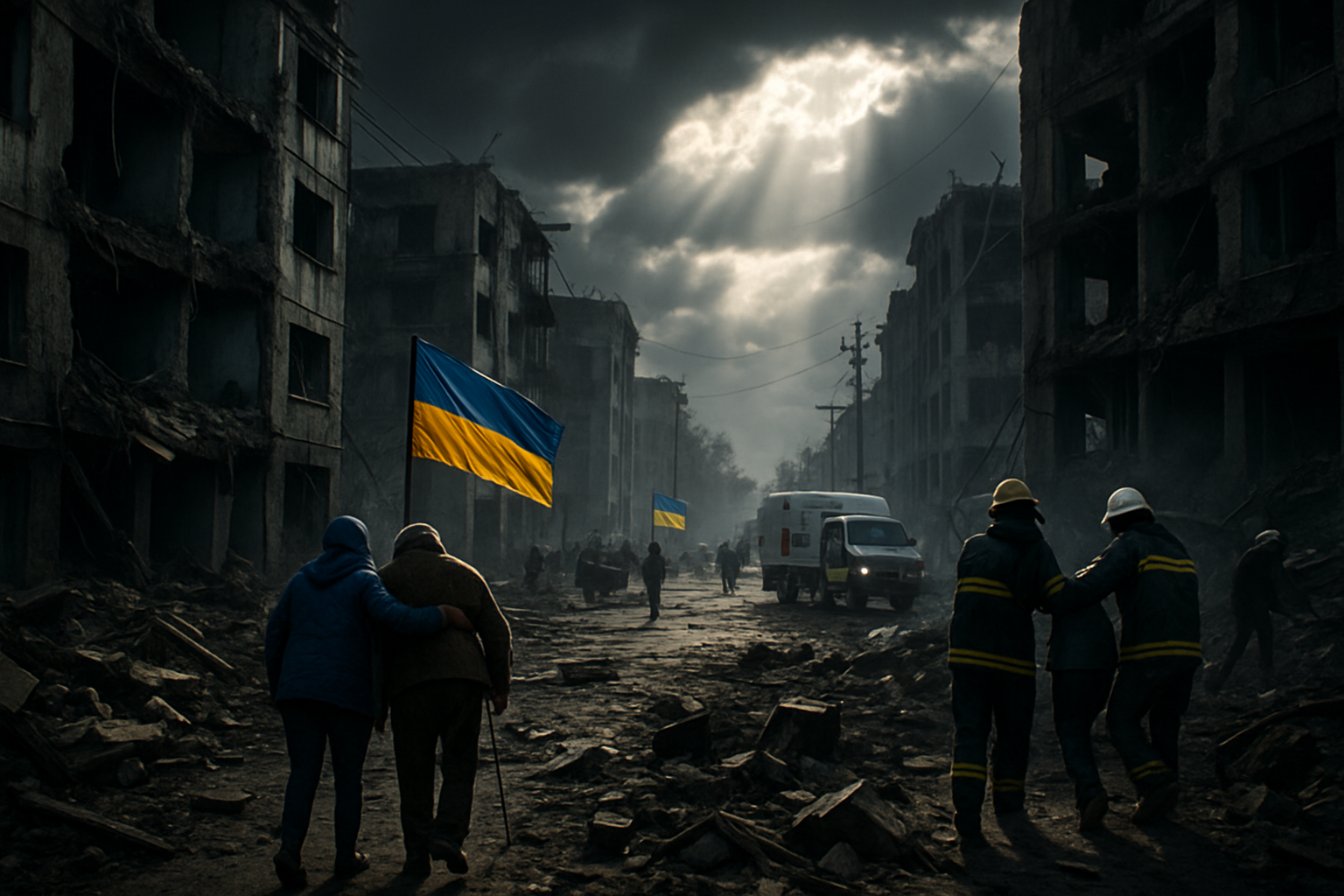
The Ukraine-Russia conflict has reached a critical juncture in March 2026, with diplomatic efforts suspended due to the Iran crisis, new revelations about US pressure on territorial concessions, and continued military escalation marking the war's entry into its fifth year.
Multiple developments this week have fundamentally altered the trajectory of what appeared to be promising peace negotiations, while systematic attacks on Ukrainian infrastructure and civilian targets continue to escalate, drawing international condemnation and emergency support measures.
Diplomatic Crisis: Peace Talks Suspended Indefinitely
The most significant setback came with President Volodymyr Zelensky's announcement that trilateral peace negotiations between Ukraine, Russia, and the United States have been postponed indefinitely due to the Iran crisis. This suspension derailed what had been historic diplomatic momentum achieved in February 2026.
The February breakthroughs represented the most substantial progress since the invasion began, including a historic 314-prisoner exchange—the largest in five months—and the restoration of US-Russia military communications after a four-year suspension. These achievements, described by Ukrainian Defense Minister Rustem Umerov as "substantial and productive," had created optimism for comprehensive peace talks scheduled under the Trump administration's June 2026 deadline.
"Due to the situation around Iran, there are still no necessary signals for a trilateral meeting until the security situation allows"
— President Volodymyr Zelensky
The suspension affects negotiations that had evolved from Abu Dhabi through Geneva to a planned Washington venue, potentially involving presidential-level engagement. The framework achievements remain intact, with officials indicating talks can resume when the Iranian crisis permits.
US Pressure on Territorial Concessions Revealed
Perhaps the most controversial revelation came from Zelensky's disclosure that the United States has been conditioning security guarantees on Ukrainian withdrawal from unoccupied Donbas territories. This demand represents a significant shift in US policy that Zelensky characterized as "compromising Ukraine and Europe's security."
The territorial disputes remain fundamentally unchanged from the conflict's onset, with eastern Ukrainian territories under Russian control serving as the primary sticking point. Russia continues to demand territorial recognition and insists that any Putin-Zelensky talks must occur in Moscow, while Ukraine maintains its territorial integrity position.
Reports from Austrian sources revealed additional complexity, with allegations that Putin offered the United States a deal to withhold Russian targeting data from Iran in exchange for America stopping intelligence sharing with Ukraine. This highlights the interconnected nature of regional conflicts derailing Ukrainian peace efforts.
Military Escalation and Systematic Targeting
Russian forces have accelerated territorial gains, capturing 481 square kilometers in January 2026 compared to 260 square kilometers in December 2025—an 85% increase representing the fastest expansion in months. The past week alone saw Russia launch 1,750 strike drones, 1,530 guided aerial bombs, and 39 missiles against Ukrainian targets.
The systematic targeting of civilian infrastructure continues to violate Geneva Conventions, with energy terrorism leaving over 1,170 Kyiv buildings with inadequate heating during extreme winter conditions. Ukrainian nuclear facilities have been forced to halt electricity production for the first time in the conflict.
Recent attacks include strikes on Kharkiv's Slobidskyi district injuring civilians, infrastructure damage in Kryvyi Rih, and continued targeting of railway and port facilities. The human toll has been devastating, with Zelensky's previous disclosure of 55,000 Ukrainian soldiers officially killed and a "large number" missing, while international estimates suggest actual casualties could be 2-3 times higher.
Ukraine's Strategic Pivot to Global Security Provider
In a remarkable transformation, Ukraine has evolved from aid recipient to security provider, deploying military experts to the Middle East. Ukrainian specialists are now operating in the UAE, Qatar, Jordan, Bahrain, and Kuwait, helping defend against Iranian Shahed drones—the same weapons devastating Ukrainian infrastructure.
This strategic pivot demonstrates Ukraine's leverage of battlefield experience into international partnerships, potentially creating new negotiating leverage while providing critical expertise to allies facing similar threats.
International Support and European Divisions
Despite the diplomatic setbacks, international support remains unprecedented. The European Union's €90 billion loan package represents the largest single-nation assistance ever, though Slovakia, Czech Republic, and Hungary's refusal to participate exposes deep European divisions.
Additional support includes Sweden-Denmark's €246 million air defense package, Germany's 35 Patriot missiles, and the UK's revelation of four operational maintenance facilities in Ukraine servicing Western equipment, with a fifth planned. This infrastructure investment signals long-term commitment beyond current conflict resolution.

Nuclear Crisis Context
The suspension of peace talks occurs against the backdrop of an unprecedented nuclear governance crisis. The New START treaty's expiration on February 5, 2026, marked the first time in over 50 years without US-Russia nuclear constraints. Both nations control 80% of global nuclear weapons, with the UN Secretary-General António Guterres warning of nuclear risks at their "highest levels in decades."
The restored military communications between the Pentagon and Russian General Staff represent the only remaining formal diplomatic channel between the nuclear superpowers, making the preservation of this framework critical for global security.
Humanitarian Crisis Deepens
The humanitarian impact continues to escalate, with over 17.8 million Ukrainians accessing winter support programs. Energy attacks during extreme cold represent calculated humanitarian pressure tactics, with systematic targeting of repair personnel documented as war crimes under international law.
The recent termination of 116 international agreements with Russia, Belarus, and the Commonwealth of Independent States demonstrates Ukraine's commitment to severing all legal ties with Soviet-era frameworks, further complicating potential reconciliation paths.
Regional Security Implications
The conflict's implications extend far beyond Ukraine's borders, with significant developments affecting European security architecture. North Korea and Belarus have signed new friendship agreements supporting Russia's war effort, while reports emerge of fraudulent recruitment affecting African nations, with Zimbabwe reporting 15 citizens killed after deceptive military recruitment.
European allies are establishing forward support infrastructure in conflict zones, representing a new template for international military cooperation that maintains distinctions between support roles and direct combat involvement.
Looking Forward: Uncertain Timeline
The timeline for resumed negotiations depends entirely on the resolution of the Iran situation, leaving the most significant diplomatic opportunity since the invasion began in limbo. Military escalation continues with systematic civilian targeting, while Ukraine maintains operational capabilities and expands international security partnerships.
The success or failure of eventual resumed talks carries global implications for 21st-century territorial dispute resolution, European security architecture redefinition, and international law enforcement credibility. Stakes include territorial sovereignty principles that will shape decades of power competition.
"The framework preservation allows reactivation when favorable conditions return, but territorial compromise innovation versus continued military approach determination awaits geopolitical realignment"
— International Security Analysis
As the conflict enters its fifth year, the combination of suspended diplomacy, escalating military operations, and deepening humanitarian crisis creates an increasingly complex landscape. The international community watches as diplomatic innovation is tested against traditional limitations, with outcomes that will determine not only European security but global conflict resolution mechanisms for generations to come.
The preservation of the diplomatic framework achieved through February's breakthroughs offers hope that negotiations can resume when international conditions permit. However, the fundamental territorial disputes remain unchanged, requiring unprecedented innovation to bridge the gap between Ukrainian territorial integrity demands and Russian recognition claims. The coming months will prove decisive in determining whether sustained diplomatic engagement can overcome military escalation or whether the conflict will continue to intensify with global implications for territorial sovereignty principles and international order.