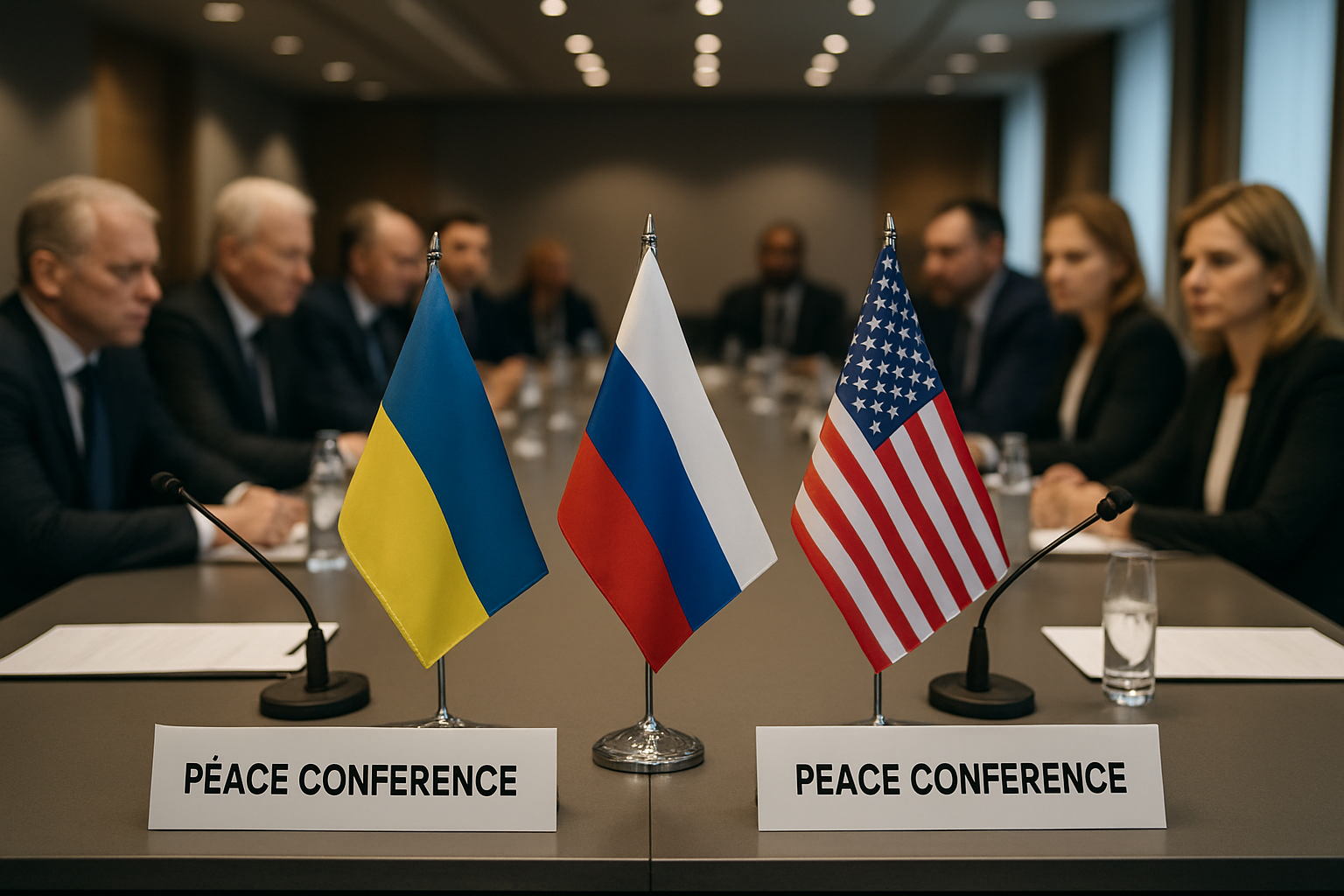
Ukrainian President Volodymyr Zelensky made a significant overture at the Munich Security Conference Saturday, stating that if given a two-month ceasefire, Ukraine would proceed to national elections - marking the first potential path to democratic renewal since Russia's invasion began nearly four years ago.
Speaking at the 62nd Munich Security Conference, Zelensky emphasized that elections could only occur "when there are all appropriate security guarantees" and a cessation of hostilities with Russia. This represents a crucial shift in Ukraine's position, acknowledging international pressure while maintaining firm conditions for democratic processes during wartime.
Munich Conference Addresses "Era of Disruptive Politics"
The Munich Security Conference, themed "The Era of Disruptive Politics: Challenges to International Order," brought together over 60 nations amid what organizers called the most sobering assessment in the conference's 62-year history. German Chancellor Friedrich Merz opened proceedings by declaring that the "post-war order no longer exists," calling for immediate action to "repair and revive transatlantic trust."
US Secretary of State Marco Rubio delivered a keynote address attempting to reset US-Europe relations exactly one year after JD Vance's controversial remarks severely damaged transatlantic ties. Rubio declared America and Europe "made to be together," though his absence from critical Ukraine supporters meetings raised concerns among European officials about declining American interest in European-led initiatives.
The conference occurred against the backdrop of unprecedented nuclear governance challenges. The New START treaty between the United States and Russia expired February 5, marking the first time in over 50 years without nuclear arms control between the superpowers. UN Secretary-General António Guterres warned this represents a "grave turning point" with nuclear weapon use risks "higher than at any time in decades."
Diplomatic Breakthrough and Continuing Military Escalation
The Munich discussions built upon significant diplomatic momentum from the Abu Dhabi trilateral talks that concluded February 5. These negotiations between Ukraine, Russia, and the United States achieved a historic 314-prisoner exchange - the first in five months - and restored US-Russia military communications after a four-year suspension.
Ukrainian Defense Minister Rustem Umerov described the Abu Dhabi talks as "substantial and productive," with detailed discussions on ceasefire monitoring mechanisms. The Pentagon confirmed the restoration of military-to-military communications provides "means to increase transparency and reduce escalation" through deconfliction protocols and incident prevention measures.
"The Americans are proposing that parties end the war by the beginning of summer, and will pressure both sides according to this timeline."
— President Volodymyr Zelensky, on US diplomatic timeline
However, diplomatic progress continues alongside severe military escalation. Russia has accelerated territorial gains, capturing 481 square kilometers in January 2026 compared to 260 square kilometers in December 2025. The country launched over 10,000 drones and bombs in January alone, representing a significant intensification of military operations.
Energy Infrastructure Targeting and Humanitarian Crisis
Russia's systematic targeting of Ukrainian energy infrastructure has created a severe humanitarian crisis during the harsh winter months. The February 3 attack, which DTEK described as the "most powerful blow" of 2026, left over 1,170 buildings in Kyiv without heating during minus-30°C temperatures.
This strategy of "energy terrorism" has affected eight Ukrainian oblasts, forcing nuclear power plants to halt electricity production for the first time during the conflict. The International Atomic Energy Agency confirmed this unprecedented shutdown raised significant safety concerns for Europe's nuclear security.
Zelensky revealed that all Ukrainian power plants have been damaged by Russian attacks, though the energy system continues operating thanks to the dedication of energy workers and international air defense support. The systematic targeting has led to emergency warming centers being activated across the country, with over 17.8 million Ukrainians accessing winter support programs.
International Support and European Unity
Despite political divisions, European support for Ukraine reached historic levels. The European Parliament approved a €90 billion loan package - the largest EU assistance package ever for a single nation - though Slovakia, Czech Republic, and Hungary refused participation, revealing persistent divisions within the bloc.
Additional military support continues flowing to Ukraine, including Sweden and Denmark's €246 million air defense package featuring Tridon Mk2 systems, and Germany's provision of 35 Patriot missiles through the Ramstein coordination group. Poland has maintained fighter jet deployments for border security, while the World Bank allocated $40 million for energy restoration efforts.
The human cost of the conflict became clearer as Zelensky disclosed that 55,000 Ukrainian soldiers have been officially confirmed killed since the invasion began, with a "large number" still classified as missing in action. International researchers estimate actual military casualties could be 2-3 times higher when including undocumented losses.
Looking Toward June 2026 Peace Deadline
The Trump administration has established a June 2026 deadline for comprehensive peace negotiations, with talks potentially moving to Washington venues that could involve presidential-level engagement. This represents an evolution from the UAE-hosted Abu Dhabi framework to higher-level diplomatic initiatives.
However, fundamental disagreements persist over eastern Ukrainian territories currently under Russian control. This remains the primary sticking point preventing broader territorial and political resolution, despite humanitarian breakthroughs achieved through sustained diplomatic engagement.
European leaders at Munich emphasized the need for strategic autonomy while maintaining alliance relationships. French President Emmanuel Macron, in his closing remarks, declared that Europe must become "a geopolitical power providing its own security," reflecting broader concerns about American commitment to European security guarantees.
Strategic Implications for International Order
The Munich Security Conference highlighted the stakes extending far beyond the Ukraine conflict itself. Success in achieving a comprehensive peace agreement could end Europe's deadliest war since World War II and provide a template for 21st-century conflict resolution. Failure could intensify military operations globally and undermine diplomatic credibility for addressing territorial disputes.
The restoration of US-Russia military communications, while significant, represents only one diplomatic channel in an increasingly complex international landscape. With nuclear constraints eliminated between superpowers for the first time in decades, the urgency for innovative diplomatic solutions has never been greater.
As the conference concluded, delegates faced the reality that traditional international frameworks require fundamental adaptation to address modern security challenges. The coming months will test whether diplomatic innovation can bridge territorial sovereignty disputes or whether continued military escalation will reshape European security architecture.
The path forward depends on unprecedented compromise solutions that balance territorial integrity principles with practical realities on the ground. Zelensky's conditional election offer represents one potential element in a broader framework that could restore democratic governance while achieving sustainable peace in Europe's most consequential conflict since 1945.