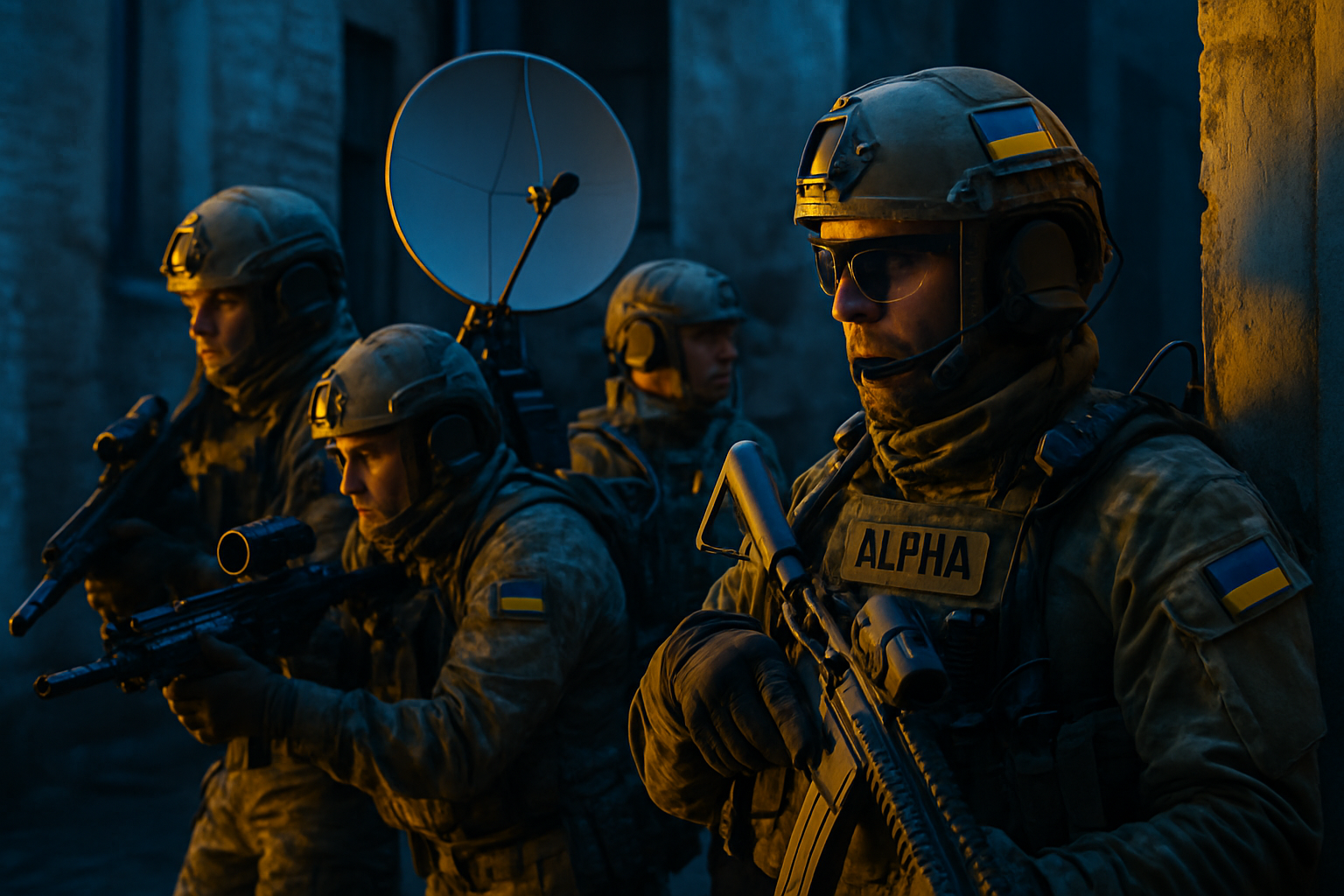
Ukraine's Security Service (SBU) Alpha Special Operations Center has eliminated over 2,100 Russian troops in one week while military intelligence releases unprecedented documentary footage of agent operations, demonstrating the country's intelligence capabilities amid indefinitely suspended peace negotiations.
The SBU Alpha unit's remarkable success rate comes as Ukraine's military intelligence agency (HUR) takes the extraordinary step of publicly documenting covert operations through a newly released documentary film showcasing a Ukrainian agent operating behind Russian lines. These developments highlight Ukraine's sophisticated intelligence apparatus at a critical juncture when trilateral peace talks between Ukraine, Russia, and the United States remain suspended due to the ongoing Iran crisis.
Elite Alpha Unit Achieves Exceptional Results
Ukrainian security officials confirmed that fighters from the Alpha Special Operations Center neutralized and wounded 2,158 Russian invaders during intensive operations over the past seven days. This represents one of the highest weekly casualty figures inflicted by a single Ukrainian intelligence unit since the conflict began, demonstrating the effectiveness of specialized counter-intelligence operations.
The Alpha unit, operating under the Security Service of Ukraine, has evolved significantly since the 2022 invasion, transforming from traditional internal security functions to sophisticated special operations targeting enemy forces. Intelligence analysts note that the unit's success rate reflects enhanced coordination between Ukrainian intelligence services and improved tactical capabilities developed through battlefield experience.
Military Intelligence Documentary Unprecedented
In an unprecedented move, Ukraine's military intelligence agency HUR has released documentary footage detailing the activities of a Ukrainian agent operating behind enemy lines. The decision to publicly document such sensitive operations marks a significant shift in intelligence transparency, potentially serving multiple strategic purposes including psychological warfare and international legitimacy building.
Intelligence experts suggest the documentary release serves to demonstrate Ukraine's operational reach into Russian-controlled territories while potentially encouraging other assets or sympathizers. The timing coincides with suspended diplomatic efforts, indicating Ukraine's determination to showcase its intelligence capabilities during the current diplomatic vacuum.
Diplomatic Context and Strategic Implications
These intelligence victories occur against the backdrop of indefinitely suspended peace negotiations. As previously reported, trilateral talks between Ukraine, Russia, and the United States achieved historic breakthroughs in February 2026, including a 314-prisoner exchange and restored US-Russia military communications after a four-year suspension. However, the Iran crisis has derailed diplomatic momentum, leaving military and intelligence operations as the primary means of strategic communication.
Ukrainian President Volodymyr Zelensky recently confirmed that negotiations remain postponed due to Middle East priorities, stating there are "no necessary signals for trilateral meeting until security situation allows." This diplomatic suspension has effectively shifted focus to military capabilities and intelligence operations as key leverage mechanisms.
Broader Intelligence War Evolution
The Alpha unit's success and HUR's documentary release represent broader evolution in Ukraine's intelligence warfare strategy. Recent memory analysis indicates systematic Ukrainian intelligence operations have included:
- Capture of Russian soldiers during stabilization operations in Zaporizhzhia sector
- Counter-intelligence operations exposing domestic espionage networks
- Long-range strikes on Russian energy infrastructure and military facilities
- International intelligence cooperation, particularly in Middle East drone warfare expertise
Ukraine has strategically evolved from aid recipient to security provider, deploying military experts to UAE, Qatar, Jordan, Bahrain, and Kuwait to combat Iranian Shahed drones—the same weapons systems targeting Ukrainian infrastructure. This transformation demonstrates how battlefield intelligence experience translates into international strategic partnerships.
Counter-Intelligence Challenges
Concurrent with offensive operations, Ukrainian security services continue addressing internal threats. Recent cases include a Zhytomyr region resident sentenced to 15 years imprisonment for providing Russian intelligence with Ukrainian aircraft movement data, and a 21-year-old Bucha resident charged with terrorist activities. These cases underscore persistent espionage networks in previously occupied territories, requiring sustained counter-intelligence efforts.
Security analysts emphasize that Ukraine's intelligence services face dual challenges: conducting sophisticated operations against Russian forces while simultaneously protecting against internal infiltration and sabotage. The Alpha unit's external success must be balanced against the ongoing need for domestic security operations.
Nuclear Governance Crisis Context
These intelligence operations unfold within an unprecedented nuclear governance crisis. The New START treaty expired on February 5, 2026, marking the first time in over 50 years without US-Russia nuclear constraints. With both superpowers controlling approximately 80% of global nuclear weapons, intelligence operations carry heightened significance for strategic stability.
UN Secretary-General António Guterres has described the current period as a "grave turning point" with nuclear risks at their "highest in decades." In this environment, intelligence capabilities serve not only tactical military purposes but also strategic deterrence functions, particularly given that restored military communications represent the only remaining formal diplomatic channel between nuclear superpowers.
International Intelligence Cooperation
Ukraine's intelligence evolution includes unprecedented international cooperation. Beyond Middle East deployments, the UK has revealed four operational MRO (Maintenance, Repair, and Operations) facilities in Ukraine servicing Western equipment, with a fifth planned. This represents the first public acknowledgment of extensive military infrastructure supporting Ukrainian operations.
Intelligence sharing has expanded to include sophisticated technology transfer and operational coordination. Ukrainian drone warfare expertise, developed through necessity against Russian forces, now benefits allied nations facing similar threats. This intelligence diplomacy creates strategic partnerships that extend beyond traditional military aid relationships.
Strategic Assessment
The Alpha unit's remarkable success rate and HUR's documentary release signal Ukraine's confidence in its intelligence capabilities despite diplomatic uncertainty. With peace talks suspended indefinitely due to regional conflicts, intelligence operations serve multiple strategic purposes: immediate tactical advantage, international credibility building, and leverage preservation for eventual diplomatic resumption.
These developments occur amid continued Russian territorial gains—481 square kilometers captured in January 2026 versus 260 square kilometers in December 2025, representing an 85% acceleration. However, Ukraine's intelligence successes demonstrate sustained operational capabilities that could prove decisive in both military and diplomatic contexts.
As the conflict enters a phase of indefinite diplomatic suspension, intelligence operations like those conducted by the Alpha unit and documented by HUR represent Ukraine's strategic adaptation to changing circumstances. Success in these covert operations maintains pressure on Russian forces while preserving options for eventual peace negotiations when diplomatic conditions allow.
The broader implications extend beyond Ukraine, establishing precedents for intelligence warfare in 21st-century conflicts and demonstrating how sophisticated intelligence capabilities can serve both immediate military objectives and long-term strategic positioning in an increasingly complex international security environment.