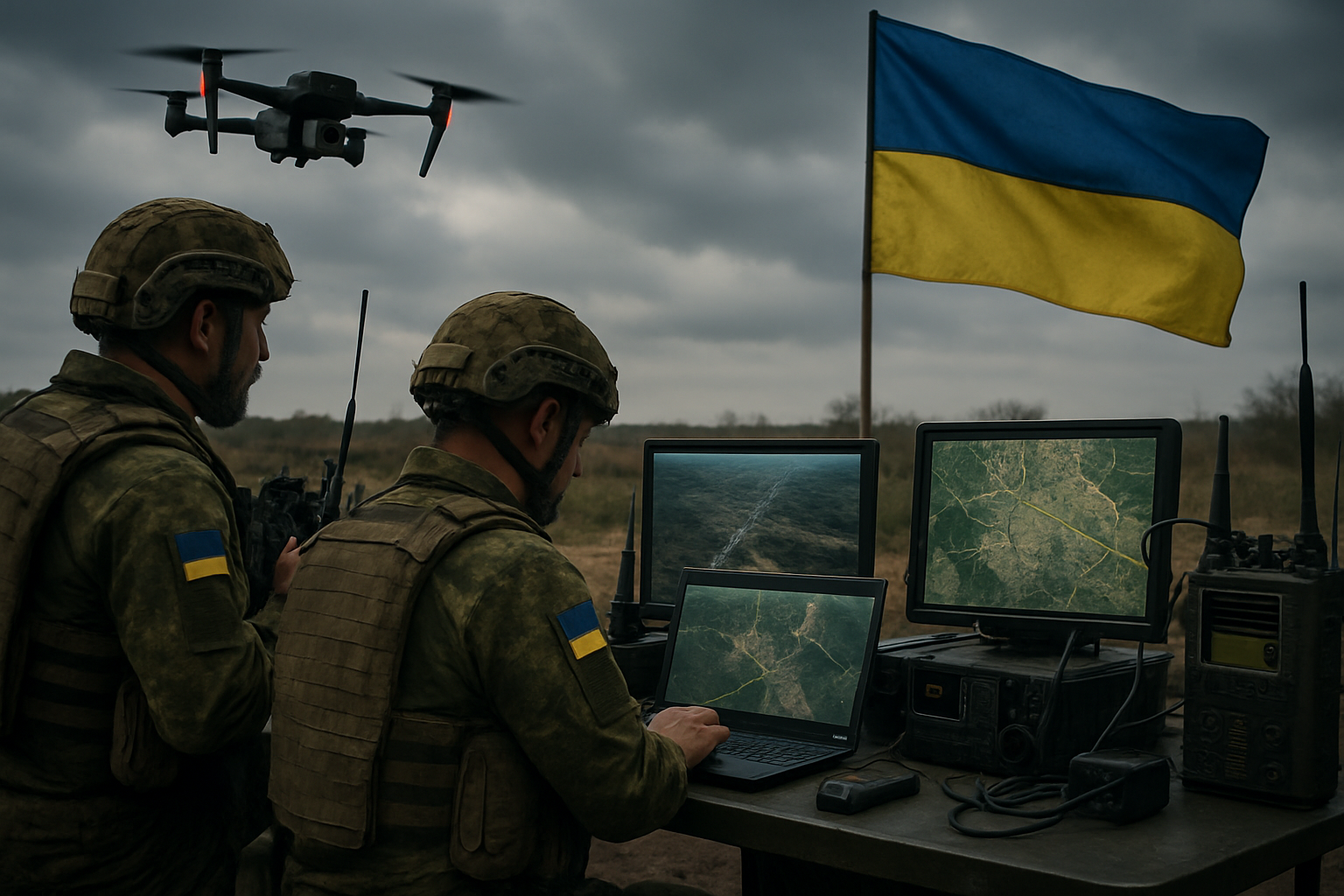
Russian military forces have dramatically intensified their assault operations on Ukraine's southern front, with attacks surging 60% between April 20-26, 2026, according to Ukrainian military officials, while both sides deploy unprecedented numbers of drones in what experts describe as a revolutionary transformation of modern warfare.
The escalation comes as trilateral peace negotiations between Ukraine, Russia, and the United States remain indefinitely suspended due to the ongoing Iran crisis consuming American foreign policy attention, dealing a significant blow to February 2026 diplomatic breakthroughs that had offered the most promising path to resolution since the invasion began.
Southern Front Under Unprecedented Pressure
Ukrainian Defense Forces report that Russian assault activity increased dramatically along the southern front lines between April 20-26, accompanied by intensified use of aviation strikes and drone operations. The 60% surge in attacks represents one of the most significant tactical escalations witnessed in this sector since the conflict's early phases.
"Russian forces have significantly increased assault activity alongside intensified use of aviation and drones, while their losses also grew," confirmed Ukrainian military spokesman Captain Dmytro Voloshyn, who warned that Russian units have received additional artillery ammunition and may further intensify shelling operations in the coming days.
The escalation extends beyond ground operations. Russian forces launched coordinated attacks across multiple Ukrainian regions using over 660 drones and missiles in a single weekend assault, killing at least 16 people including civilians in residential areas. Ukrainian air defense systems intercepted 580 drones and 30 missiles, achieving a 94% drone interception rate, but the sheer volume overwhelmed defensive capabilities in several locations.
Revolutionary Drone Warfare Evolution
The conflict has entered a new phase characterized by unprecedented deployment of unmanned systems. Russia now operates an estimated 101,000 troops dedicated exclusively to drone operations - the largest unmanned military force in modern warfare history. This massive expansion of drone capabilities represents a fundamental shift in military doctrine that experts believe will influence global defense strategies for decades.
"Ukraine achieved first all-robot assault using exclusively unmanned systems - a paradigm shift where autonomous systems completely replaced human soldiers capturing strategic positions. This is the first documented case of purely robotic military conquest in modern history."
— President Volodymyr Zelensky
Norwegian support for Ukraine's drone capabilities received a significant boost with the announcement that Norway will deliver "several thousand drones" to Ukrainian forces "by summer 2026." The drones will be produced and financed by Norway under a comprehensive bilateral agreement, representing the latest example of international partners directly supporting Ukraine's technological warfare evolution.
French military analysts have documented how Ukrainian forces have developed sophisticated anti-drone units that "prefigure the wars of tomorrow." Operating with both rudimentary and cutting-edge equipment, these specialized units protect Ukrainian airspace from Russian drone attacks using innovative tactics that combine traditional air defense with emerging technologies.
Diplomatic Framework Frozen by Iran Crisis
The military escalation occurs against the backdrop of suspended diplomatic progress. The most significant peace initiative since the invasion began - trilateral negotiations between Ukraine, Russia, and the United States - remains indefinitely postponed due to the Iran crisis dominating American foreign policy priorities.
February 2026 had witnessed historic breakthroughs including a 314-prisoner exchange (the largest in five months), restoration of US-Russia military communications after a four-year suspension, and Geneva talks that achieved "significant progress" on ceasefire monitoring mechanisms with European "Big 5" observers participating for the first time.
The framework for renewed negotiations remains preserved, with Pentagon-Moscow deconfliction protocols continuing to operate in Syria, the Arctic, and Africa. However, the timeline for resumed talks depends entirely on resolution of the Middle East situation, creating uncertainty about when diplomatic momentum might return to Europe's deadliest conflict since World War II.
Nuclear Governance Crisis Compounds Tensions
Military operations unfold under the shadow of an unprecedented nuclear governance crisis. The New START treaty expired on February 5, 2026, marking the first time in over 50 years that the United States and Russia operate without nuclear arms control constraints. Both nations control approximately 80% of the world's nuclear weapons, with Russia possessing 4,380 warheads and the US maintaining 3,708.
UN Secretary-General António Guterres has characterized the situation as a "grave turning point," warning that nuclear risks have reached their "highest level in decades." The restored US-Russia military communications represent the only formal diplomatic channel between the superpowers, making their preservation critical for global security.
Ukraine's Strategic Transformation
Amid the military pressure, Ukraine has undergone a remarkable strategic transformation from aid recipient to security provider. More than 200 Ukrainian military specialists have been deployed to UAE, Qatar, Jordan, Bahrain, and Kuwait, sharing expertise in defending against Iranian Shahed drone attacks - the same weapons systems being used against Ukrainian infrastructure.
This evolution demonstrates how battlefield experience translates into strategic partnerships, potentially creating new diplomatic leverage when negotiations resume. The UK has revealed the operation of four maintenance, repair, and overhaul (MRO) facilities within Ukraine servicing Western-supplied equipment, with a fifth facility planned - the first public acknowledgment of such extensive military infrastructure on Ukrainian soil.
Escalating Humanitarian Crisis
The human cost continues mounting as systematic civilian targeting violates international humanitarian law. Ukrainian officials have disclosed that 55,000 soldiers have been officially killed, with a "large number" missing and estimates suggesting actual casualties may be 2-3 times higher.
Russian forces have implemented what Ukrainian authorities describe as "energy terrorism" - systematic targeting of civilian infrastructure during extreme weather conditions. Over 1,170 buildings in Kyiv lack adequate heating from previous attacks, while Ukrainian nuclear plants were forced to halt electricity production for the first time since the conflict began.
More than 17.8 million Ukrainians are accessing winter support programs, highlighting the widespread humanitarian impact of infrastructure attacks. The targeting of energy workers restoring power - with 15 DTEK employees documented as killed - represents calculated violations of Geneva Conventions protecting civilian personnel during wartime.
International Support Under Strain
Despite competing global crises, international support for Ukraine remains substantial though divisions have emerged. The European Union approved a historic €90 billion loan package - the largest single-nation assistance program in history - though Slovakia, Czech Republic, and Hungary refused participation, exposing significant bloc divisions.
Germany continues providing 35 Patriot missile systems, while Sweden and Denmark have committed €246 million for air defense systems. However, the Iran crisis has strained resources, with Gulf states using more PAC-3 missiles in recent days against Iranian attacks than Ukraine received from the US over four years.
Territorial Disputes Remain Unchanged
The fundamental sticking point in any future negotiations remains unchanged: eastern Ukrainian territories under Russian control. Russian territorial gains have accelerated, with 481 square kilometers captured in January versus 260 square kilometers in December 2025 - an 85% increase representing the fastest expansion in months.
Russia demands recognition of occupied territories and insists any Putin-Zelensky meeting occur in Moscow, while Ukraine maintains its territorial integrity position with requirements for long-term security guarantees. President Zelensky has categorically rejected territorial concessions, stating Ukrainian people would reject "handing over territories" as a "failure story."
Global Template for 21st Century Conflicts
Military analysts emphasize that developments in Ukraine are setting precedents for 21st-century conflict resolution. The stakes extend beyond regional borders to include European security architecture redefinition, international law enforcement credibility, and territorial sovereignty principles that will influence global dynamics for decades.
Success in eventual resumed negotiations could end Europe's deadliest war since World War II and provide a template for territorial dispute resolution. Failure risks continued escalation with global implications for diplomatic solutions to international conflicts, making the suspended framework's preservation critical for future peace efforts.
Uncertain Path Forward
The timeline for renewed diplomatic engagement depends on resolution of the Iran crisis and broader Middle East stability. Military escalation continues with systematic civilian targeting while Ukraine expands international partnerships and maintains operational capabilities through technological innovation.
As the fourth anniversary of the invasion approaches, the contrast between military intensification and diplomatic suspension highlights the complex challenges facing international conflict resolution in an increasingly multipolar world. The preserved framework from February's breakthroughs offers hope for eventual reactivation, but fundamental compromises remain absent from both sides as fighting intensifies on Ukraine's southern front.