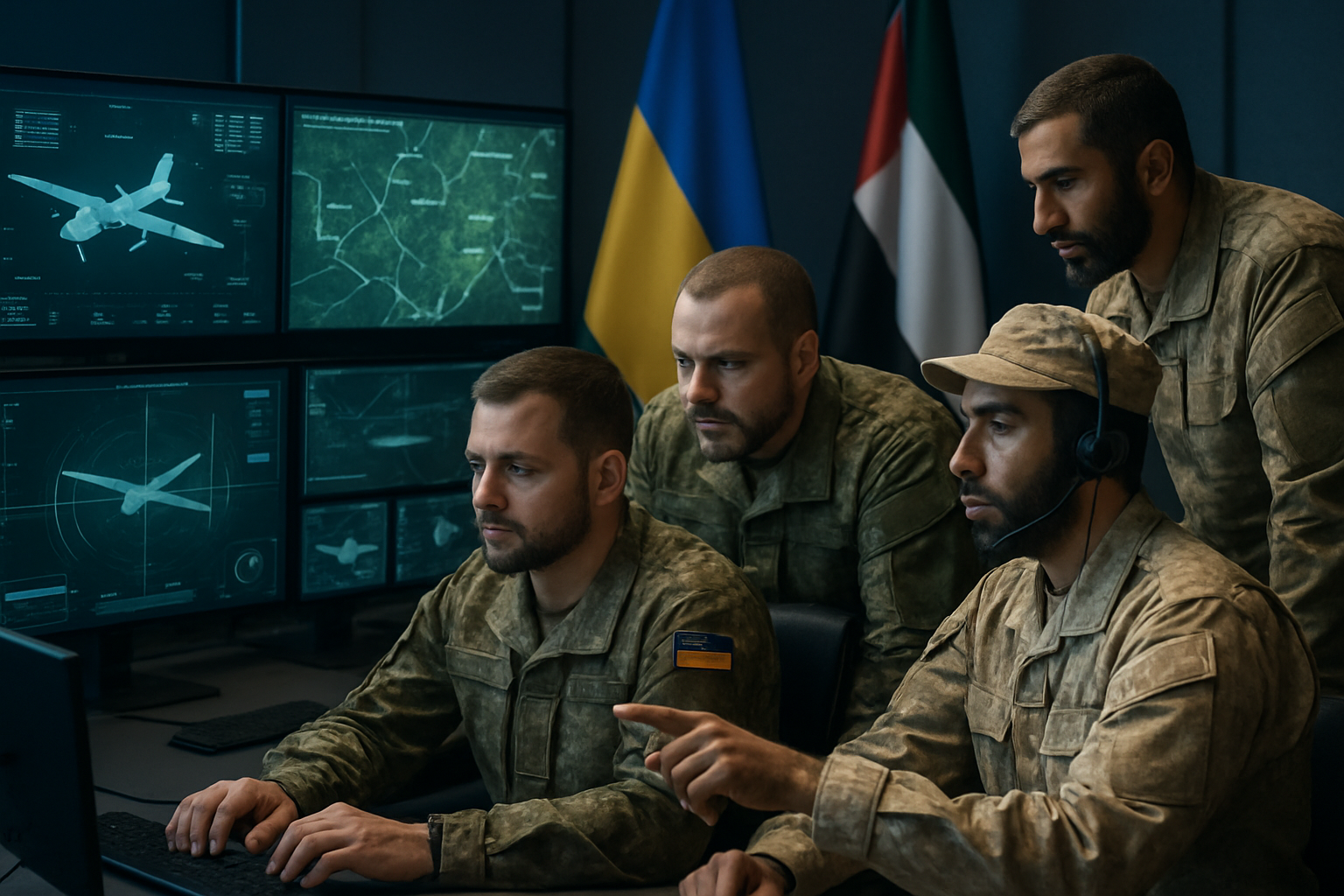
Ukraine has deployed military specialists to five Middle Eastern countries to counter Iranian drone attacks, marking a historic transformation from aid recipient to global security provider as peace negotiations with Russia remain indefinitely suspended due to the ongoing Iran crisis.
Ukrainian Defense Secretary Rustem Umerov confirmed that over the past week, Ukrainian experts have been deployed to Jordan, Qatar, Kuwait, the United Arab Emirates, and Saudi Arabia to share expertise in combating Iranian Shahed drones—the same weapons that have devastated Ukrainian infrastructure for months. This strategic pivot represents Ukraine's evolution from a nation primarily receiving international assistance to one actively providing security solutions based on hard-won battlefield experience.
Peace Talks Derailed by Middle East Crisis
President Volodymyr Zelensky announced that trilateral negotiations between Ukraine, Russia, and the United States have been postponed indefinitely due to the escalating Iran crisis. "Due to the situation around Iran, there are still no necessary signals for a trilateral meeting," Zelensky stated, adding that talks will resume "as soon as the security situation and general political context allow."
The suspension represents a significant setback to diplomatic momentum that had achieved historic breakthroughs in February, including a 314-prisoner exchange—the first in five months—and the restoration of US-Russia military communications after a four-year suspension. The framework established through Abu Dhabi talks had shown promise, with Pentagon deconfliction protocols extending globally to operations in Syria, the Arctic, and Africa.
The June 2026 deadline established by the Trump administration for Washington venue negotiations now faces uncertainty, with competing Middle East priorities potentially derailing the most significant diplomatic opportunity since the invasion began.
Russian Spring Offensive Intensifies
As diplomatic channels remain frozen, military escalation continues on multiple fronts. Estonian Defense Forces Intelligence Center chief Colonel Ants Kiviselg reported that combat intensity has risen sharply with the start of a Russian spring offensive, evidenced by increased airstrikes and rising Russian casualties.
Ukrainian forces currently occupy nearly the same positions as last year, according to President Zelensky, but Russian territorial gains have accelerated dramatically—481 square kilometers captured in January versus 260 square kilometers in December 2025, representing an 85% increase. Over the past week alone, Russia launched 1,750 strike drones, 1,530 guided aerial bombs, and 39 missiles against Ukrainian targets.
The systematic targeting of civilian infrastructure continues, with energy "terrorism" leaving over 1,170 Kyiv buildings without adequate heating during harsh winter conditions. Ukrainian nuclear plants have been forced to halt electricity production for the first time since the conflict began, representing a dangerous escalation in attacks on critical infrastructure.
Ukraine's Global Security Partnerships
The deployment of Ukrainian military experts to the Middle East exemplifies a broader strategic transformation. These specialists are sharing crucial knowledge about intercepting and destroying Iranian Shahed drones, the same weapons that have killed thousands of Ukrainian civilians and destroyed critical infrastructure.
"Ukraine is working with five partners in the Middle East to counter Shahed drones. The United States has also requested expert support for its military in two areas in the region."
— President Volodymyr Zelensky
This cooperation extends beyond drone defense. Ukrainian ports, despite operating under constant attack, have become models for Gulf countries facing similar security challenges. According to German media reports, Ukrainian port operators are advising Middle Eastern counterparts on maintaining critical maritime operations under wartime conditions.
The strategic implications are profound: Ukraine is leveraging its painful battlefield experience into valuable partnerships that could provide both diplomatic leverage and economic benefits for post-war reconstruction.
International Support Continues Despite Divisions
International backing for Ukraine remains substantial, though divisions persist. Germany has introduced simplified procedures for exporting weapons to Ukraine and Gulf states to strengthen air defense capabilities. Japan has also indicated readiness to deepen defense cooperation, with discussions underway about how Kyiv's combat experience could inform Tokyo's own defense development.
However, the suspension of peace talks highlights competing priorities within the international community. The Iran crisis has diverted attention and resources, with Gulf states reportedly using more PAC-3 missiles against Iran in recent days than Ukraine has received from the US over four years of conflict.
Technological Innovation Under Pressure
Ukrainian forces continue to demonstrate remarkable adaptability and innovation. The 147th Separate Artillery Brigade of the Air Assault Forces has become the first in Ukraine's Defense Forces to test military exoskeletons in combat conditions, showcasing the country's willingness to embrace cutting-edge technology to maintain tactical advantages.
Long-range strike capabilities remain operational, with Ukrainian forces successfully targeting Russian positions in occupied territories and hitting infrastructure deep within Russian territory, including energy facilities in multiple regions.
Nuclear Governance Crisis Backdrop
The diplomatic suspension occurs against the backdrop of an unprecedented nuclear governance crisis. The New START treaty between the US and Russia expired on February 5, 2026—marking the first time in over 50 years without bilateral nuclear constraints between the superpowers, who control 80% of global nuclear weapons.
UN Secretary-General António Guterres has called this a "grave turning point," with nuclear risks at their "highest in decades." The restoration of US-Russia military communications through the Ukrainian peace process represents the only remaining major diplomatic channel between the nuclear superpowers.
Territorial Disputes Remain Unchanged
Despite humanitarian breakthroughs and communication improvements, fundamental disagreements persist. Eastern Ukrainian territories under Russian control remain the core sticking point, with Russia demanding territorial recognition and Moscow as the venue for direct Putin-Zelensky talks, while Ukraine maintains its position on territorial integrity.
Russian gains acceleration potentially strengthens Moscow's bargaining position, while Ukraine's expanding international partnerships and security provider role may create new leverage for eventual negotiations.
The Human Cost Continues
The humanitarian toll remains staggering. President Zelensky has disclosed that 55,000 Ukrainian soldiers have been officially killed, with a "large number" missing—though international estimates suggest actual casualties may be two to three times higher. Civilian casualties from systematic targeting continue to mount, with recent attacks killing elderly civilians in multiple regions.
Over 17.8 million Ukrainians continue to access winter support programs, highlighting the massive scale of humanitarian needs as the conflict enters its fifth year.
Looking Ahead: Uncertain Timeline
The timeline for resumed negotiations depends entirely on developments in the Iran crisis. While the diplomatic framework established through previous talks remains intact—including prisoner exchange mechanisms, structured negotiation formats, and Pentagon-Moscow deconfliction protocols—the opportunity for breakthrough talks faces indefinite delay.
Ukraine's strategic pivot to becoming a security provider while maintaining defensive capabilities demonstrates remarkable resilience and adaptability. However, the suspension of peace talks amid continued military escalation and competing international crises underscores the complex challenges facing 21st-century conflict resolution.
Success in eventually resumed talks could end Europe's deadliest war since World War II and provide a template for territorial dispute resolution. Failure may further intensify military operations with global implications for international law enforcement, territorial sovereignty principles, and the credibility of diplomatic solutions worldwide.
As Ukraine continues to defend its territory while expanding its role as a global security partner, the coming months will prove decisive in determining whether diplomatic innovation can overcome military escalation—or whether the world will witness further deterioration in one of the most consequential conflicts of the modern era.