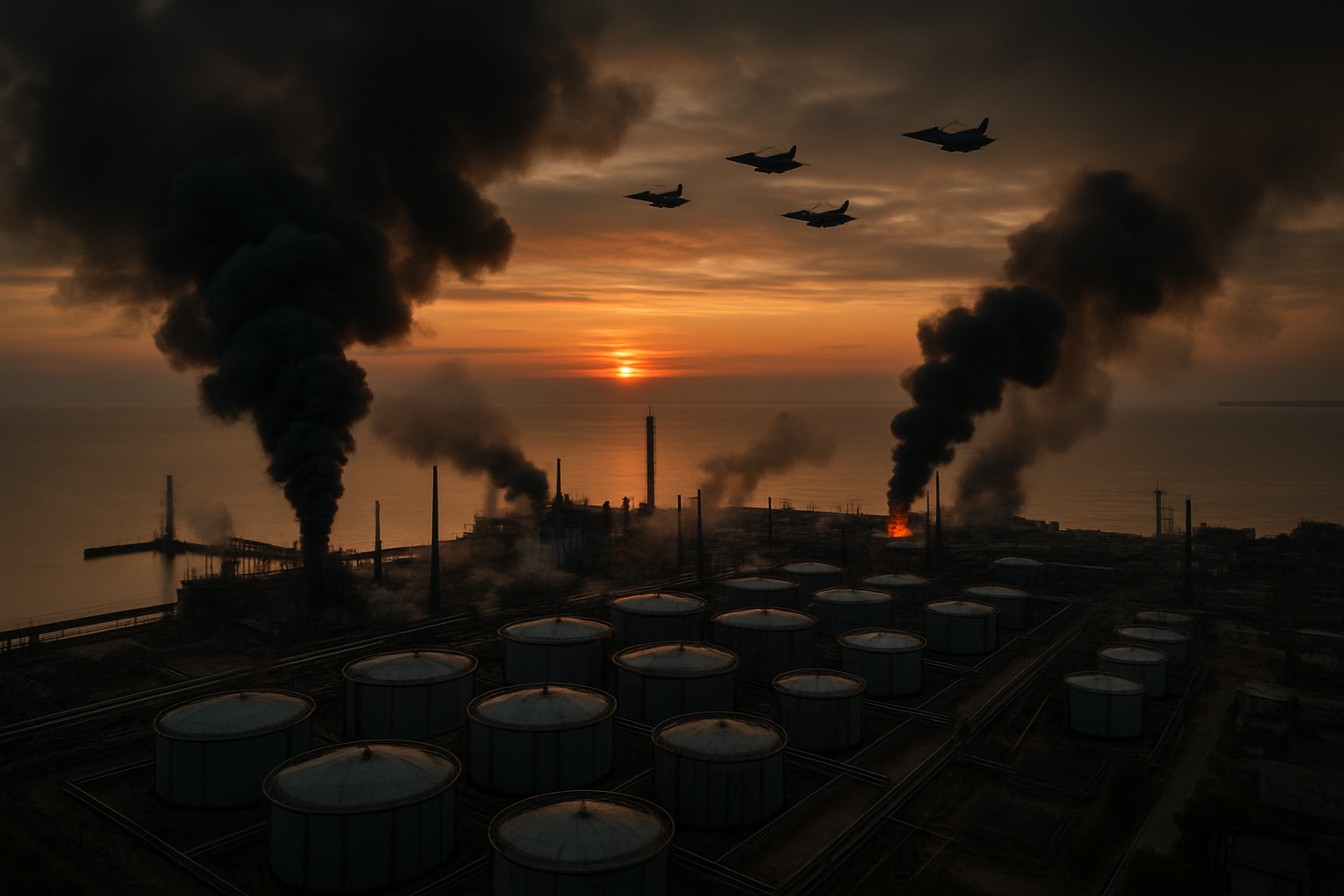
Ukrainian Defense Forces launched a precision strike on Russia's strategically vital Novorossiysk oil terminal on the Black Sea while combat intensified across multiple fronts, with 56 clashes reported since morning as the conflict enters a critical new phase of energy infrastructure warfare.
The attack on Novorossiysk represents Ukraine's most significant strike against Russian energy infrastructure in recent weeks, targeting the largest oil terminal on Russia's Black Sea coast that handles millions of barrels of crude oil annually. Russian authorities confirmed fires broke out at the facility following what they described as a "massive drone attack" in the early morning hours.
Strategic Targeting of Energy Infrastructure
The Novorossiysk terminal serves as a critical component of Russia's energy export network, processing oil from fields across western Russia for shipment to global markets. Ukrainian officials have repeatedly stated that such facilities directly support Russia's war economy and therefore constitute legitimate military targets.
"Ukraine aims to drain Russia's war chest with drone strikes on oil facilities," according to international security analysts, who note this attack continues a systematic campaign that has already disrupted approximately 40% of Russian oil export capacity through Baltic Sea routes.
"These operations demonstrate Ukraine's enhanced deep-strike capabilities extending well beyond 1,000 kilometers from Ukrainian territory."
— Defense Intelligence Assessment
Frontline Combat Escalation
While Ukrainian forces struck deep into Russian territory, intense fighting continued across multiple sectors of the front line. The General Staff reported 56 combat clashes since the start of the day, with Russian forces concentrating their greatest efforts on the Pokrovsk and Kostiantynivka directions.
Ukrainian President Volodymyr Zelensky received detailed reports from military commanders, including updates from General Oleksandr Syrskyi on the operational situation. "The Russian army is currently concentrating the greatest efforts in the Oleksandrivka and Pokrovsk directions, where Ukrainian resistance remains strongest," according to military briefings.
The eastern front has witnessed particularly fierce fighting, with Russian forces attempting to advance while Ukrainian defenders maintain strategic positions. Intelligence reports suggest Russian forces killed in Donetsk region included foreign fighters, with Ukrainian intelligence discovering the body of a Nepali mercenary among the casualties.
Regional Security Implications
The strikes on Russian energy infrastructure occur as the broader conflict shows signs of geographic expansion. Recent weeks have seen Ukrainian drones crash in multiple European countries during operations targeting Russian facilities, including incidents in Estonia, Latvia, and Romania.
NATO allies have responded with enhanced coordination, with the Arctic Sentry mission providing increased intelligence sharing and satellite surveillance. Estonia, which hosts a regional HIMARS maintenance facility worth €10 million, has experienced multiple spillover incidents but maintains its support for Ukrainian defensive operations.
Energy Warfare Campaign
The attack on Novorossiysk fits into Ukraine's broader strategic evolution from defensive operations to proactive targeting of Russian military-industrial infrastructure. Previous successful operations have included strikes on the Ust-Luga port terminal in the Baltic Sea, which handles 700,000 barrels per day and represents one of Russia's largest petroleum export facilities.
These operations have had measurable economic impact, with Ukrainian strikes disrupting significant portions of Russian energy exports and stranding dozens of shadow fleet tankers in the Gulf of Finland. The systematic targeting has forced Russia to seek more expensive and less efficient alternative export routes.
"Every day Russian exports are delayed creates mounting problems for Moscow's war financing capabilities."
— Estonian Security Expert
International Military Support
Ukraine's enhanced operational capabilities have been significantly bolstered by international military cooperation. Recent developments include the revelation of four operational maintenance, repair, and overhaul (MRO) facilities within Ukraine servicing Western-supplied equipment, with a fifth facility planned.
Sweden has committed to supplying modern Tridon Mk2 air defense systems specifically designed to counter Shahed-type drones and other aerial threats. These systems will enhance Ukraine's ability to defend against the type of attacks that Russia has been conducting with increasing frequency.
Diplomatic Context
The intensified military operations occur against a backdrop of suspended peace negotiations. Trilateral talks between Ukraine, Russia, and the United States remain indefinitely postponed due to the Iran crisis consuming American foreign policy attention, despite significant breakthroughs achieved in February 2026.
The previous diplomatic momentum included a historic 314-prisoner exchange and the restoration of US-Russia military communications after a four-year suspension. However, fundamental disagreements over territorial issues remain unchanged, with Russia demanding recognition of occupied territories while Ukraine maintains its territorial integrity position.
Civilian Infrastructure Attacks
While Ukrainian forces target military-relevant energy infrastructure, Russian forces continue systematic attacks on civilian facilities. Recent strikes hit a gas station in Kharkiv region with a UAV, causing fuel tanks to catch fire, and damaged power infrastructure affecting multiple regions.
Seven people were wounded in Russian attacks on Nikopol in the Dnipropetrovsk region, while Kharkiv faced multiple drone attacks throughout the day. These attacks on civilian infrastructure represent what Ukrainian officials describe as "energy terrorism" designed to pressure the civilian population during winter months.
Nuclear Governance Crisis
The conflict continues amid an unprecedented nuclear governance crisis, with the New START treaty having expired in February 2026 - the first time in over 50 years without bilateral nuclear constraints between the United States and Russia. This creates additional urgency for diplomatic solutions while both superpowers control approximately 80% of global nuclear weapons.
Looking Forward
As Ukraine demonstrates increasingly sophisticated deep-strike capabilities and Russia maintains pressure across multiple front-line sectors, the conflict appears to be entering a new phase characterized by expanded geographic scope and intensified targeting of economic infrastructure.
The success of operations like the Novorossiysk strike demonstrates Ukraine's strategic evolution from defensive operations to comprehensive economic pressure campaigns designed to affect Russian military sustainability over the long term. However, the suspension of diplomatic processes due to competing international crises adds uncertainty to future resolution prospects.
The international community continues to watch closely as this template-setting conflict may influence approaches to territorial disputes and conflict resolution mechanisms for decades to come, with implications extending far beyond the immediate theater of operations.