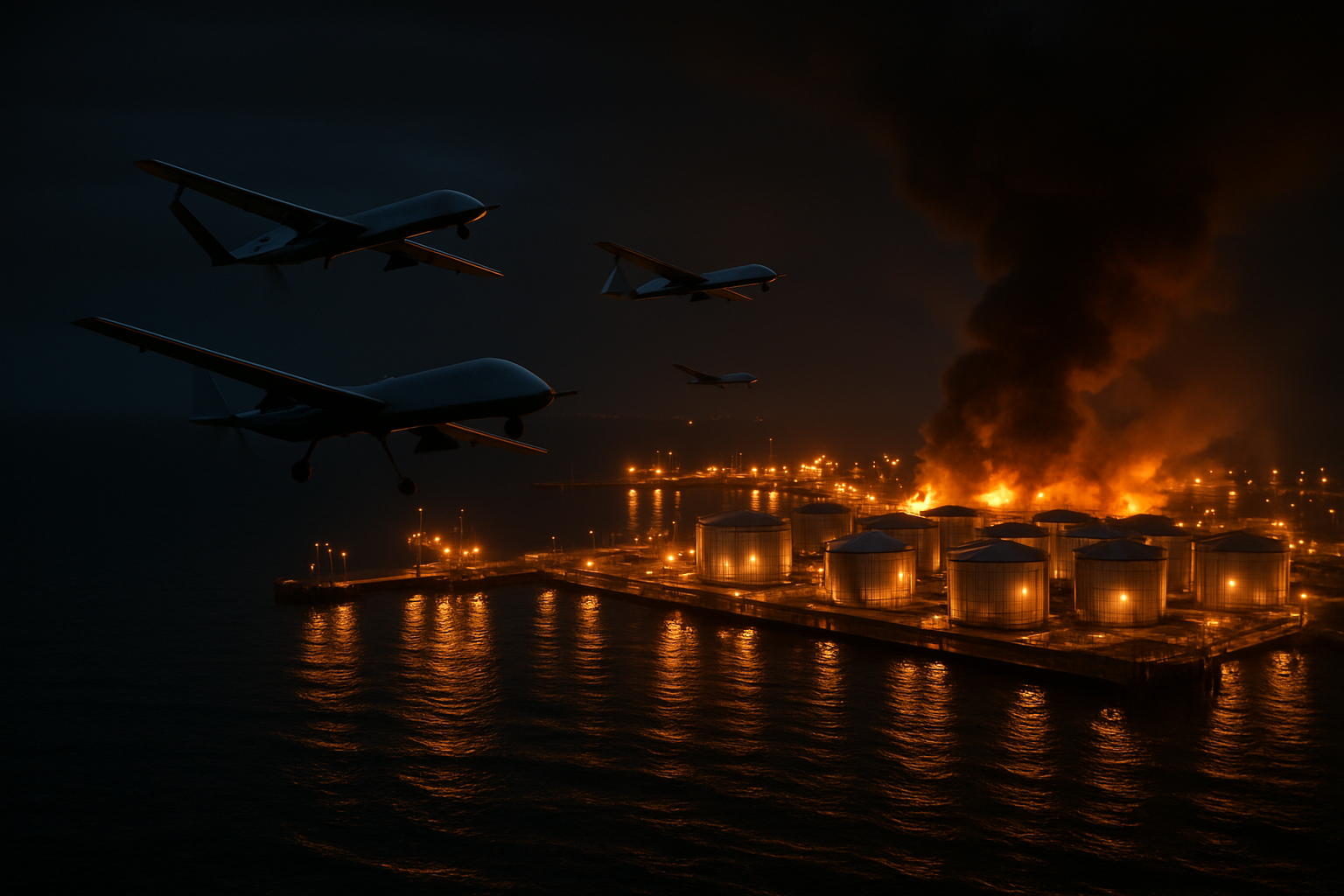
Ukrainian drones successfully struck Russia's strategically vital Ust-Luga port in the Leningrad region on Sunday morning, marking the third attack on the critical oil export facility in just one week and highlighting Ukraine's evolving deep-strike capabilities.
Alexander Drozdenko, governor of the Leningrad region, confirmed the attack via Telegram, reporting damage to the port and a resulting fire at the facility. According to Russian officials, 36 drones were intercepted over the region during the overnight assault, but several Ukrainian unmanned aircraft successfully penetrated Russian air defenses.
Strategic Target Under Repeated Attack
The Ust-Luga port, operated by Russian oil pipeline monopoly Transneft, represents one of Russia's largest petroleum export outlets, handling approximately 700,000 barrels per day of oil exports. Recent data indicates the facility shipped 32.9 million metric tons of oil products in 2023, making it a cornerstone of Russia's energy export infrastructure.
This latest strike follows a pattern of sustained Ukrainian targeting of Russian energy infrastructure throughout the conflict. Estonian experts suggest these direct attacks on Russian ports have proven more effective than international sanctions in disrupting Moscow's war financing capabilities, creating significant holes in Russia's budget.
Escalating Deep-Strike Campaign
The repeated attacks on Ust-Luga demonstrate Ukraine's enhanced deep-strike capabilities, with forces now capable of conducting precision operations at ranges exceeding 1,000 kilometers from Ukrainian territory. This represents a strategic evolution from defensive operations to proactive targeting of Russian economic and military infrastructure supporting the war effort.
According to Russian Defense Ministry reports, the broader assault included attacks across multiple regions, with officials claiming to have intercepted 203 Ukrainian drones over Russian territory, annexed Crimea, and the Black Sea. However, the successful strikes on critical infrastructure like Ust-Luga indicate significant penetration of Russian air defenses.
"Ukraine has regularly attacked Russian oil exporting facilities and oil refineries as it seeks to undermine Moscow's war economy."
— Reuters Analysis
Regional Security Implications
The targeting of facilities near the Finnish border carries broader regional security implications for NATO proximity. The Ust-Luga port's location in the Baltic Sea region makes it a critical node not just for Russian exports, but also for European energy security considerations.
Previous Ukrainian operations have successfully disrupted Russian energy exports by approximately 40% according to some analyses, with dozens of shadow fleet tankers stranded in the Gulf of Finland after Ukrainian strikes forced both Ust-Luga and Primorsk terminals to halt petroleum loading operations.
Diplomatic Context
The attacks occur against the backdrop of suspended peace negotiations between Ukraine, Russia, and the United States, which have been indefinitely postponed due to the ongoing Iran crisis. Despite diplomatic efforts earlier in 2026, including prisoner exchanges and restored military communications, fundamental territorial disputes remain unresolved.
Ukrainian officials maintain that such strikes target infrastructure directly supporting Russia's war effort and are legitimate under international law. The systematic targeting of energy export facilities represents a strategic campaign to disrupt both military logistics and the economic foundations of Russian military operations.
Economic Warfare Evolution
The repeated strikes on Ust-Luga reflect the broader evolution of economic warfare in modern conflicts. By targeting critical export infrastructure, Ukraine aims to create lasting economic pressure while degrading Russia's sustained military capability through reduced revenues.
Energy warfare has become a defining characteristic of the conflict, with both sides targeting critical infrastructure. However, Ukraine's focus on export facilities differs from Russia's systematic attacks on civilian energy infrastructure, which have been widely condemned as violations of international humanitarian law.
Looking Ahead
The success of Ukrainian operations against heavily defended targets like Ust-Luga demonstrates remarkable operational capabilities and sophisticated intelligence gathering. As the conflict continues, such strategic targeting of Russian economic infrastructure is likely to intensify, potentially forcing Moscow to divert significant resources to protect critical facilities.
With peace talks currently suspended due to competing international crises, military pressure through operations like the Ust-Luga strikes may become increasingly important in shaping the strategic balance and eventual negotiating positions when diplomatic efforts resume.