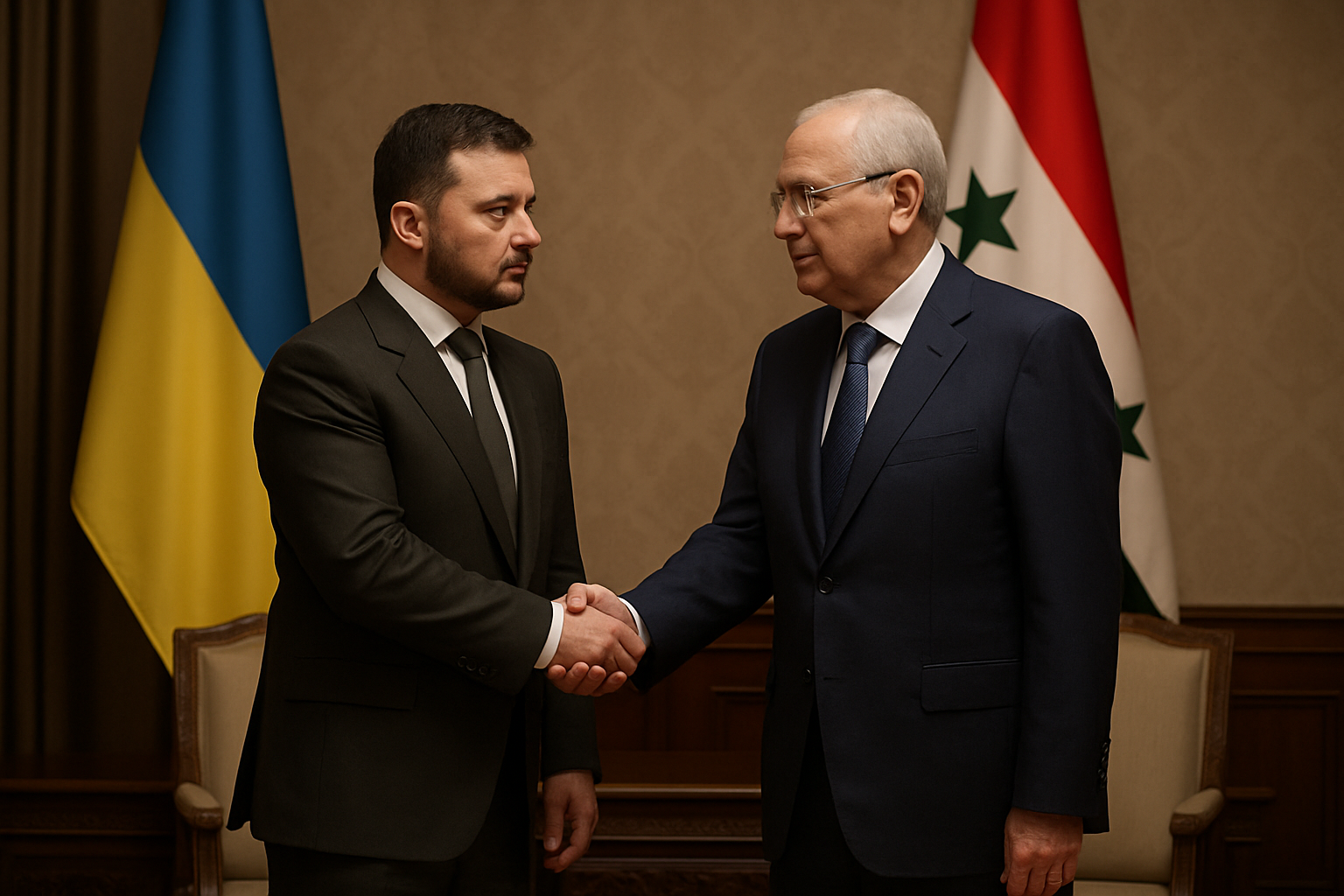
Ukrainian President Volodymyr Zelensky conducted a groundbreaking visit to Damascus on Sunday, meeting with Syria's new leader Ahmed al-Sharaa to establish comprehensive security cooperation agreements that mark Ukraine's continued evolution from aid recipient to global security provider.
The historic meeting, which represents the first visit by a Ukrainian president to Syrian soil, comes as both nations face the shared threat of Iranian-manufactured Shahed drones and signals a dramatic shift in regional security dynamics amid suspended Ukraine-Russia peace talks.
Bilateral Security Framework Takes Shape
Arriving alongside Turkish Foreign Minister Hakan Fidan, Zelensky's delegation engaged in extensive discussions focused on military experience exchange, particularly Ukraine's hard-earned expertise in combating Iranian Shahed drones—the same weapons systems that have devastated Ukrainian infrastructure and now target Syrian territory.
The Ukrainian leader has offered Middle East states his country's expertise in countering drone and missile attacks developed during its ongoing war with Russia. This represents a continuation of Ukraine's strategic pivot toward becoming a security provider rather than merely an aid recipient, leveraging battlefield experience into valuable partnerships.
"Ukraine can assist with waterway crisis and regional security challenges. Only joint action by nations can yield results."
— Volodymyr Zelensky, Ukrainian President
According to Ukrainian Ambassador to Kuwait Dr. Maksym Subkh, the recent visit of President Zelensky to the Gulf region aimed to strengthen defense cooperation with regional partners, with plans to formalize a defense pact that would be "crucial for both Ukraine and regional stability."
Turkish Mediation and Trilateral Engagement
The presence of Turkish Foreign Minister Hakan Fidan underscores Turkey's continued role as a regional mediator, facilitating diplomatic engagement between Ukraine and Syria. This trilateral format demonstrates Turkey's complex regional relationships and its positioning as a bridge between NATO allies and Middle Eastern partners.
Turkey's involvement reflects its strategic interest in maintaining diverse partnerships across the region while supporting Ukraine's defensive capabilities against Russian aggression. The cooperation also aligns with Turkey's broader regional security objectives and its role in facilitating various diplomatic initiatives.
Strategic Context and Regional Security
This Damascus meeting occurs against the backdrop of suspended trilateral Ukraine-Russia-US peace negotiations, which have been indefinitely postponed due to the Iran crisis that has dominated American foreign policy attention. The February 2026 diplomatic breakthroughs—including a historic 314-prisoner exchange and restoration of US-Russia military communications—remain stalled by Middle East priorities.
Ukraine has already deployed over 200 military specialists across the Middle East, including the UAE, Qatar, Jordan, Bahrain, and Kuwait, sharing drone defense expertise against the same Iranian weapons systems that have targeted Ukrainian cities. This expansion represents a fundamental transformation of Ukraine's international role from a nation seeking assistance to one providing critical security expertise.
Iranian Threat Assessment
The cooperation agreement addresses a shared security challenge that extends far beyond bilateral interests. Iranian Shahed drones have proven to be a persistent threat to both Ukrainian infrastructure and Middle Eastern facilities, creating natural opportunities for defensive cooperation and intelligence sharing on Iranian capabilities and tactics.
The timing is particularly significant as Iran maintains effective control over the Strait of Hormuz, blocking 40% of global oil transit, while simultaneously supporting Russian military operations with drone technology transfers. Ukraine's expertise in countering these systems has become increasingly valuable to regional partners facing similar threats.
Diplomatic Innovation Amid Suspended Peace Talks
The Ukraine-Syria cooperation framework demonstrates how innovative security partnerships can emerge even as traditional diplomatic channels face obstacles. While the most promising peace initiatives since the invasion began remain suspended due to regional conflicts, Ukraine continues to build strategic relationships that could provide new leverage in future negotiations.
The preservation of diplomatic frameworks—including prisoner exchange mechanisms and Pentagon-Moscow deconfliction protocols—means that negotiation structures can be reactivated when the Iran crisis permits, but Ukraine's expanding network of security partnerships strengthens its position for eventual resumed talks.
Historical Significance and Future Implications
This meeting represents the first Ukraine-Syria presidential encounter in history, marking a new chapter in bilateral relations. The cooperation template could influence similar partnerships between nations facing comparable regional security challenges, providing new models for international cooperation based on shared practical challenges rather than traditional geopolitical alignments.
For Syria, hosting the Ukrainian president signals growing international acceptance and potential reconstruction partnership opportunities as Damascus continues rebuilding diplomatic relationships in the post-conflict period. For Ukraine, this demonstrates the sophisticated evolution of its foreign policy from defensive operations to proactive security provider status.
The success of this cooperation model—combining battlefield-tested defensive strategies with regional partnership development—may determine whether diplomatic innovation can complement military operations in addressing complex 21st-century security challenges. As both nations face evolving threats from Iranian military technology, their partnership could establish precedents for international cooperation in an increasingly multipolar security environment.