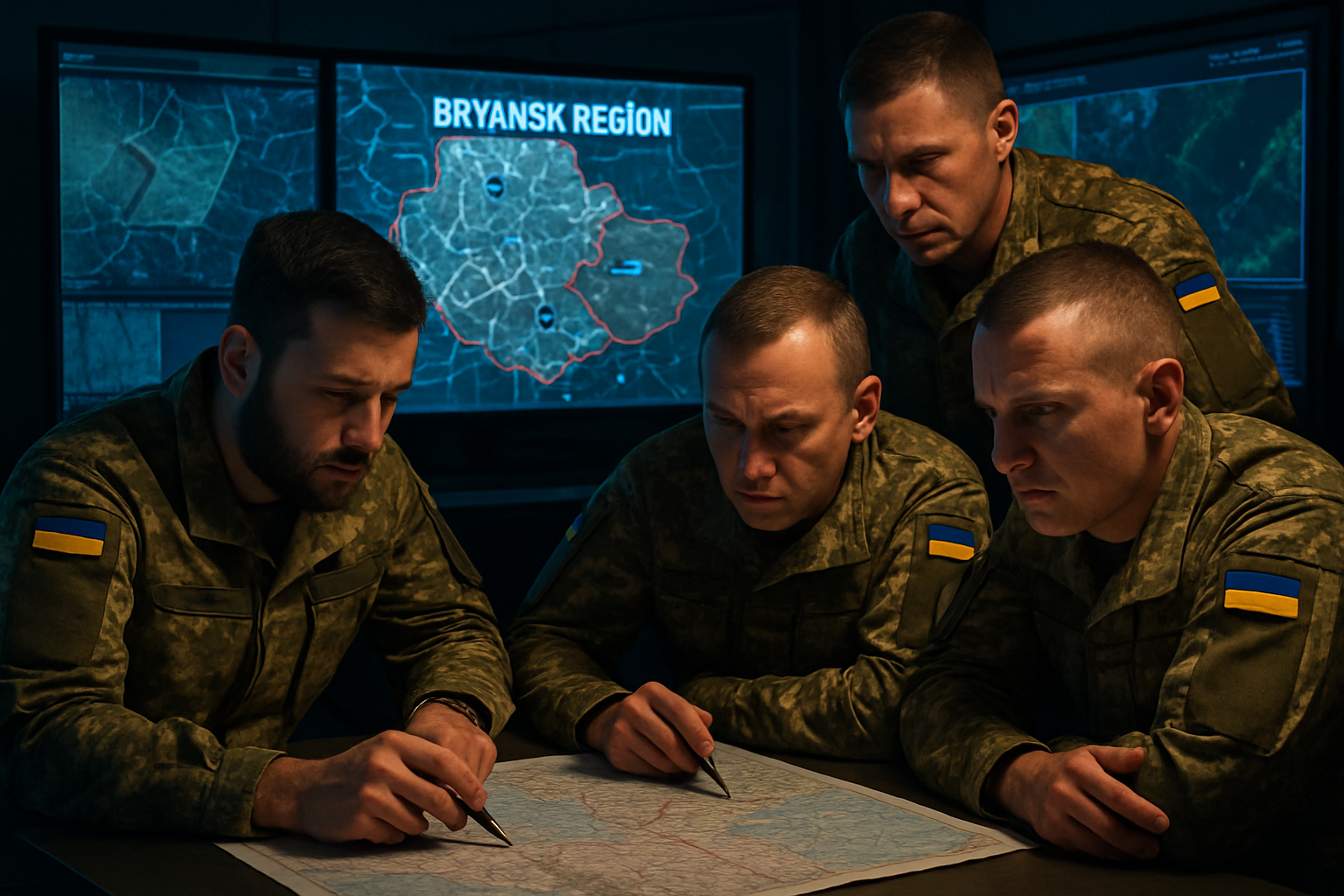
Ukrainian forces have successfully struck a Russian missile manufacturing facility in the Bryansk region, according to President Volodymyr Zelensky, marking a significant escalation in cross-border operations as the conflict enters its fifth year amid stalled peace negotiations.
The strategic strike targeted a facility that supplied electronic components, semiconductors, and microchips essential to various Russian weapons systems, according to French intelligence sources. The attack resulted in six civilian casualties and 37 wounded in the Bryansk Oblast, according to local Russian authorities, representing one of the deadliest Ukrainian strikes on Russian territory in recent months.
Strategic Targeting of Defense Infrastructure
President Zelensky confirmed the operation in his evening address, describing the targeted facility as "an important Russian missile factory." The installation was reportedly crucial to Russia's weapons production capabilities, manufacturing electronic components that feed into the broader Russian military-industrial complex supporting the ongoing invasion of Ukraine.
The strike demonstrates Ukraine's sustained long-range operational capabilities despite defensive pressures across multiple fronts. Ukrainian forces have consistently demonstrated their ability to reach deep into Russian territory, with recent operations extending over 500 kilometers from the border, including previous strikes on oil depots in Velikie Luki and ballistic missile facilities in the Astrakhan region.
Escalating Cross-Border Campaign
This latest attack comes as part of Ukraine's systematic campaign to degrade Russian military production and logistics capabilities. The strategy focuses on disrupting the supply chains that enable Russia's continued assault on Ukrainian territory, targeting facilities that produce or support weapons systems used against civilian and military targets in Ukraine.
Russian authorities report increased Ukrainian drone and missile activity across border regions, with dozens of attacks intercepted over territories including Belgorod, Kursk, and now Bryansk. The escalation reflects Ukraine's determination to take the fight to Russian soil while defending its own territory from continued Russian bombardment.
"We have struck an important Russian missile factory. This is our response to Russian terror."
— President Volodymyr Zelensky
Russian Retaliation Continues
Moscow's response has been swift and brutal, with Russian forces launching massive coordinated attacks across Ukrainian territory using nearly 1,750 strike drones, 1,530 guided aerial bombs, and 39 missiles over the past week alone. The systematic targeting of Ukrainian civilian infrastructure continues unabated, with particular focus on energy facilities and transportation networks.
Recent Russian attacks killed 10 people in a Kharkiv residential building and targeted a Kyiv-Sumy passenger train locomotive, demonstrating the Kremlin's willingness to strike civilian targets in retaliation for Ukrainian operations on Russian soil. Russian forces have also deliberately targeted emergency services personnel during rescue operations, a violation of international humanitarian law.
International Military Support Expansion
The escalation occurs against the backdrop of expanding international military support for Ukraine. The United Kingdom has revealed four operational maintenance, repair, and overhaul (MRO) facilities within Ukraine servicing Western-supplied armored vehicles and artillery systems, with a fifth facility planned. This marks the first public acknowledgment of such sophisticated military infrastructure on Ukrainian soil.
The MRO facilities enable rapid repair turnaround for Western equipment without requiring transport to neighboring countries, significantly improving operational readiness rates for advanced weapons systems. This development represents a long-term commitment to Ukrainian military modernization extending beyond current conflict requirements.
Diplomatic Efforts Remain Stalled
Despite the military escalation, diplomatic channels remain active but strained. Peace negotiations that achieved historic breakthroughs in February 2026, including a 314-prisoner exchange and the restoration of US-Russia military communications after a four-year suspension, have been suspended due to the Iran crisis in the Middle East.
The postponement of planned trilateral talks between Ukraine, Russia, and the United States has created uncertainty around the June 2026 peace deadline established by the Trump administration. The suspension demonstrates how regional conflicts can derail promising diplomatic initiatives, even as the fundamental territorial disputes over eastern Ukraine remain unresolved.
Military Capabilities Despite Pressure
Ukrainian Defense Forces have maintained their operational reach despite facing accelerated Russian territorial gains in eastern regions. In recent operations, Ukrainian forces struck multiple Russian targets in occupied Crimea, Donetsk, and Zaporizhzhia regions, including air defense systems, landing craft, and command posts.
The Ukrainian Navy reports that Russia maintains a significant Black Sea Fleet presence with five surface vessels and two submarine missile carriers, continuing to pose threats to shipping and maritime operations. However, Ukrainian long-range strikes have consistently demonstrated the vulnerability of Russian assets both in occupied territories and on Russian soil.
Nuclear Concerns Persist
The conflict continues to unfold against the backdrop of an unprecedented nuclear governance crisis. The New START treaty expired on February 5, 2026, marking the first time in over 50 years without US-Russia nuclear constraints. Both nations control approximately 80% of global nuclear weapons, creating what UN Secretary-General António Guterres described as a "grave turning point" with nuclear risks at their "highest in decades."
Ukrainian nuclear facilities remain under constant threat from Russian attacks, with plants previously forced to halt electricity production for the first time in the conflict. The systematic targeting of energy infrastructure has left over 1,170 Kyiv buildings without heating during extreme winter conditions, representing what officials describe as "energy terrorism."
Regional Security Implications
The Bryansk strike and broader escalation pattern reflects the conflict's evolution into a more intensive phase of cross-border operations. NATO allies are establishing forward support infrastructure in conflict zones, creating templates for future military cooperation partnerships while maintaining distinctions between support roles and direct combat involvement.
The energy security concerns extend beyond Ukraine's borders, affecting regional stability and European markets as infrastructure attacks create humanitarian challenges across the region. Neighboring countries continue adapting their security postures in response to the sustained conflict dynamics.
Humanitarian Crisis Deepens
As military operations intensify, the humanitarian toll continues mounting. President Zelensky has disclosed that 55,000 Ukrainian soldiers have been officially killed, with a "large number" missing in action. International estimates suggest actual casualties may be two to three times higher than official figures.
The systematic targeting of civilian infrastructure, including railway networks, energy facilities, and emergency services, represents a calculated strategy of civilian pressure that violates Geneva Convention protections. Emergency warming centers remain operational nationwide as the population endures continued attacks on essential services during extreme weather conditions.
Looking Ahead
The Bryansk missile factory strike represents a significant escalation in Ukraine's campaign to degrade Russian military capabilities at their source. As peace negotiations remain suspended and diplomatic momentum stalled by regional crises, both sides appear committed to military solutions for territorial and strategic objectives.
The evolution toward more sophisticated cross-border operations, supported by expanding international military infrastructure, suggests the conflict may be entering a new phase of operational complexity. Success in degrading Russian production capabilities could impact Moscow's ability to sustain long-term military operations, while Russian retaliation continues to exact a devastating toll on Ukrainian civilian populations.
With the June 2026 peace deadline uncertain due to the postponed talks, the international community faces the challenge of managing multiple simultaneous crises while preserving momentum for what remains Europe's most significant security challenge since the Cold War. The stakes extend far beyond Ukraine and Russia, affecting European security architecture, international law enforcement, and territorial sovereignty principles that will shape global power competition for decades to come.