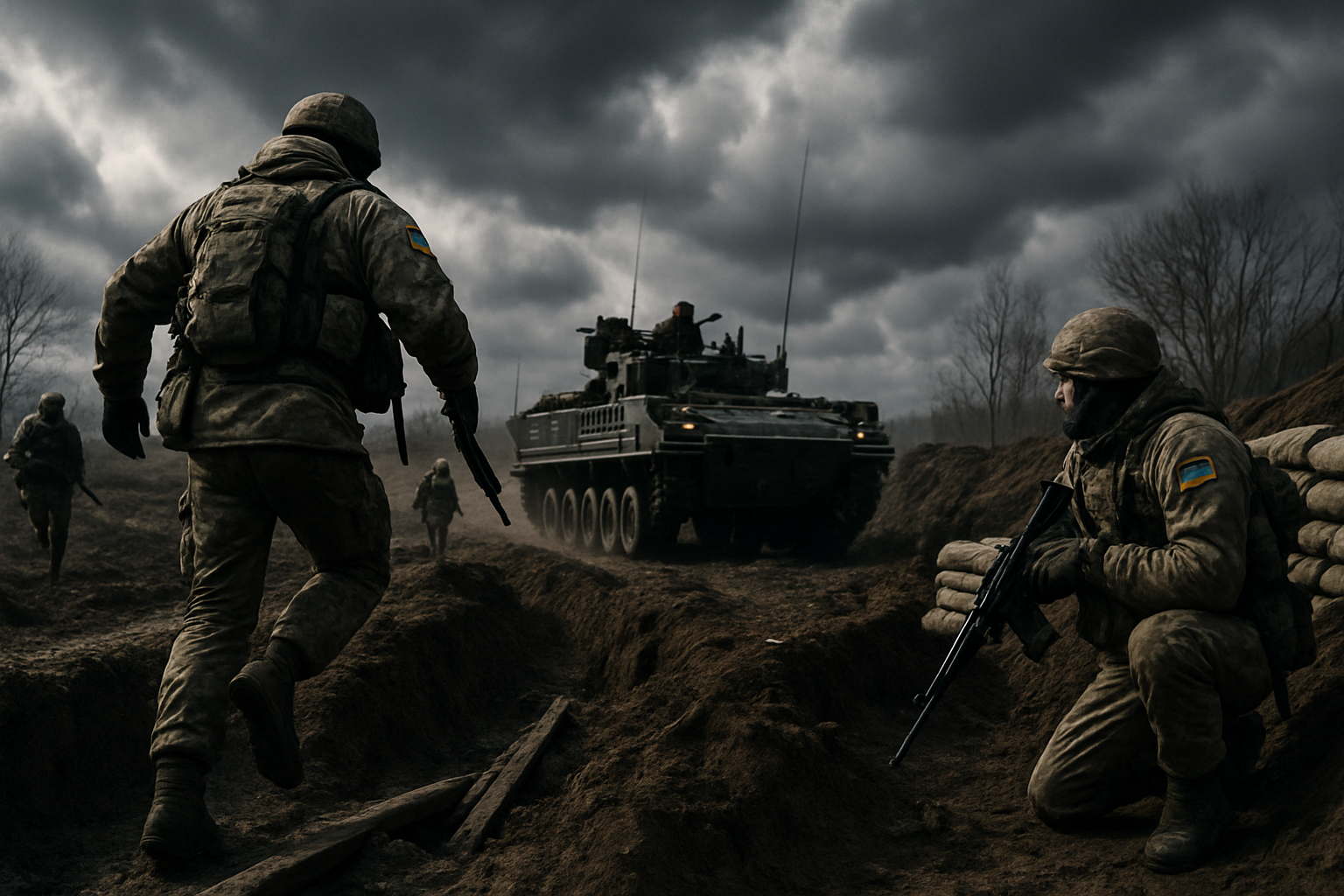
Ukrainian forces have achieved their most significant territorial gains since 2023, reclaiming nearly 400 square kilometers in a planned offensive that has largely cleared the Dnipropetrovsk region of Russian forces, according to military officials.
The offensive, which Ukrainian military sources describe as a coordinated operation, has forced Russian troops to delay operations and reinforce defensive positions across the eastern front. General Oleksandr Komarenko confirmed to RBC-Ukraine that Ukrainian forces now control almost the entire Dnipropetrovsk region after recovering the substantial territory over the past week.
Major Territorial Recovery
This represents the largest Ukrainian territorial gain since the summer 2023 counteroffensive, marking a significant shift in battlefield dynamics. The successful operation demonstrates Ukraine's continued ability to conduct coordinated military actions despite facing ongoing resource challenges and sustained Russian pressure across multiple fronts.
Military analysts suggest the gains reflect improved tactical coordination and potentially successful exploitation of Russian defensive weaknesses in the region. The operation appears to have caught Russian forces off-guard, forcing them to abandon previously held positions and retreat to more defensible lines.
Continued Russian Attacks on Civilians
Even as Ukraine celebrates territorial gains, Russian forces have maintained their systematic targeting of civilian infrastructure. In Sloviansk, located in the Donetsk region, Russian airstrikes have resulted in mounting civilian casualties with conflicting reports on the exact toll.
Ukrainian officials report that the death toll in Sloviansk has risen to four people, with 16-17 injured, including children. Among the victims was a 14-year-old girl, highlighting the continued impact of the conflict on Ukraine's civilian population. The strikes used guided aerial bombs, demonstrating Russia's continued reliance on precision munitions against non-military targets.
"The systematic targeting of civilian areas represents a clear violation of international humanitarian law. These attacks on Sloviansk show Russia's deliberate strategy of terrorizing Ukrainian communities."
— Ukrainian Ministry of Defense Statement
International Military Support
The territorial gains come amid continued international military assistance to Ukraine. Germany, working with European partners, has reportedly organized the delivery of approximately 35 Patriot missiles in the modern PAC-3 configuration to Ukraine, according to German media reports citing defense sources.
This delivery was made possible through the initiative of German Defense Minister Boris Pistorius, demonstrating continued European commitment to providing Ukraine with advanced air defense capabilities. The PAC-3 missiles represent some of the most sophisticated interceptor technology available, particularly effective against ballistic missiles and aircraft.
Hungarian Political Opposition
In a significant diplomatic development, Hungary's National Assembly has adopted a resolution rejecting Ukraine's membership in the European Union and opposing further military funding for Kyiv. The resolution also opposes efforts to transform the EU into a military alliance, representing a major divergence from broader European Union policy on Ukraine.
This Hungarian position creates additional complications for EU decision-making on Ukraine support, as the bloc typically requires unanimity for major policy decisions. The resolution reflects the continued divisions within the European Union regarding the extent and nature of support for Ukraine's war effort.
Strategic Implications
The Ukrainian territorial gains in Dnipropetrovsk region represent more than tactical success—they demonstrate Ukraine's ability to conduct effective offensive operations despite nearly two years of sustained conflict. The recovery of nearly 400 square kilometers suggests that Russian defensive positions, while formidable, remain vulnerable to well-coordinated Ukrainian operations.
For Russia, the loss of territory in Dnipropetrovsk complicates military planning and forces a reallocation of resources to strengthen defensive positions elsewhere. The collapse of what military analysts describe as Russia's "buffer zone strategy" in the region may signal broader vulnerabilities in Russian defensive planning.
Civilian Impact and International Law
The continued strikes on Sloviansk underscore the dual nature of the current conflict phase—significant military developments occurring alongside persistent attacks on civilian targets. The use of guided bombs against residential areas and civilian infrastructure represents what Ukrainian officials characterize as systematic war crimes.
International human rights organizations have documented patterns of civilian targeting throughout the conflict, with particular concern about attacks during winter months when infrastructure damage has heightened humanitarian impact. The strikes in Sloviansk, resulting in civilian casualties including children, fit this documented pattern.
Looking Forward
The territorial gains achieved by Ukrainian forces represent a significant development in a conflict that has largely been characterized by static front lines over recent months. The success in Dnipropetrovsk region may influence both military planning and diplomatic considerations as the conflict continues into its third year.
However, the simultaneous continuation of strikes on civilian areas like Sloviansk demonstrates that despite tactical successes, the broader conflict dynamics remain unchanged. Russian strategy appears to maintain dual tracks—military pressure on Ukrainian forces and systematic targeting of civilian infrastructure and populations.
The international community's response, including continued military aid like the German-coordinated Patriot missile delivery, suggests sustained commitment to supporting Ukraine's defense capabilities. However, political developments like Hungary's EU resolution highlight the ongoing challenges in maintaining unified international support.
As Ukraine consolidates its gains in Dnipropetrovsk region, the focus will likely shift to whether these territorial recoveries can be sustained and expanded, while simultaneously addressing the humanitarian crisis created by continued attacks on civilian areas across the country.