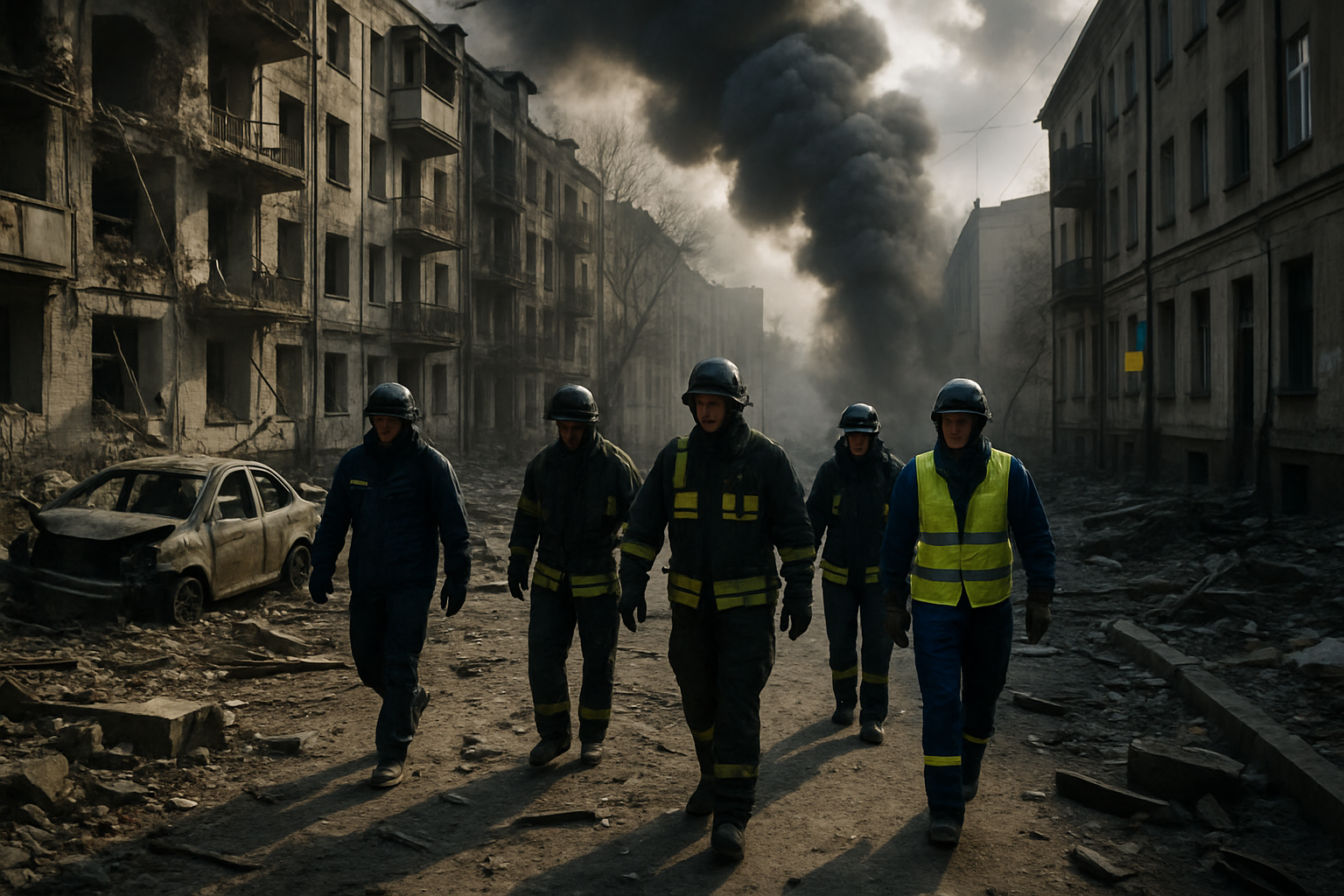
Ukrainian forces faced 194 Russian attacks on April 21, 2026, with the heaviest fighting concentrated in the Pokrovsk and Kostiantynivka sectors, as diplomatic efforts to resolve the conflict remain indefinitely suspended due to the Iran crisis consuming American foreign policy attention.
The latest military update from Ukraine's General Staff revealed the scale of ongoing hostilities, with Russian forces launching systematic attacks across multiple sectors of the 1,200-kilometer front line. Seven civilians were injured in Russian strikes on Novomykolaivka village in Zaporizhzhia region, highlighting the continued targeting of civilian areas.
Druzhba Pipeline Repairs Completed But Aid Package Blocked
In a significant development, President Volodymyr Zelensky announced that repairs to the damaged Druzhba oil pipeline have been completed. However, he has conditioned the pipeline's reopening on the release of the EU's historic €90 billion financial support package, which remains blocked by Hungarian Prime Minister Viktor Orbán.
The pipeline, which transports Russian oil to Hungary through Ukraine, was damaged in earlier Russian strikes. Zelensky's decision to link its reopening to EU aid reflects Ukraine's strategic use of economic leverage amid the ongoing conflict.
"We have completed the necessary repairs, but this is about more than just infrastructure - it's about European unity and support for Ukraine's defense,"
— Volodymyr Zelensky, Ukrainian President
Diplomatic Crisis Deepens as Peace Talks Remain Stalled
The suspension of trilateral peace talks between Ukraine, Russia, and the United States continues indefinitely due to the Iran crisis, which has consumed American diplomatic resources since March 2026. This represents a major setback to the promising diplomatic momentum achieved in February 2026.
February's breakthrough included the largest prisoner exchange in five months (314 individuals), the restoration of US-Russia military communications after a four-year suspension, and Geneva talks that achieved "significant progress" on ceasefire monitoring mechanisms with European "Big 5" observers participating for the first time.
The Trump administration's June 2026 deadline for a comprehensive peace agreement, with Washington as the proposed venue for potential presidential-level engagement, now appears uncertain due to competing Middle East priorities.
Military Escalation and Technological Warfare
Recent developments showcase the evolution of modern warfare, with Ukraine achieving what military analysts describe as the first fully robotic military conquest in modern warfare - capturing Russian positions using only unmanned systems. This milestone reflects the technological transformation of the conflict.
Russia now operates 101,000 drone troops, representing the largest unmanned force in modern warfare history. This technological arms race has fundamentally altered battlefield dynamics, with both sides deploying increasingly sophisticated autonomous systems.
Russian territorial gains have accelerated significantly, with 481 square kilometers captured in January 2026 versus 260 square kilometers in December 2025 - an 85% increase representing the fastest monthly expansion in recent periods.
Ukraine's Strategic Global Pivot
Ukraine has evolved from an aid recipient to a security provider, deploying over 200 military specialists to the UAE, Qatar, Jordan, Bahrain, and Kuwait to share expertise in combating Iranian Shahed drones - the same weapons being used against Ukrainian civilians.
The UK has revealed four operational Maintenance, Repair, and Operations (MRO) facilities in Ukraine servicing Western-supplied equipment, with a fifth facility planned. This represents the first public acknowledgment of extensive military infrastructure on Ukrainian soil, demonstrating long-term Western commitment to Ukraine's defense capabilities.
Humanitarian Crisis and Civilian Targeting
The human cost of the conflict continues to mount, with President Zelensky having disclosed that 55,000 Ukrainian soldiers have been officially killed, with a "large number" missing. International estimates suggest actual casualties may be 2-3 times higher.
Systematic targeting of civilian infrastructure continues, with over 1,170 Kyiv buildings still lacking adequate heating from previous "energy terrorism" attacks. Ukrainian nuclear plants have been forced to halt electricity production for the first time since the conflict began, raising serious concerns about energy security.
The pattern of attacks on civilian infrastructure during extreme weather conditions represents documented violations of the Geneva Conventions, with 15 DTEK energy workers killed while attempting to restore power infrastructure.
Nuclear Governance Crisis
The conflict unfolds against the backdrop of an unprecedented nuclear governance crisis. The New START treaty expired on February 5, 2026, marking the first time in over 50 years without US-Russia nuclear constraints. Both superpowers control approximately 80% of global nuclear weapons, with Russia possessing 4,380 warheads and the US 3,708.
UN Secretary-General António Guterres has described this as a "grave turning point," warning that nuclear risks are at their "highest in decades." The restored military communications between the Pentagon and Russian General Staff represent the only remaining formal diplomatic channel between the nuclear superpowers.
International Support and European Divisions
The EU's €90 billion loan package represents the largest single-nation assistance package in history, though Slovakia, Czech Republic, and Hungary have refused participation, exposing significant divisions within the European bloc.
Additional support continues to flow from other allies, with Germany providing 35 Patriot missiles and Sweden-Denmark contributing €246 million for air defense systems. However, Hungary's veto threats over energy disputes continue to complicate unified Western responses.
Over 17.8 million Ukrainians are currently accessing winter support programs, reflecting the massive humanitarian challenge facing the country.
Territorial Disputes and Sticking Points
The fundamental sticking points that have plagued peace negotiations remain unchanged. Eastern Ukrainian territories under Russian control represent the core disagreement, with Russia demanding recognition of occupied territories and insisting that any Putin-Zelensky talks take place in Moscow.
Ukraine maintains its position on territorial integrity, with Zelensky categorically rejecting territorial concessions. He has stated that the Ukrainian people would reject "handing over territories" as a "failure story."
Framework Preservation and Future Prospects
Despite the current suspension, diplomatic achievements from February 2026 remain intact for potential reactivation when the Iran crisis permits. The prisoner exchange mechanisms, structured negotiation format, and Pentagon-Moscow deconfliction protocols covering operations in Syria, the Arctic, and Africa can be restored.
The UAE methodology, which proved effective in producing concrete humanitarian results, provides a foundation for future engagement when geopolitical conditions allow.
Strategic Implications and Global Stakes
The stakes of this conflict extend far beyond Ukraine's borders. Success in eventual resumed talks could end Europe's deadliest war since World War II and provide a template for 21st-century territorial dispute resolution. Failure risks continued escalation with global implications for diplomatic solutions to territorial conflicts worldwide.
The conflict has become a testing ground for European security architecture redefinition, international law enforcement credibility, and territorial sovereignty principles that will influence power competition dynamics for decades to come.
Looking Ahead: Uncertain Timeline
The timeline for resumed negotiations depends heavily on the resolution of the Iran situation and broader Middle East stability. Military escalation continues with systematic civilian targeting while Ukraine expands its international partnerships and maintains operational capabilities.
As the conflict approaches its fourth anniversary, the international community faces a critical test of whether diplomatic innovation can overcome military escalation in determining European security trajectories for the coming decades.
The current phase represents perhaps the most significant diplomatic opportunity since the invasion began, suspended by competing international crises that demonstrate the interconnected nature of regional conflicts in today's multipolar security environment.