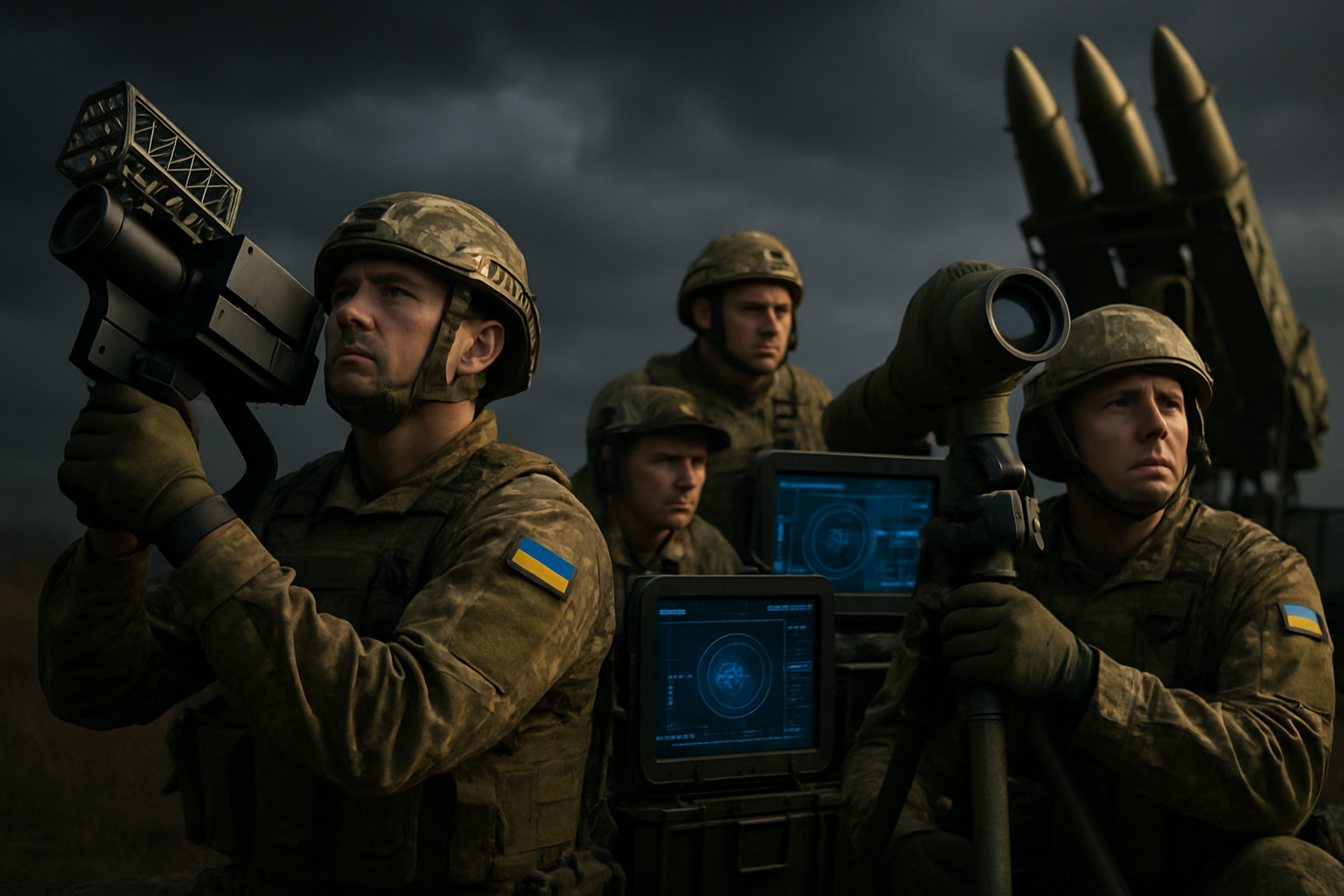
Ukrainian President Volodymyr Zelensky has declared that Ukraine must obtain its own anti-ballistic defense systems, either independently or through solid partnerships, as military operations near nuclear facilities continue to pose unprecedented risks of nuclear disaster amid the ongoing Russian war.
Speaking at the 40th anniversary commemoration of the Chernobyl disaster, Zelensky emphasized the urgent need for Ukraine to secure comprehensive missile defense capabilities. The announcement comes as Ukraine faces mounting challenges in obtaining advanced defense systems, with supply difficulties linked to the concurrent conflicts in the Middle East, particularly the Iran crisis that has indefinitely suspended trilateral peace negotiations.
Critical Nuclear Security Concerns
Ukraine has repeatedly called at the United Nations for an immediate cessation of all military operations near nuclear facilities, which pose the risk of a nuclear disaster amid the Russian war. The urgency of these concerns has been underscored by systematic Russian attacks on energy infrastructure that have forced Ukrainian nuclear plants to halt electricity production for the first time in the conflict.
The nuclear crisis has reached unprecedented levels since the expiration of the New START treaty on February 5, 2026—the first time in over 50 years without US-Russia nuclear constraints. Both superpowers control 80% of global nuclear weapons, with Russia possessing 4,380 warheads and the US maintaining 3,708, creating what UN Secretary-General Guterres has called a "grave turning point" with nuclear risks at their "highest in decades."
Suspended Peace Talks and Military Escalation
The diplomatic landscape has dramatically shifted since February 2026 breakthroughs that included a historic 314-prisoner exchange and restoration of US-Russia military communications after a four-year suspension. However, the Iran crisis has indefinitely derailed trilateral Ukraine-Russia-US negotiations that showed significant promise for conflict resolution.
"The current target is at least 50,000 unmanned ground vehicles for this year,"
— President Zelensky, Setting Military Production Goals
Despite the diplomatic setback, military escalation continues to accelerate. Russian forces have achieved territorial gains of 481 square kilometers in January versus 260 square kilometers in December 2025—an 85% increase representing the fastest expansion in months. Russia now operates 101,000 troops dedicated exclusively to drone operations, constituting the largest unmanned force in modern warfare history.
Devastating Human and Infrastructure Toll
The conflict's humanitarian crisis has reached staggering proportions. In Sloviansk community in the Donetsk region alone, 81 people have been killed and 402 wounded since the start of Russia's full-scale invasion on February 24, 2022. More than 50% of residential high-rise buildings in the community have been damaged, illustrating the systematic nature of civilian targeting.
Recent attacks demonstrate the continued threat to civilian populations. Russian forces attacked a parking lot in the Kovpakivsky district of Sumy with a drone, damaging seven vehicles, while in another incident, soldiers of the "Murchyky" UAV battalion successfully destroyed nine Russian quad bikes in the Vovchansk area, showcasing both the precision of modern drone warfare and the ongoing intensity of combat operations.
Recognition of Military Service
Amid the ongoing conflict, President Zelensky has awarded state honors to 890 defenders of Ukraine, with 442 of these honors bestowed posthumously, highlighting the tremendous sacrifice of Ukrainian military personnel. This recognition comes as Ukraine has disclosed that 55,000 soldiers have been officially killed, with a "large number" missing and estimates suggesting the actual toll may be 2-3 times higher.
Strategic Defense Innovation
Ukraine's call for independent anti-ballistic systems represents a significant evolution in the country's defense strategy. The demand reflects not only immediate security needs but also long-term strategic planning for sustainable defense capabilities. The emphasis on achieving these capabilities "alone or with solid partners" suggests Ukraine is exploring multiple pathways to enhance its defensive posture.
This strategic pivot occurs alongside Ukraine's transformation from aid recipient to security provider, with over 200 military specialists now deployed across the UAE, Qatar, Jordan, Bahrain, and Kuwait, sharing expertise in defending against Iranian Shahed drones—the same weapons being used to attack Ukrainian infrastructure.
International Support and Challenges
Despite ongoing challenges, international support for Ukraine remains substantial, though increasingly strained by competing global crises. The European Union has approved a historic €90 billion loan package, the largest single-nation assistance ever provided, though Slovakia, Czech Republic, and Hungary have refused participation, exposing divisions within the bloc.
The UK has revealed four operational MRO facilities in Ukraine servicing Western equipment, with a fifth planned, representing the first public acknowledgment of extensive military infrastructure on Ukrainian soil. Sweden and Denmark have committed €246 million for air defense systems, while Germany continues to provide 35 Patriot missiles.
Framework for Future Peace
While peace talks remain suspended due to the Iran crisis, the diplomatic framework established in February 2026 remains intact for potential reactivation. The prisoner exchange mechanisms, Pentagon-Moscow deconfliction protocols covering operations in Syria, the Arctic, and Africa, and structured negotiation formats developed through UAE methodology have proven effective in producing humanitarian results.
The territorial sticking points remain unchanged: Eastern Ukrainian territories under Russian control represent the fundamental disagreement, with Russia demanding recognition and Moscow venue talks while Ukraine maintains its territorial integrity position.
Global Security Implications
The stakes of this conflict extend far beyond Ukraine's borders. Success in eventual resumed talks could end Europe's deadliest war since World War II and provide a template for 21st-century conflict resolution. Failure risks continued escalation with global implications for diplomatic solutions to territorial disputes.
The conflict has already transformed conventional warfare through unprecedented drone operations and autonomous systems, with Ukraine achieving the historic first capture of Russian positions using only unmanned systems without human soldiers—representing a fundamental shift in military doctrine.
Coming Phase Uncertain
The timeline for resumed negotiations depends on resolution of the Iran situation and broader Middle East stability. Military escalation continues with systematic civilian targeting while Ukraine expands international partnerships and maintains operational capabilities.
As the conflict enters its fifth year with nuclear facilities under threat and peace talks suspended, Ukraine's demand for independent anti-ballistic defense systems represents both a practical security necessity and a strategic assertion of sovereignty. The international community faces critical decisions about supporting Ukraine's defensive capabilities while managing competing global crises and preserving the possibility of diplomatic breakthrough.
The success or failure of eventual resumed talks will carry global implications for territorial sovereignty principles, international law enforcement, and conflict prevention mechanisms that will shape international relations for decades to come.