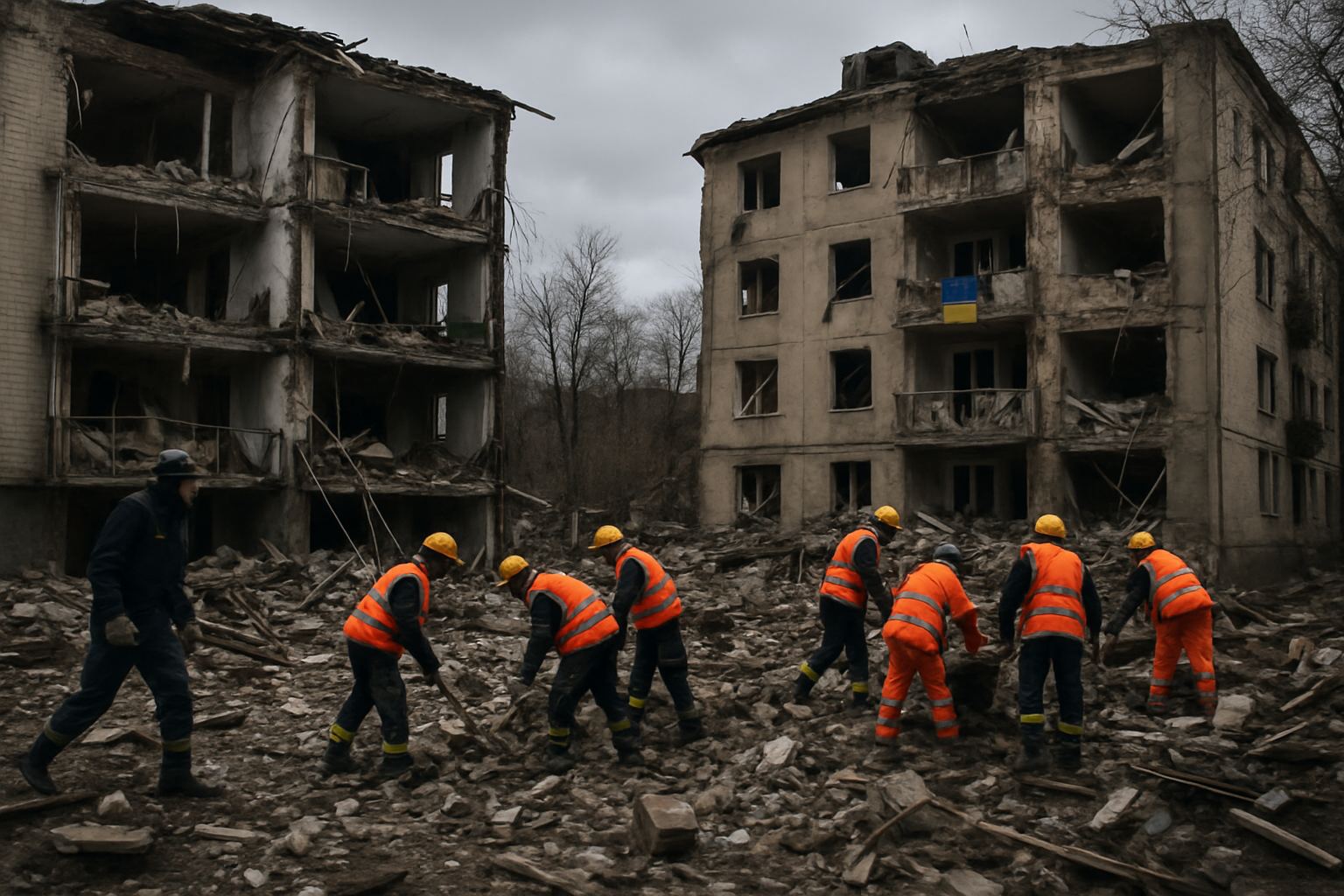
Russian forces killed at least 8 people across Ukraine on Friday in a massive missile and drone assault, marking a sharp escalation in civilian casualties as diplomatic efforts to end the conflict remain indefinitely suspended due to the Iran crisis.
The deadly strikes hit multiple regions including Zhytomyr, where one person was killed and 10 wounded as dozens of homes and public buildings were destroyed. In the eastern city of Kramatorsk, Russian aerial bombs killed four civilians and wounded two others in the latest bombardment of the Donetsk region.
Peace Talks Remain Suspended
The escalation comes as the most promising diplomatic initiative since the Russian invasion began has been put on hold indefinitely. President Volodymyr Zelensky announced that trilateral peace negotiations between Ukraine, Russia, and the United States have been postponed due to the crisis in the Middle East.
"Due to the situation around Iran, there are still no necessary signals for trilateral meeting," Zelensky stated, adding that talks would resume "as soon as the security situation allows."
The suspension represents a significant setback to diplomatic momentum that had been building since February 2026, when historic breakthroughs included a 314-prisoner exchange - the first in five months - and the restoration of US-Russia military communications after a four-year suspension.
Systematic Civilian Targeting Continues
Ukrainian officials report that Russia has intensified its strategy of targeting civilian infrastructure and residential areas. The Kyiv region suffered particularly severe damage, with over 60 facilities damaged across four districts. One man was killed and eight people injured in attacks on the Bucha, Brovary, Fastiv, and Obukhiv districts.
"Russia's terrorist tactics deliberately execute strikes in broad daylight to cause maximum damage and civilian casualties," Ukrainian Foreign Minister Andriy Sybiha stated, revealing that Russia launched approximately 500 drones and missiles in recent operations.
— Ukrainian Foreign Ministry
The systematic targeting of civilians violates Geneva Conventions and represents what Ukrainian officials describe as "energy terrorism" - a strategy that has left over 1,170 buildings in Kyiv without adequate heating during harsh winter conditions.
International Response and Support
Despite the diplomatic setbacks, international support for Ukraine remains robust. The European Union has approved a historic €90 billion loan package - the largest single-nation assistance package in EU history. However, divisions persist within Europe, with Slovakia, Czech Republic, and Hungary refusing to participate in the financing.
Sweden and Denmark have committed €246 million for air defense systems, while Germany has provided 35 Patriot missiles. The UK has revealed the existence of four operational MRO (Maintenance, Repair, and Operations) facilities in Ukraine for servicing Western-supplied equipment, with a fifth facility planned.
Ukraine's Strategic Evolution
Remarkably, Ukraine has evolved from being primarily an aid recipient to becoming a security provider on the global stage. Ukrainian military experts are now deployed in five Middle Eastern countries - Jordan, Qatar, Kuwait, UAE, and Saudi Arabia - sharing expertise in combating Iranian Shahed drones, the same weapons that have been devastating Ukrainian cities.
Nuclear Governance Crisis
The conflict is unfolding against the backdrop of an unprecedented nuclear governance crisis. The New START treaty between the US and Russia expired on February 5, 2026, marking the first time in over 50 years that the two superpowers have operated without bilateral nuclear constraints.
Together, Russia and the United States control approximately 80% of the world's nuclear weapons, with Russia possessing 4,380 warheads and the US maintaining 3,708. UN Secretary-General António Guterres has described the situation as a "grave turning point," with nuclear risks at their "highest in decades."
Military Situation and Casualties
The conflict has taken a devastating human toll. President Zelensky has disclosed that 55,000 Ukrainian soldiers have been officially confirmed killed, with a "large number" still classified as missing in action. International estimates suggest the actual casualty figures could be two to three times higher when including undocumented deaths and missing personnel.
Russian territorial gains have accelerated significantly, capturing 481 square kilometers in January 2026 compared to 260 square kilometers in December 2025 - an 85% increase. Over the past week alone, Russia launched 1,750 strike drones, 1,530 guided aerial bombs, and 39 missiles against Ukrainian targets.
Framework for Future Negotiations
While current diplomatic efforts are stalled, the framework for future negotiations remains intact. The prisoner exchange mechanisms, Pentagon-Moscow deconfliction protocols covering operations in Syria, the Arctic, and Africa, and structured negotiation formats developed during the Abu Dhabi talks can be reactivated when conditions permit.
The UAE methodology, which involved working groups organized by topic and joint position synchronization, proved effective in achieving concrete humanitarian results even amid ongoing military operations. This represents the most substantial US-Russia agreement since the conflict began.
Stakes for Global Security
The outcome of this conflict extends far beyond Ukraine's borders. Success in eventual resumed negotiations could end Europe's deadliest war since World War II and provide a template for 21st-century conflict resolution. Failure, however, may intensify military operations globally and undermine the credibility of diplomatic solutions for territorial disputes worldwide.
The stakes include the redefinition of European security architecture, international law enforcement credibility, and the enforcement of territorial sovereignty principles that will shape power competition for decades to come.
Looking Ahead
As the timeline for resumed negotiations depends entirely on the resolution of the Iran situation, military escalation continues with systematic civilian targeting while Ukraine maintains its operational capabilities and expands its international partnerships. The success or failure of eventual resumed talks will carry global implications for territorial dispute resolution innovation versus continued military approaches in determining European security redefinition.
With over 17.8 million Ukrainians currently accessing winter support programs and infrastructure under constant threat, the humanitarian crisis deepens as the international community manages multiple simultaneous crises while attempting to preserve momentum on Europe's most significant security challenge since the Cold War.