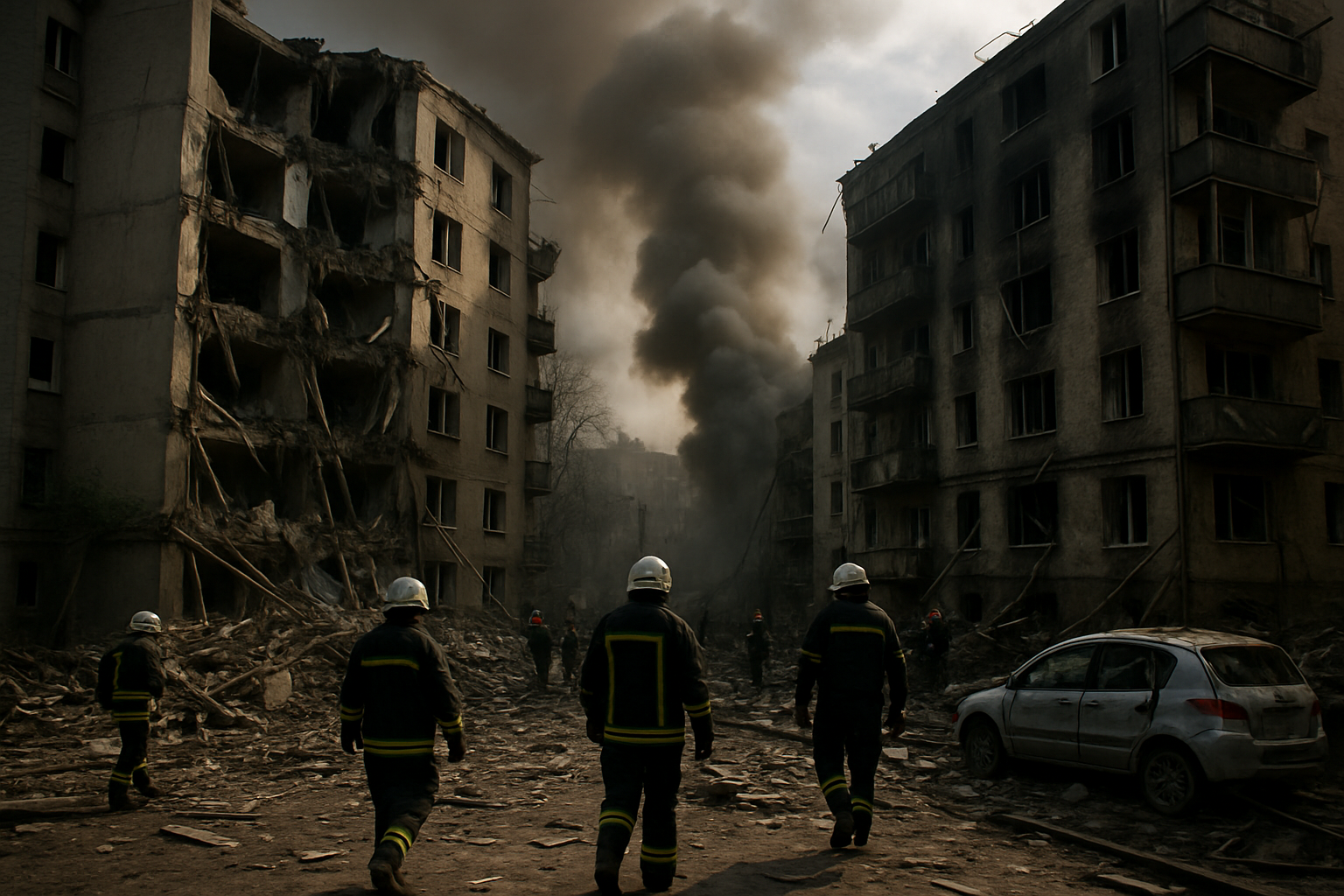
Russian forces launched coordinated attacks across multiple Ukrainian cities on April 6, 2026, killing at least three civilians in Odesa and causing widespread damage to civilian infrastructure and energy facilities across the country, while diplomatic efforts to end the nearly four-year conflict remain indefinitely suspended.
The latest wave of attacks targeted Odesa, Chernihiv, and other Ukrainian regions, with Russian forces deploying 141 drones and multiple ballistic missiles in what marks one of the most intensive assaults in recent weeks. Ukrainian air defense forces successfully intercepted 114 drones, according to the Ukrainian Air Force, but 26 attack drones struck 17 locations across the country.
Civilian Casualties Mount in Odesa Attack
In Odesa, the southern port city crucial to Ukraine's grain exports, at least three people were confirmed killed in Russian drone strikes that targeted residential areas. Russian media reports indicated the deaths included two women and a two-year-old child, with 15 additional people wounded in the attacks on civilian infrastructure.
The systematic targeting of civilian areas has been documented as part of Russia's broader strategy to pressure Ukraine through attacks on non-military infrastructure, which international legal experts classify as violations of the Geneva Conventions.
"The enemy struck residential homes, critical infrastructure objects and administrative buildings. A hit to a multi-story building was recorded"
— Oleksii Kuleba, Ukrainian Vice Prime Minister
Energy Infrastructure Under Sustained Attack
Beyond the immediate casualties, the attacks continued Russia's systematic campaign against Ukraine's energy infrastructure. In the Chernihiv region, energy facilities were damaged in the Novhorod-Siverskyi district, leaving more than 10,000 people without power. This "energy terrorism" strategy has left over 1,170 buildings in Kyiv without adequate heating from previous attacks.
The targeting of civilian energy infrastructure during harsh weather conditions represents what Ukrainian officials and international observers have termed a calculated campaign to break civilian morale through humanitarian pressure. Ukrainian nuclear plants have been forced to halt electricity production for the first time in the conflict due to these systematic attacks.
Ukrainian Territorial Gains Amid Russian Advances
Despite the ongoing attacks, Ukrainian forces have made strategic gains in certain areas. Army Chief Oleksandr Syrskyi reported that Ukraine had regained control of 480 square kilometers (185 square miles) of territory in southeastern and eastern front areas since late January 2026, including eight settlements in the Dnipropetrovsk region and four in the Zaporizhzhia region.
However, this comes against the backdrop of accelerated Russian territorial gains of 481 square kilometers in January 2026 compared to 260 square kilometers in December 2025 - an 85% increase that represents the fastest expansion in months.
Peace Talks Indefinitely Suspended
The attacks occur as diplomatic efforts to end the conflict remain in limbo. President Volodymyr Zelensky confirmed that trilateral peace negotiations between Ukraine, Russia, and the United States have been postponed indefinitely due to the ongoing Iran crisis consuming American foreign policy attention.
The suspension represents a significant setback to the diplomatic momentum achieved in February 2026, which included a historic 314-prisoner exchange - the first in five months - and the restoration of US-Russia military communications after a four-year suspension. Geneva talks in February had achieved "significant progress" on ceasefire monitoring mechanisms, with European "Big 5" observers participating for the first time.
Framework Preservation Despite Delays
While the talks are suspended, diplomatic achievements remain intact for potential reactivation when the Iranian crisis permits American refocus. The proven framework includes prisoner exchange mechanisms, Pentagon-Moscow deconfliction protocols covering operations in Syria, the Arctic, and Africa, and structured negotiation formats that proved effective for humanitarian results.
The Trump administration's June 2026 deadline for Washington venue talks, potentially at the presidential level, now remains uncertain as Middle East priorities dominate US foreign policy attention.
Nuclear Governance Crisis Backdrop
The conflict continues against the backdrop of an unprecedented nuclear governance crisis. The New START treaty expired on February 5, 2026, marking the first time in over 50 years without US-Russia nuclear constraints. Both nations control approximately 80% of global nuclear weapons, with the UN Secretary-General António Guterres describing current nuclear risks as the "highest in decades."
The restored military communications serve as the only remaining formal diplomatic channel between the nuclear superpowers, adding extraordinary urgency to efforts toward a comprehensive resolution.
International Support Continues
Despite the diplomatic suspension, international support for Ukraine remains unprecedented. The European Union's historic €90 billion loan package - the largest single-nation assistance ever provided - continues, though Slovakia, Czech Republic, and Hungary have refused participation, exposing divisions within the bloc.
Additional support includes Sweden and Denmark's €246 million for air defense systems, Germany's provision of 35 Patriot missiles, and the UK's revelation of four operational Maintenance, Repair, and Operations (MRO) facilities in Ukraine servicing Western-supplied equipment, with a fifth planned.
Human Cost Continues to Mount
The human toll of the conflict remains staggering. President Zelensky has disclosed that 55,000 Ukrainian soldiers have been officially killed, with a "large number" missing. International estimates suggest the actual casualties may be two to three times higher. More than 17.8 million Ukrainians are accessing winter support programs due to infrastructure damage from systematic attacks.
Over the past week alone, Russia launched more than 2,800 attack drones, nearly 1,350 guided bombs, and over 40 missiles of various types against Ukraine, according to official Ukrainian sources.
Strategic Implications
The suspension of diplomatic efforts while attacks continue carries profound implications for 21st-century conflict resolution. The stakes extend beyond Ukraine to include European security architecture redefinition, international law enforcement credibility, and territorial sovereignty principles that will shape international relations for decades.
Success in eventual resumed talks could end Europe's deadliest war since World War II and provide a template for territorial dispute resolution. Failure may intensify military operations globally and undermine diplomatic credibility in resolving future conflicts.
Regional Security Evolution
Ukraine has evolved from aid recipient to security provider, deploying military experts to the UAE, Qatar, Jordan, Bahrain, Kuwait, and Saudi Arabia to combat Iranian Shahed drones - the same weapons being used against Ukrainian infrastructure. This strategic transformation leverages battlefield experience into regional security partnerships, potentially creating new negotiating leverage.
Coming Phase Uncertain
The timeline for renewed negotiations depends on resolution of the Iranian crisis. Military escalation continues with systematic civilian targeting while Ukraine maintains operational capabilities and expands international partnerships. The framework achievements remain preserved for reactivation when conditions permit, but fundamental territorial sticking points - eastern Ukrainian territories under Russian control - remain unchanged.
Russia demands recognition of occupied territories and Moscow venue for any Putin-Zelensky talks, while Ukraine maintains its territorial integrity position. The success or failure of eventual resumed talks carries global implications for territorial dispute resolution innovation versus continued military approaches in determining European security redefinition for the 21st century.