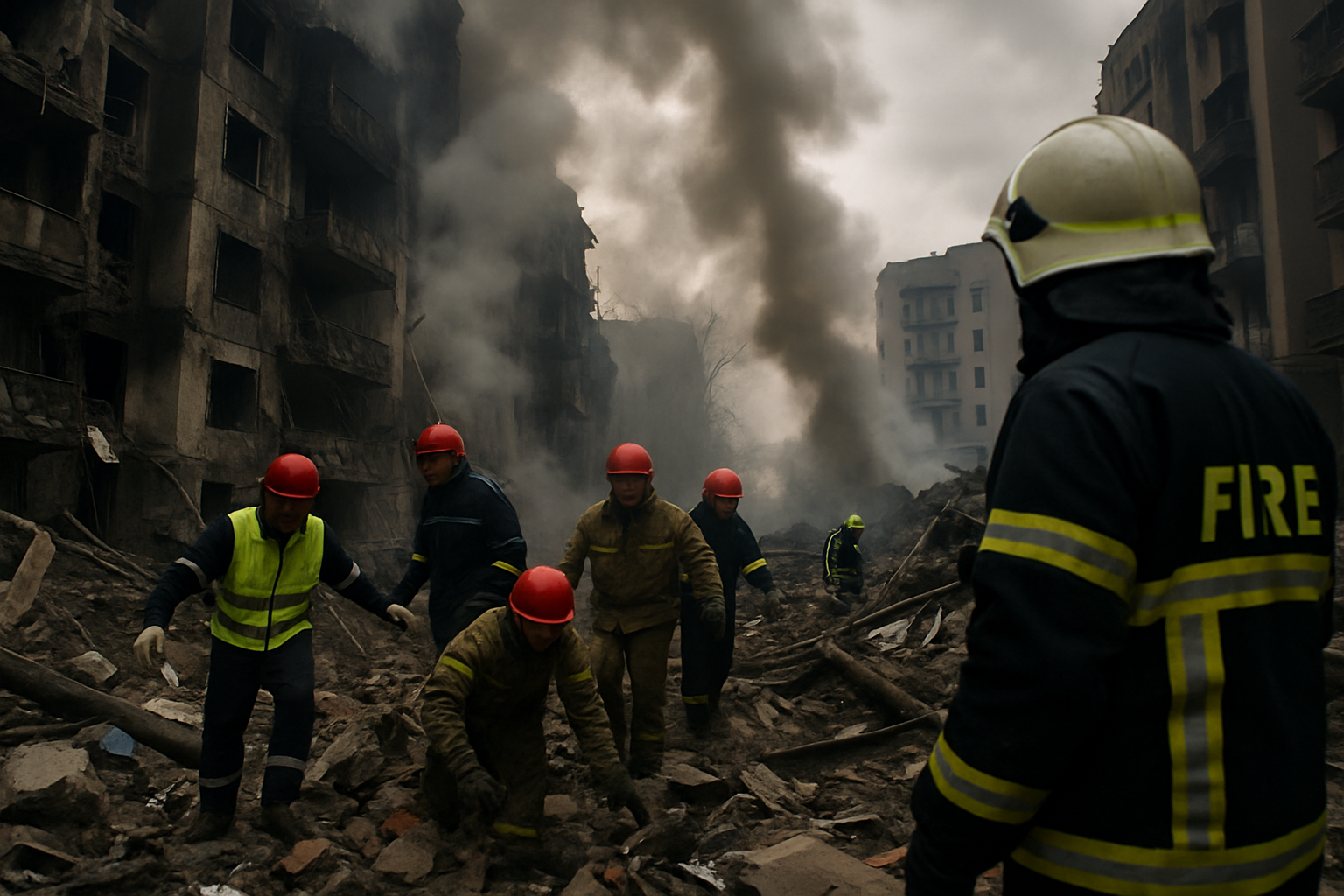
Russia conducted one of its most devastating coordinated assaults of 2026 on April 17, launching nearly 700 drones and dozens of ballistic missiles against Ukrainian cities including Odessa and Kiev, resulting in at least 17 civilian deaths, while Ukrainian forces reported killing 1,000 Russian invaders in a single day.
The massive Russian attack represents a significant escalation in the systematic targeting of civilian infrastructure, occurring as trilateral peace negotiations between Ukraine, Russia, and the United States remain indefinitely suspended due to the ongoing Iran crisis consuming American foreign policy attention.
Devastating Civilian Casualties
According to reports from multiple Ukrainian sources and Italian media, Russian forces killed at least 17 civilians in coordinated strikes across the country. Kiev Mayor Vitali Klitschko confirmed casualties in the capital, while Odessa bore the brunt of the assault with multiple civilian deaths reported.
The attacks targeted critical infrastructure and residential areas, continuing Russia's documented strategy of "energy terrorism" that has left over 1,170 Kiev buildings without adequate heating from previous attacks. Ukrainian nuclear power plants were forced to halt electricity production for the first time in the conflict, representing an unprecedented escalation in infrastructure warfare.
U.S. President Donald Trump described the large-scale air attack as "terrible," marking a rare direct condemnation of Russian military actions from the Trump administration, which has been focused on managing the Iran crisis.
Record Daily Russian Casualties
Ukrainian military sources reported eliminating 1,000 Russian troops in a single day, bringing total Russian combat losses to approximately 1,316,070 personnel as of April 17, 2026. The figure represents one of the highest single-day casualty tolls reported since the conflict began in February 2022.
"Russia's total combat losses in its full-scale war against Ukraine have reached approximately 1,316,070 personnel as of April 17, 2026, including 1,000 troops killed or wounded over the past day."
— Ukrainian Armed Forces General Staff
The massive casualties come despite Russian territorial gains of 481 sq km in January versus 260 sq km in December 2025, representing an 85% increase in the fastest territorial expansion in months. This suggests Russian forces are paying an increasingly unsustainable human cost for tactical advances.
Expanding Drone Warfare Operations
Russian forces deployed nearly 700 drones in the 24-hour assault period, demonstrating the evolution of their drone warfare capabilities. Russia now operates 101,000 troops dedicated to drone operations—the largest unmanned force in modern warfare history.
Ukrainian forces responded with their own drone operations, striking a transport facility in Dnipro and conducting successful intercepts of Russian boats attempting to cross the Dnipro River. Units of the Azov Brigade within the 1st Corps of the National Guard are using attack drones to control Russian logistics routes around Donetsk and strike targets deep behind enemy lines.
The 40th Separate Marine Brigade used drones to hit two Russian boats attempting to cross the Dnipro River, neutralizing 15 enemy troops in a demonstration of Ukraine's evolving tactical drone capabilities.
Peace Talks Remain Suspended
The devastating attacks occur against the backdrop of indefinitely suspended trilateral peace negotiations between Ukraine, Russia, and the United States. The Iran crisis has consumed American foreign policy attention, derailing momentum from historic February 2026 breakthroughs that included a 314-prisoner exchange and the restoration of US-Russia military communications after a four-year suspension.
The February Geneva talks had achieved "significant progress" on ceasefire monitoring mechanisms with European "Big 5" observers (Germany, France, Italy, UK, Poland) participating for the first time. However, fundamental territorial disputes remain unresolved, with Russia demanding recognition of occupied eastern Ukrainian territories and Ukraine maintaining its territorial integrity position.
The Trump administration's June 2026 Washington venue deadline for comprehensive peace talks now appears uncertain due to competing Middle East priorities, though diplomatic frameworks remain preserved for potential reactivation when conditions permit.
Nuclear Crisis Context
The escalation occurs amid an unprecedented nuclear governance crisis. The New START treaty expired on February 5, 2026, marking the first time in over 50 years without US-Russia nuclear constraints. Both superpowers control 80% of global nuclear weapons, with Russia possessing 4,380 warheads and the US maintaining 3,708.
UN Secretary-General António Guterres has warned of a "grave turning point" with nuclear risks at their "highest in decades." The restored military communications represent the only remaining formal superpower diplomatic channel through Pentagon-Moscow deconfliction protocols.
International Support and Divisions
International support for Ukraine remains at historic levels despite growing divisions. The EU's €90 billion loan package represents the largest single-nation assistance ever provided, though Slovakia, Czech Republic, and Hungary have refused participation, exposing persistent European divisions.
Ukraine continues its strategic transformation from aid recipient to security provider, with over 200 military specialists deployed to the UAE, Qatar, Jordan, Bahrain, and Kuwait to share Shahed drone defense expertise—the same Iranian weapons attacking Ukrainian infrastructure.
The UK has revealed four operational MRO (Maintenance, Repair, and Overhaul) facilities within Ukraine servicing Western-supplied equipment, with a fifth planned, marking the first public acknowledgment of extensive military infrastructure on Ukrainian soil.
Systematic Civilian Targeting
The pattern of systematic civilian targeting represents documented violations of the Geneva Conventions. Russian forces have targeted energy infrastructure during extreme winter conditions, emergency services, and repair personnel in what Ukrainian officials describe as calculated humanitarian pressure tactics.
Fifteen DTEK energy workers have been killed while attempting to restore power infrastructure, demonstrating the deliberate targeting of civilian repair personnel. The strategy of "energy terrorism" has affected over 17.8 million Ukrainians accessing winter support programs.
The International Atomic Energy Agency is investigating a temporary external power outage at the Zaporizhzhia Nuclear Power Plant, highlighting ongoing nuclear safety concerns amid the systematic targeting of energy infrastructure.
Regional and Global Implications
The suspension of peace talks by the Iran crisis demonstrates the interconnected nature of regional conflicts in the current multipolar security environment. The stakes extend beyond Ukraine to include European security architecture redefinition, international law enforcement credibility, and territorial sovereignty principles for the 21st century.
Success in eventual resumed talks could end Europe's deadliest war since World War II and provide a conflict resolution template for future territorial disputes. Failure risks continued escalation with global implications for diplomatic solutions to territorial sovereignty challenges.
Coming Phase Uncertain
The timeline for resumed negotiations depends on resolution of the Iran situation and broader Middle East stability. Military escalation continues with systematic civilian targeting while Ukraine maintains operational capabilities and expands international partnerships as a security provider.
Ukrainian forces disclosed that 699 children have been killed since the start of the full-scale war, with 2,457 injured, underscoring the human cost of the ongoing conflict. The fourth anniversary of the invasion approaches with diplomatic solutions urgently needed but fundamental compromises absent from both sides.
The framework for peace negotiations remains preserved through proven mechanisms including prisoner exchanges, Pentagon-Moscow deconfliction protocols covering Syria, Arctic, and Africa operations, and structured negotiation formats that achieved concrete humanitarian results despite broader territorial disagreements.