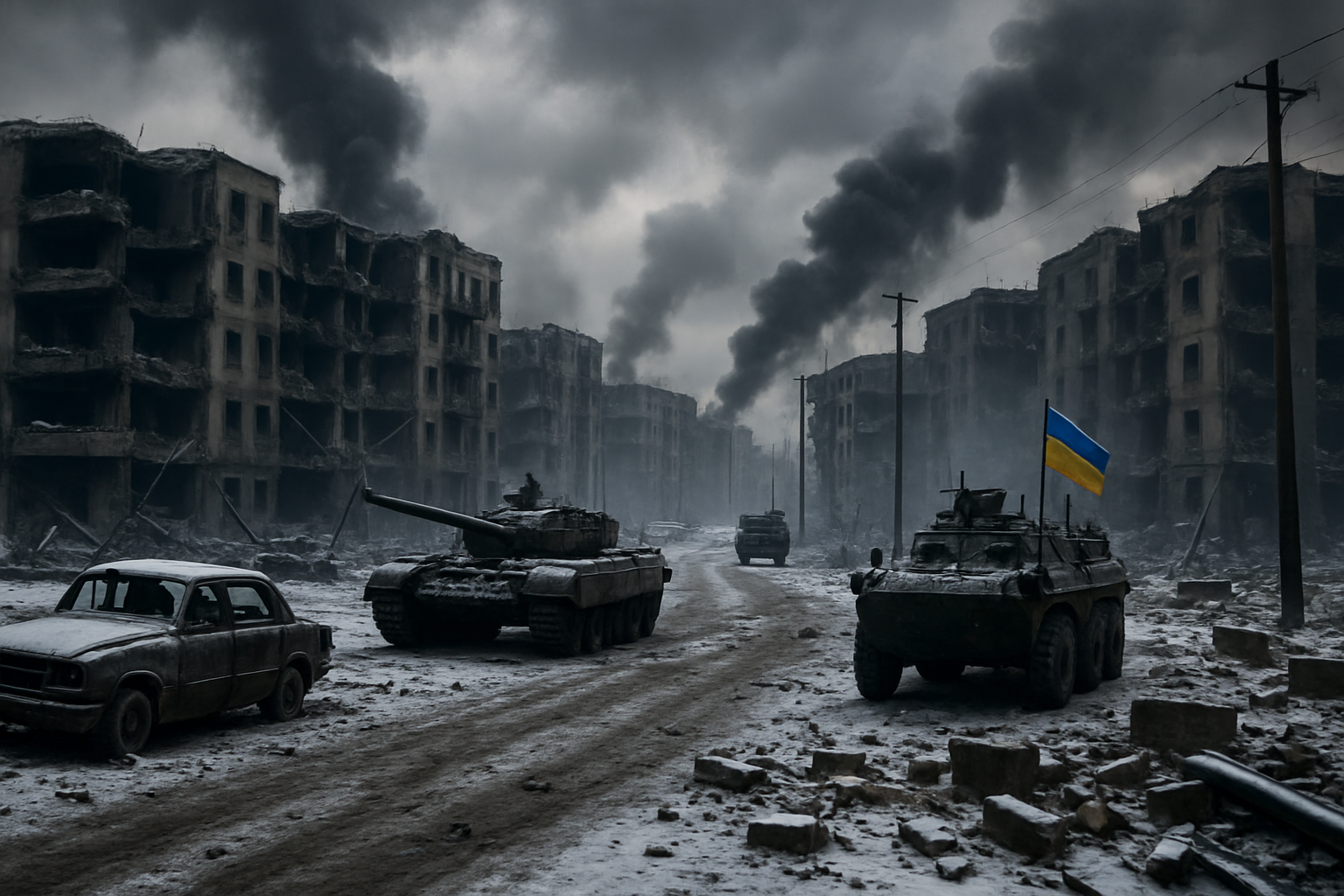
Russian military forces have captured the strategic village of Karpivka in Ukraine's Donetsk region while Ukrainian officials report continued violations of the Gaza ceasefire for the 133rd consecutive day, highlighting the fragile nature of diplomatic agreements amid ongoing military operations.
According to Russia's Defense Ministry, Russian forces have established control over Karpivka in eastern Ukraine, marking the latest territorial gain in what military analysts describe as an accelerating campaign of territorial acquisition. This development comes as Ukrainian President Volodymyr Zelensky categorically rejected calls for withdrawal from government-controlled areas of the Donetsk region, describing these territories as a "critical defensive line for the country."
Escalating Military Operations
The capture of Karpivka represents part of a broader pattern of Russian territorial gains that have accelerated dramatically in recent months. Intelligence reports indicate Russian forces captured 481 square kilometers in January 2026 alone, compared to 260 square kilometers in December 2025—a near doubling of territorial acquisition rates that underscores the intensification of military operations.
Ukrainian air defense systems intercepted 106 out of 120 Russian drones deployed in attacks since February 20, demonstrating both the scale of offensive operations and Ukraine's defensive capabilities. The attacks resulted in casualties across multiple regions, with five people wounded in the Sumy region and significant infrastructure damage reported in Odesa, where a lyceum was partially destroyed and residential buildings damaged.
"We will not withdraw from the government-controlled areas of Donetsk. This territory serves as a critical defensive line that we must maintain for the security of our nation."
— Volodymyr Zelensky, Ukrainian President
Gaza Ceasefire Under Strain
Parallel to the Ukraine conflict escalation, Israeli forces continue systematic violations of the Gaza ceasefire agreement for the 133rd consecutive day since the accord entered force on October 10, 2025. Palestinian sources report ongoing military operations including bombardments, expanded security perimeters, and restrictions on civilian movement that contravene ceasefire provisions.
The violations have resulted in the wounding of three Palestinians, according to local medical sources, as Israeli forces maintain what they describe as necessary security operations. The persistent nature of these violations—spanning over four months—raises serious questions about the enforcement mechanisms of international ceasefire agreements and the commitment of parties to honor diplomatic accords.
European Support and Regional Impact
Hungary has announced it will block a critical €90 billion EU aid package for Ukraine, citing disputes over the damaged Druschba oil pipeline. This decision threatens what would be the largest financial assistance package in EU history for a single nation and highlights persistent divisions within the European Union regarding support for Ukraine.
The Hungarian blockade comes despite broad European support for Ukrainian resistance efforts, with other EU members having already committed substantial military and financial assistance. The dispute over the oil pipeline reflects the complex economic interdependencies that complicate unified European responses to the ongoing conflict.
Humanitarian Crisis Deepening
The escalation of military operations has exacerbated an already severe humanitarian crisis. Ukrainian forces report that 175 combat clashes occurred along the front line in recent days, with the fiercest battles concentrated in the Pokrovsk and Kostiantynivka sectors. These intense combat operations have displaced thousands of civilians and strained emergency response capabilities.
Meanwhile, systematic attacks on civilian infrastructure continue, with Russian forces targeting energy facilities and residential areas. A particularly devastating strike on Sumy injured three people, including two children, highlighting the civilian cost of the ongoing military escalation.
International Diplomatic Response
The simultaneous deterioration in both Ukraine and Gaza has prompted renewed international diplomatic efforts, though concrete results remain limited. Military experts note that Ukraine faces increasing pressure for a negotiated settlement as the conflict approaches its fourth year, with some analysts suggesting that sustained territorial losses could eventually force diplomatic compromises.
Austrian military experts have observed that "after four years of war, this killing would finally come to an end" if a viable ceasefire could be established, reflecting growing war fatigue and the human cost of prolonged conflict. However, Ukraine's firm rejection of territorial concessions suggests that fundamental disagreements remain unresolved.
Strategic Implications
The capture of Karpivka and other territorial gains provide Russia with strategic advantages in eastern Ukraine, potentially strengthening Moscow's negotiating position in any future diplomatic discussions. The systematic nature of territorial acquisition—with documented gains exceeding 700 square kilometers over recent months—indicates a coordinated military strategy rather than opportunistic advances.
For Gaza, the persistence of ceasefire violations undermines international mediation efforts and calls into question the viability of negotiated agreements without robust enforcement mechanisms. The 133-day pattern of violations suggests systematic rather than incidental breaches of the ceasefire accord.
Looking Forward
As both conflicts enter critical phases, the international community faces the challenge of maintaining diplomatic momentum while addressing the reality of continued military operations. The Ukraine war's evolution toward potential territorial settlements, combined with the breakdown of ceasefire adherence in Gaza, presents complex challenges for international law and conflict resolution mechanisms.
The coming weeks will likely prove decisive in determining whether diplomatic processes can regain traction or if military solutions will continue to dominate both conflict zones. The territorial gains in Ukraine and ceasefire violations in Gaza represent more than tactical developments—they signal fundamental challenges to the international order's ability to resolve conflicts through negotiated agreements.
President Zelensky's firm stance against territorial concessions, combined with Russia's continued military advances and the persistent Gaza ceasefire violations, underscores the fragile nature of peace processes in an era of great power competition and regional instability.