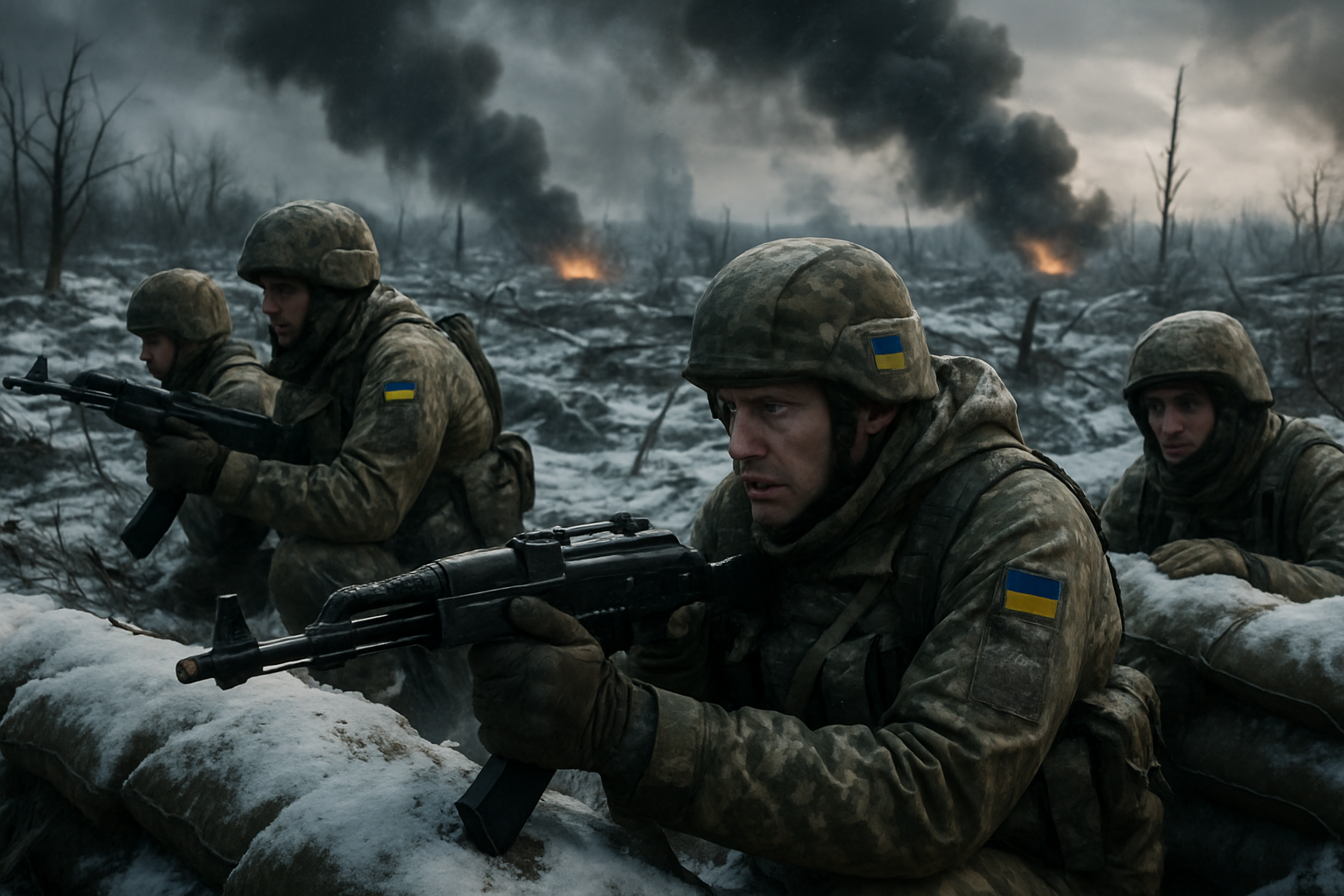
Russian forces intensified attacks across multiple Ukrainian regions over the past 24 hours, striking settlements in Sumy, Kherson, and Zaporizhzhia oblasts while Ukrainian military reports eliminating 870 Russian soldiers and significant equipment losses in daily battlefield operations.
The eastern Ukrainian city of Kramatorsk suffered a devastating Russian airstrike on Sunday that killed three civilians and wounded 13 others, including a 13-year-old boy, according to Ukraine's National Police. Russian forces used guided aerial bombs in the attack on the city, which has become a frequent target throughout the four-year war between Kyiv and Moscow.
The assault on Kramatorsk was followed by a second strike two hours later, demonstrating the systematic nature of Russian bombing campaigns against civilian areas in the contested eastern territories.
Sumy Region Under Heavy Fire
Russian forces conducted extensive bombardment operations against 25 settlements in the Sumy region during the past day, leaving three people injured according to Ukrainian military officials. The attacks represent a significant escalation in the northern border region, which has experienced intensified Russian military pressure in recent weeks.
The targeting of civilian settlements in Sumy reflects Moscow's continued strategy of applying pressure across multiple fronts simultaneously, stretching Ukrainian defensive resources and creating humanitarian crises in border communities.
Kherson Region Casualties
In the southern Kherson region, one person was killed and three others wounded as a result of Russian aggression over a 24-hour period, with occupying forces shelling 38 settlements. The persistent attacks on liberated territories demonstrate Russia's ongoing attempts to make life unbearable for Ukrainian civilians returning to areas previously under occupation.
The Kherson region has experienced systematic bombardment since Ukrainian forces liberated the regional capital in November 2022, with Russian positions across the Dnipro River maintaining the ability to strike civilian areas with artillery and missiles.
"The enemy continues to terrorize the civilian population with deliberate attacks on residential areas and critical infrastructure."
— Regional Military Administration
Zaporizhzhia Under Siege
Occupying Russian forces launched 823 attacks on 38 settlements in the Zaporizhzhia region during the past 24 hours, resulting in one death and four injuries in the Zaporizhzhia and Polohy districts. The massive scale of attacks - more than 800 individual strikes - illustrates the intensity of Russia's systematic campaign against Ukrainian-held territories.
The Zaporizhzhia region remains one of the most contested areas of the conflict, with Russian forces maintaining significant positions in the eastern portions while Ukrainian forces defend key population centers and strategic infrastructure.
Ukrainian Military Response
Ukrainian armed forces reported significant success in defensive and counteroffensive operations, with military officials announcing that Russian forces suffered approximately 1,296,700 total casualties since the full-scale invasion began on February 24, 2022. In the most recent 24-hour period alone, Ukrainian forces eliminated 870 Russian soldiers and destroyed 48 artillery systems.
The casualty figures represent one of the highest single-day totals reported in recent weeks, suggesting either intensified combat operations or improved Ukrainian defensive capabilities. Military analysts note that such casualty reports, while difficult to independently verify, indicate the continued high cost of Russia's offensive operations.
Ukrainian forces also demonstrated continued long-range strike capabilities, with soldiers from the Apache unmanned systems battalion of the 81st Separate Airmobile Brigade successfully destroying a Russian river crossing on the Bakhmutka River in the Sloviansk direction using drone technology.
Critical Infrastructure Under Attack
Russian forces struck a critical infrastructure facility in the northern city of Chernihiv, continuing Moscow's systematic campaign against Ukrainian energy and transportation networks. These attacks form part of what Ukrainian officials term "energy terrorism" - deliberate targeting of civilian infrastructure to create humanitarian crises during winter months.
The infrastructure attacks have prompted Ukrainian energy operator Ukrenergo to announce that power restriction schedules will be in effect for industrial consumers across all regions on Monday evening, March 30, indicating the cumulative impact of systematic strikes on the national power grid.
Psychological Warfare Impact
Military officials report concerning developments regarding the psychological state of Russian forces, with servicemen increasingly taking their own lives after being wounded or while surrounded by Ukrainian drone swarms. This phenomenon reflects the mounting pressure on Russian military personnel as Ukraine's technological advantages in unmanned systems create increasingly lethal battlefield conditions.
Regional Security Developments
The conflict's regional implications continue to expand, with Ukrainian military experts now deployed to five Middle Eastern countries - UAE, Qatar, Jordan, Bahrain, and Kuwait - to share expertise in combating Iranian Shahed drones. This represents Ukraine's evolution from aid recipient to security provider, leveraging battlefield experience against the same weapons systems devastating Ukrainian cities.
These international partnerships reflect the global nature of the technologies being used in the Ukraine conflict, with Iranian-manufactured drones proving equally threatening to Gulf state security as to Ukrainian civilian infrastructure.
Diplomatic Context
The intensified military operations occur against the backdrop of suspended peace negotiations, with trilateral talks between Ukraine, Russia, and the United States indefinitely postponed due to the Iran crisis consuming American foreign policy attention. The February 2026 diplomatic breakthrough, which achieved a historic 314-prisoner exchange and restored US-Russia military communications after four years, remains stalled.
Despite the diplomatic pause, the frameworks established during previous negotiations remain intact and could be reactivated when geopolitical conditions permit, according to Ukrainian officials familiar with the peace process.
Humanitarian Crisis Deepens
The continued military operations occur amid an ongoing humanitarian crisis, with over 17.8 million Ukrainians accessing winter support programs and systematic targeting of civilian infrastructure violating international humanitarian law. Ukrainian officials have disclosed that 55,000 soldiers have been officially killed since the invasion began, with international estimates suggesting actual casualties may be two to three times higher.
The targeting of energy infrastructure during extreme weather conditions represents what international observers describe as calculated humanitarian pressure tactics designed to break civilian morale while Ukrainian forces maintain defensive positions across multiple fronts.
International Support Continues
Despite competing global priorities, international support for Ukraine remains substantial, with the European Union providing a historic €90 billion loan package - the largest single-nation assistance program in EU history. Additional military aid continues flowing from Sweden, Denmark, Germany, and other allies, though the pace of weapons deliveries faces challenges from increased global demand driven by the Iran crisis.
The sustainability of international support faces testing as Western allies balance Ukrainian assistance with emerging security threats in the Middle East and concerns about prolonged conflict duration.
Looking Ahead
The military situation indicates continued escalation across multiple fronts, with Russian forces maintaining pressure on civilian infrastructure while Ukrainian defenders demonstrate sustained operational capabilities. The absence of active diplomatic engagement suggests the conflict may continue indefinitely absent major battlefield developments or shifts in international political dynamics.
Military analysts emphasize that the current pattern of systematic civilian targeting represents a deliberate strategy to create unsustainable humanitarian conditions, testing Ukrainian resilience and international support mechanisms simultaneously. The success or failure of this approach may determine the trajectory of what has become Europe's deadliest conflict since World War II.