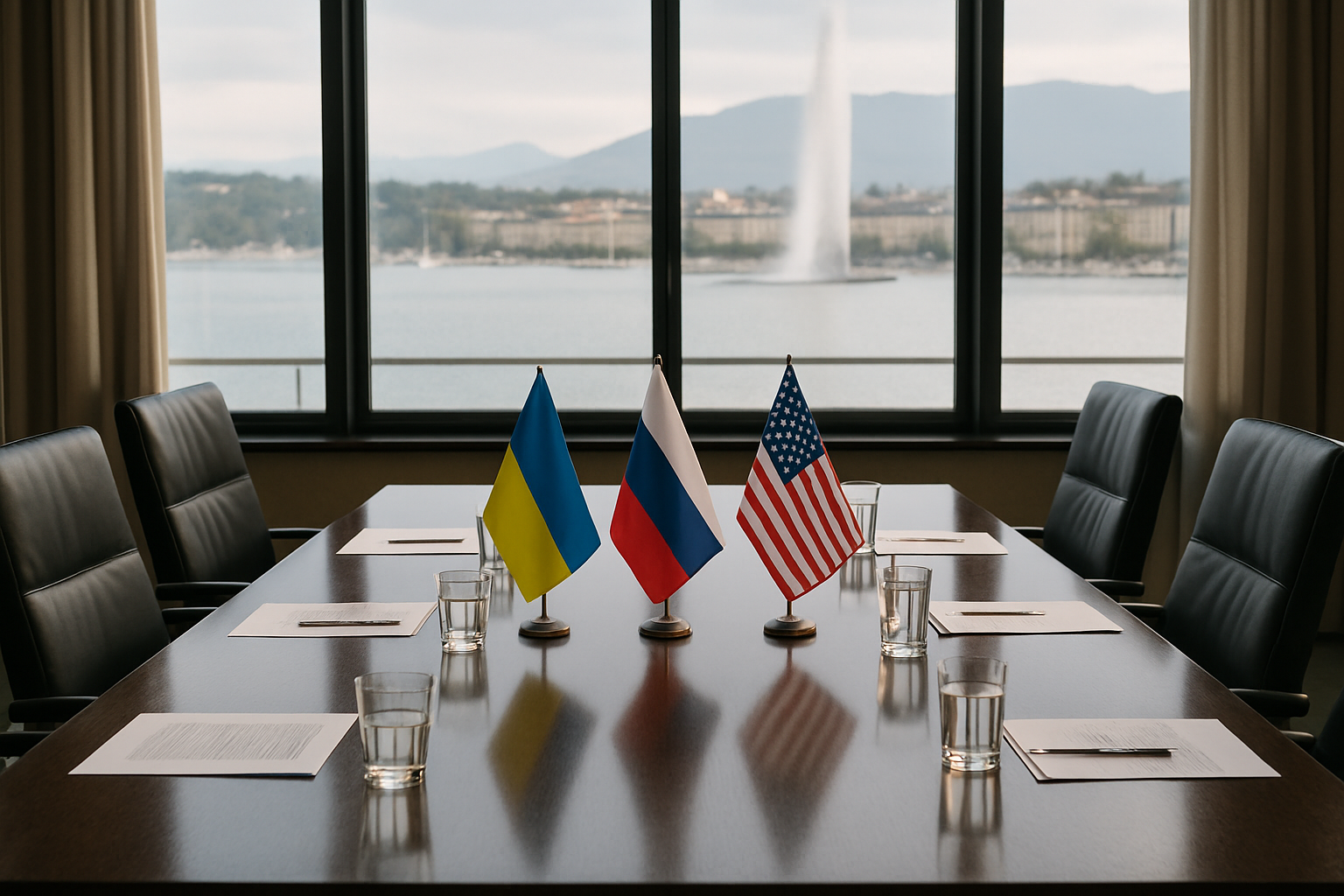
Fighting continues in eastern Ukraine with civilian casualties reported in Sloviansk and other regions, while historic diplomatic breakthroughs from recent Abu Dhabi peace talks provide cautious optimism for a potential resolution by June 2026.
In a tragic reminder of the ongoing human cost of the conflict, Russian forces launched an airstrike on the city of Sloviansk in eastern Ukraine's Donetsk region on Tuesday, killing an 11-year-old girl and her mother. Eight additional people were wounded in the attack using guided aerial bombs, including a seven-year-old child, according to Ukrainian authorities.
The civilian casualties highlight the continued violence even as diplomatic efforts gain unprecedented momentum following the historic Abu Dhabi trilateral peace talks between Ukraine, Russia, and the United States that concluded February 5, 2026.
Diplomatic Breakthrough Amid Tragedy
Despite the ongoing attacks, the most significant diplomatic progress since the conflict began has emerged from the recent negotiations. The Abu Dhabi talks achieved a historic prisoner exchange of 314 individuals—the first such swap in five months—and the restoration of US-Russia military communications after a four-year suspension.
Ukrainian Defense Minister Rustem Umerov described the talks as "substantial and productive," while US Special Envoy Steve Witkoff confirmed concrete results including detailed discussions on ceasefire monitoring mechanisms. The breakthrough occurred through UAE neutral hosting, with working groups addressing specific topics before joint position synchronization.
"The Americans are proposing that parties end the war by the beginning of summer, and will pressure both sides according to this timeline."
— President Volodymyr Zelensky
June 2026 Peace Deadline Established
President Zelensky has confirmed that the United States has established a June 2026 deadline for achieving a comprehensive peace agreement, with future talks likely to take place in Washington—marking the first time negotiations would occur on American soil. This represents a significant evolution from the Abu Dhabi framework to the highest level of US engagement.
The timeline creates unprecedented pressure for innovative solutions to territorial disputes that have remained deadlocked for nearly four years. Russia maintains that any direct Putin-Zelensky talks must occur in Moscow, while Ukraine indicates future negotiations will "most likely be in the US," suggesting potential presidential-level involvement.
Military Operations Continue Across Multiple Fronts
Despite diplomatic progress, military operations continue with Russian forces maintaining pressure across eastern Ukraine. In addition to the Sloviansk attack, fighting persists in the Pokrovsk sector where Ukrainian forces repelled 31 separate Russian assaults in a single day, according to military reports.
Russian territorial gains have accelerated in recent months, with forces capturing 481 square kilometers in January 2026 compared to 260 square kilometers in December 2025, according to the Institute for Study of War. Over 10,000 Russian drones and bombs were launched in January alone.
The conflict has also seen systematic targeting of energy infrastructure, with Russia launching what DTEK energy company described as the "most powerful blow" of 2026 against Ukrainian power facilities, leaving over 1,170 buildings in Kyiv without heating during minus-30°C temperatures.
International Support and NATO Involvement
NATO defense ministers are scheduled to meet in Brussels on February 12 to discuss continued support for Ukraine, demonstrating sustained alliance commitment. Recent international assistance includes Sweden and Denmark's announcement of a €246 million air defense package and the EU's approval of a historic €90 billion loan package for Ukrainian defense and reconstruction.
The restoration of US-Russia military communications through the Abu Dhabi framework includes deconfliction measures and incident prevention protocols, potentially affecting global security beyond Ukraine in regions where US and Russian forces operate in proximity, including Syria, the Arctic, and Africa.
Humanitarian Crisis Deepens
The winter humanitarian crisis has intensified, with over 17.8 million Ukrainians accessing winter support programs. Energy infrastructure attacks during extreme cold represent what officials describe as a "winter weapon" strategy designed to maximize civilian suffering.
President Zelensky previously disclosed that 55,000 Ukrainian soldiers have been officially confirmed killed since the February 2022 invasion, with a "large number" still classified as missing in action. International research estimates suggest actual military casualties could be two to three times higher.
European Divisions and Nuclear Context
European responses to the peace process remain divided, with Germany opposing direct Putin talks while France and Italy support broader diplomatic engagement. The diplomatic efforts occur against the backdrop of the New START treaty's expiration on February 5, 2026—the first time in over 50 years without nuclear arms control between the superpowers.
UN Secretary-General António Guterres called the nuclear treaty expiration a "grave turning point," warning that nuclear weapon use risks are "higher than at any time in decades."
Territorial Disputes Remain Central Challenge
The fundamental sticking point remains eastern Ukrainian territories under Russian control. Despite military communications restoration and successful prisoner exchanges, no progress has been reported on territorial issues that represent the core of the conflict.
Russia continues to insist on recognition of territorial gains, while Ukraine maintains its position on territorial integrity based on internationally recognized borders. This disagreement has persisted through all previous diplomatic efforts and represents the primary challenge for any comprehensive peace agreement.
Strategic Implications and Future Outlook
The current phase represents the most significant diplomatic opportunity since the conflict began, with potential to end Europe's deadliest war since World War II. Success could provide a template for international conflict resolution, while failure might intensify military operations and undermine confidence in diplomatic solutions globally.
The June deadline creates a critical timeline for resolving decade-old territorial challenges through innovative diplomatic mechanisms. The evolution from Abu Dhabi to potential Washington venues suggests increasing high-level engagement, though fundamental positions remain far apart.
As military operations continue alongside diplomatic engagement, the coming months will determine whether sustained negotiations can overcome territorial disputes that have defined European security architecture since 2014. The stakes extend beyond Ukraine to broader questions of international law enforcement, territorial sovereignty principles, and conflict prevention in the 21st century.
The tragic civilian casualties in Sloviansk serve as a stark reminder of the human cost of continued military operations, adding urgency to diplomatic efforts while highlighting the complex challenge of achieving lasting peace amid ongoing violence.